
Artificial Intelligence in the Hands of Bantul Farmers
Janika Irawan
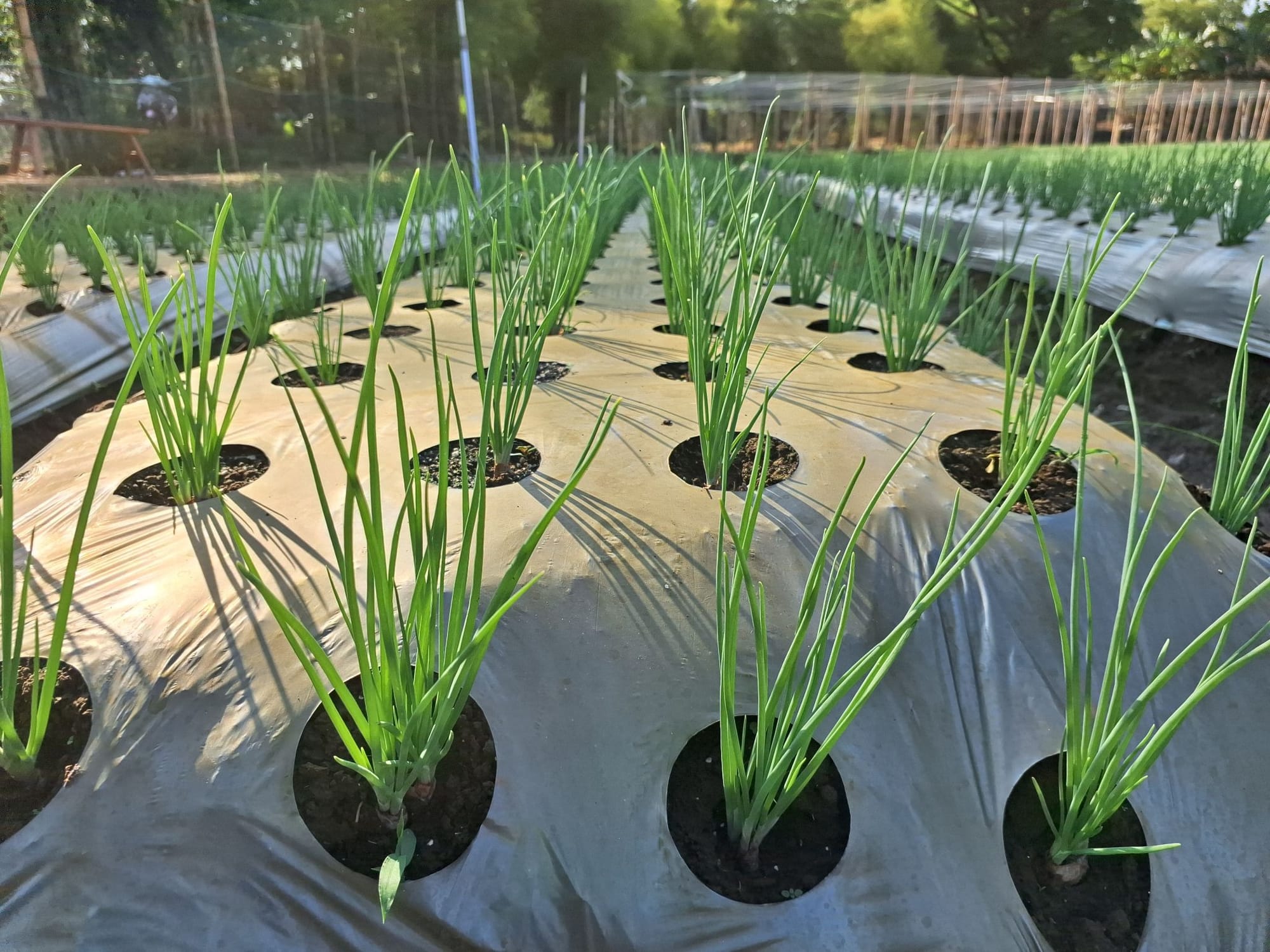
SONI Susanto sat casually on the edge of a large farm plot. The 30-year-old was monitoring a working sprinkler as it watered a variety of crops at the Banyu Kencono Agrotourism Park, located in Pleret, Bantul Regency, Special Region of Yogyakarta. The shallow-rooted crops—shallots, bitter gourds, and chili peppers—appeared vibrant and green.
As the field manager of the Banyu Kencono Agricultural Tourism Program, Soni revealed their secret. He and his team use Alexa to manage the land, including the watering system. It is not a human worker, but Internet of Things technology integrated with artificial intelligence.
“So we just give the commands. Alexa handles the rest,” Soni said on Thursday, September 3, 2026.
The agricultural land managed by the Pleret Village-Owned Enterprise (BUMKal) is cultivated using a modern farming system. With this system, which was newly introduced in August, farmers can operate far more efficiently. Using only a smartphone, the irrigation and fertilization processes run automatically.
On that Thursday afternoon, for example, to start and stop the watering process, Soni simply instructed Alexa to activate the sprinkler system. Rather than spraying water indiscriminately—which could soak the plot or leave it waterlogged—the system waters the crops until soil moisture reaches 70 percent. Based on their calculations, reaching that ideal moisture level takes exactly 10 minutes.
Once 10 minutes passed, Soni turned off the irrigation pump manually. “We aren't using Alexa for this specific pump right now because we're linking it to the subdistrict office so they can monitor it live,” Soni explained. “However, the actual commands will still come from us in the field. If someone at the village office triggers it, they might accidentally soak the workers while we're doing field maintenance.”
THIS modern agricultural system run by BUMKal Pleret did not happen overnight. According to the Village Head of Pleret, Taufiq Kamal, local farmers struggled to secure water for their crops. Taking the initiative, Kamal provided a diesel-powered water pump using grant funds sourced from various institutions.
However, a new challenge soon arose. “Operating costs were extremely high,” Kamal said at the Pleret Village Office on Friday, August 28, 2026.
Searching for another way forward, he encouraged local farmers to switch from staple food crops to horticulture.
That transition was equally difficult. Farmers complained that growing horticultural crops required far more physical effort than rice or secondary food crops. Horticultural plants demand intensive care.
“It’s too troublesome to manage,” Kamal said, echoing the farmers' concerns. Rice cultivation, he noted, had always been considered straightforward. “In their words, once you plant rice, you can leave it alone and still harvest,” he said. Furthermore, most farmers in Pleret are advanced in age.
Faced with these realities, a new idea emerged: implementing modern IoT-based agriculture paired with an AI assistant, Alexa. Building the equipment and programming the system began roughly a year ago, though full operation only started last August. But it is still limited to the farm managed by BUMKal Pleret.
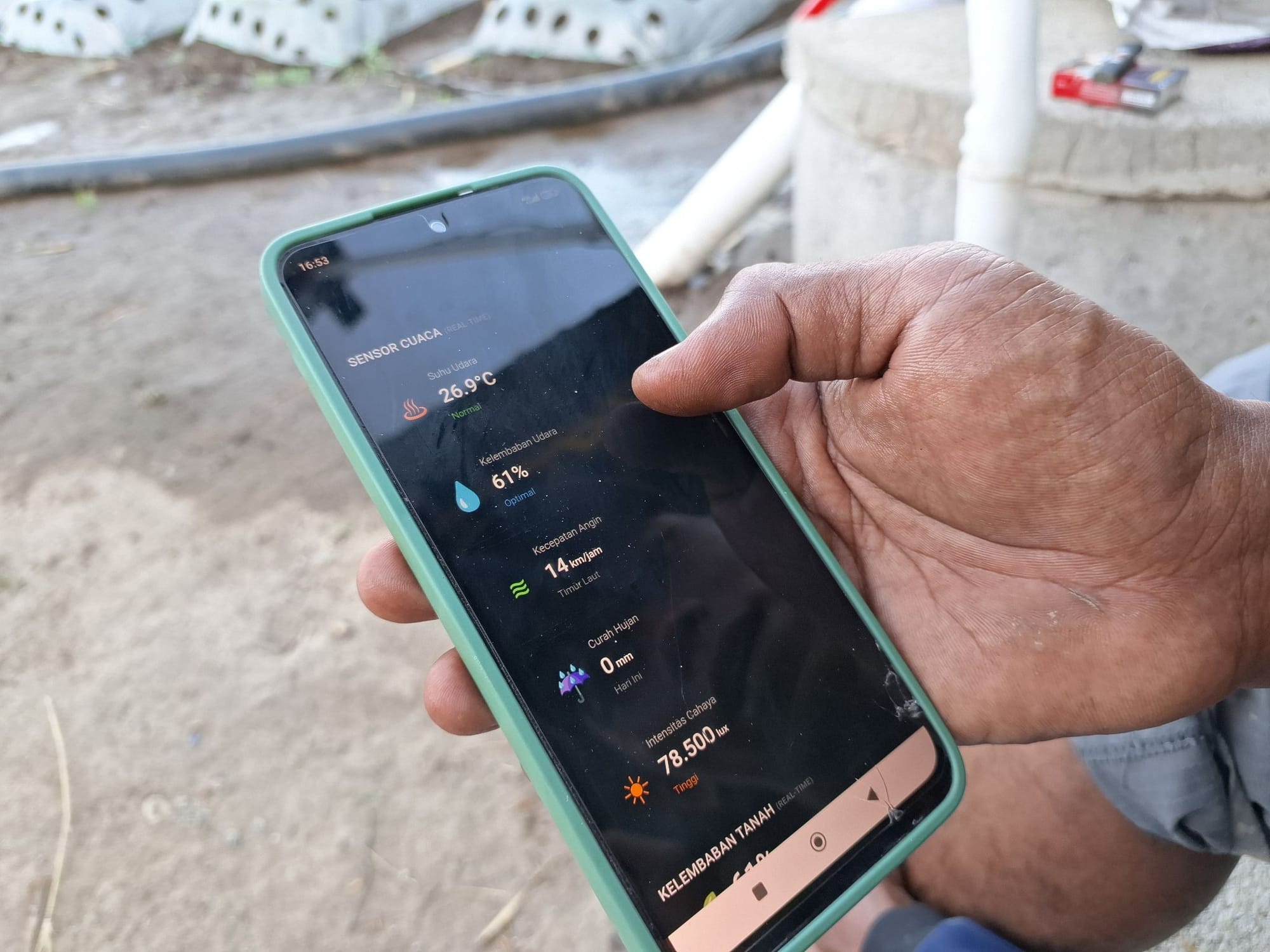
Beyond assisting with irrigation, Alexa streamlines other field operations. For instance, several sensors are installed across the land to simplify crop maintenance—measuring soil moisture, soil pH, ambient temperature, wind speed, rainfall, and sunlight intensity.
Data gathered from these sensors flows automatically into an IoT dashboard in real time. “You can see everything right here,” Soni said, displaying the IoT dashboard on his smartphone.
The incoming data dictates how the crops are treated. “For example, if humidity is too high, we reduce the nitrogen fertilizer to prevent fungal growth,” Soni explained.
Additionally, this collected data serves as the foundation for Alexa's database.
With Alexa, fertilization has become much simpler. Farmers no longer need to broadcast fertilizer manually or pour it into individual planting holes. Instead, fertilizer is delivered via an injection system during irrigation. Liquid fertilizer is prepared in a large storage barrel and distributed through hoses alongside the irrigation water.
“So there’s no need to pour it into each planting hole by hand. It saves both labor and time,” he said.
However, electricity costs posed a challenge. Soni estimated that relying solely on the state grid (PLN) would cost up to Rp50,000 per day. “The monthly bill would be sky-high. When news about this went viral online, a lot of people commented on that,” he noted.
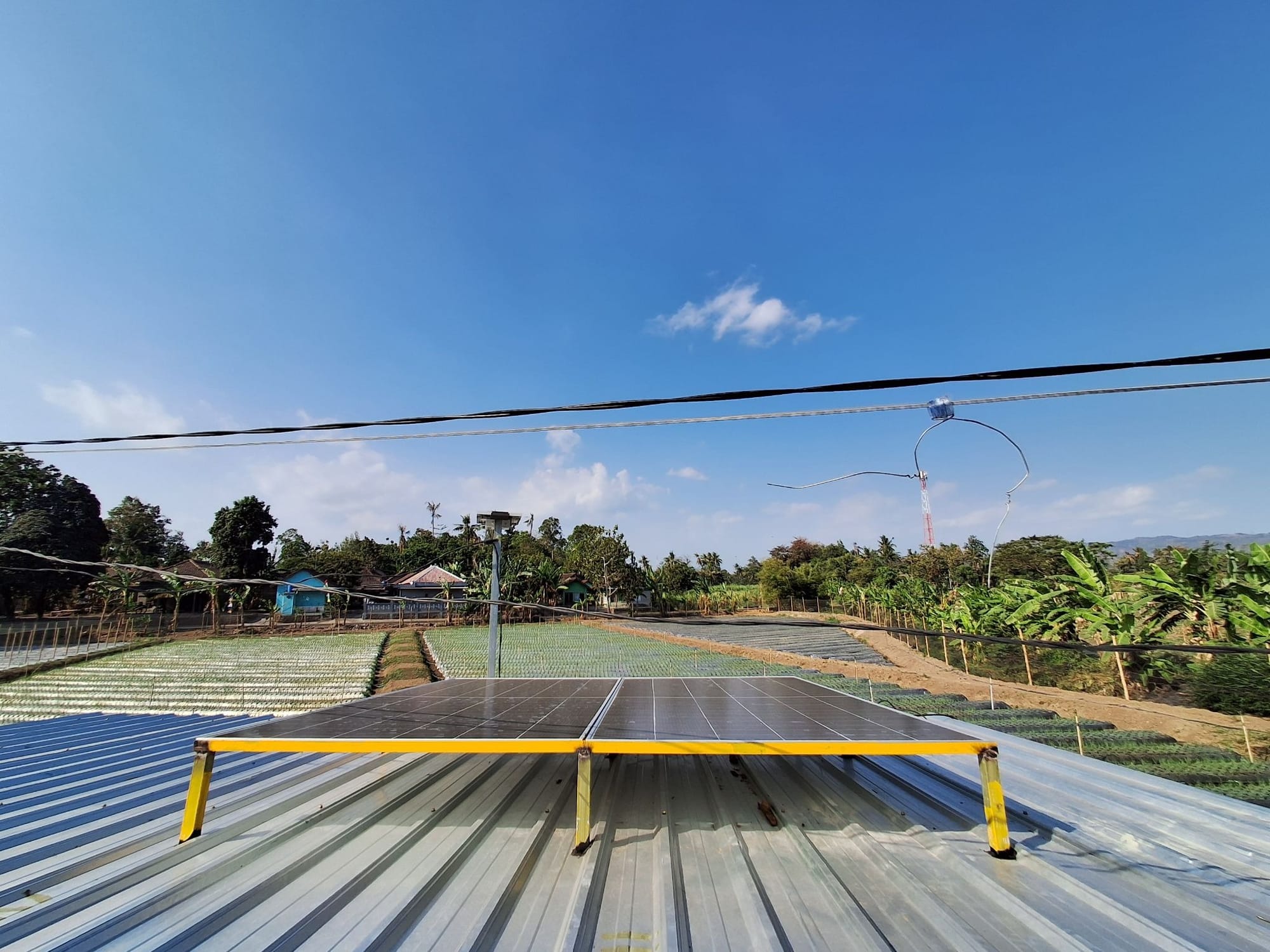
To prevent exorbitant utility bills, BUMKal Pleret installed solar panels. Grid power from PLN remains connected as a secondary backup when sunlight intensity is low.
Alexa has proven invaluable. Beyond irrigation and fertilization, the system controls farm lighting, security alarms, CCTV cameras, and power lines. Any operational issues on the ground trigger real-time alerts from Alexa to the farmers or system operators. For instance, if solar energy proves insufficient after a full day of rain while a PLN blackout is simultaneously occurring, Alexa notifies them. “It will issue an alert like: Irrigation unavailable at this time due to insufficient power supply to the pump,” Soni said.
Developing this modern agricultural system required BUMKal Pleret to spend approximately Rp130 million—around Rp70 million for land preparation and Rp60 million for the IoT and AI infrastructure.
Currently, Alexa is undergoing training to operate fully autonomously. “During this first planting season, we are letting Alexa learn. By the second planting season, it will have a complete database. We will be able to let it run autonomously because of what it learned in season one,” Soni explained.
The Director of BUMKal Pleret, Muhammad Aziz, stated that this modern farm serves as a pilot project. In the next phase, they plan to expand the cultivated area. To support this expansion, Pleret village authority ceased leasing village-owned land to private companies in 2025, reserving the land to scale up modern farming operations.
“Our hope is that the local community will eventually manage the land directly with guidance from BUMKal,” Aziz said.
Village Head Taufiq Kamal hopes this agricultural model will serve as an example for the broader community. “Hopefully, others will follow suit,” he said.
FOR now, most farmers in Pleret Village continue to cultivate their fields using conventional methods. Among them is Romadhon. The 60-year-old local resident was seen struggling to draw water from a shallow well on his land one Thursday afternoon. He drew water using a small bucket attached to a bamboo pole. It took at least four draws to fill two pails.
“Because of the dry season, the well doesn't fill up,” he said, pulling water up from the well.
Once filled, Romadhon carried the two heavy pails to the center of his plot, carefully watering each planting hole sown with long bean seeds. He repeated this exhausting routine until all planting holes across his 700-square-meter plot were moist. He hopes the rainy season arrives soon so he can switch back to planting rice.
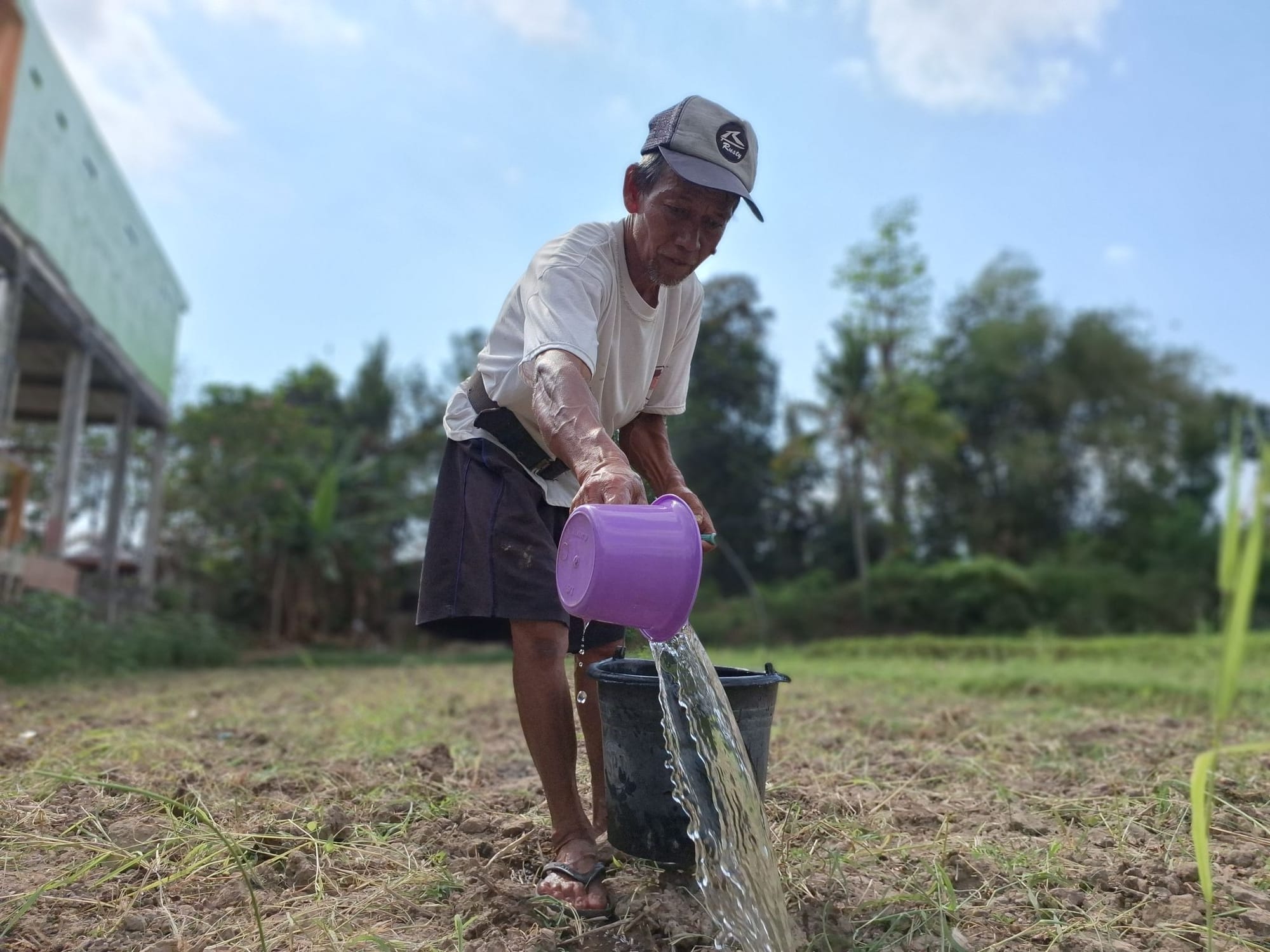
Romadhon typically plants rice twice a year. When the dry season sets in, he cultivates secondary crops, usually peanuts. Near the end of the dry season—with roughly a month to six weeks remaining before the rains arrive—he utilizes his land for short-cycle crops such as leafy vegetables.
“Basically, it’s just to pass the time while waiting for water. Once the rainy season starts, I’ll till the land again for rice,” he explained.
The severe water shortage during the dry season remains a persistent headache for local farmers. River-fed irrigation channels have dried up entirely, leaving wells as their only option. Extracting groundwater requires diesel-powered pumps, which add a financial strain.
On a typical day, Romadhon spends Rp36,000 on fuel for his water pump. “It’s quite a heavy burden,” he said.