
Garda Pangan Food Rescue Initiative in Surabaya
By Nur Hadi
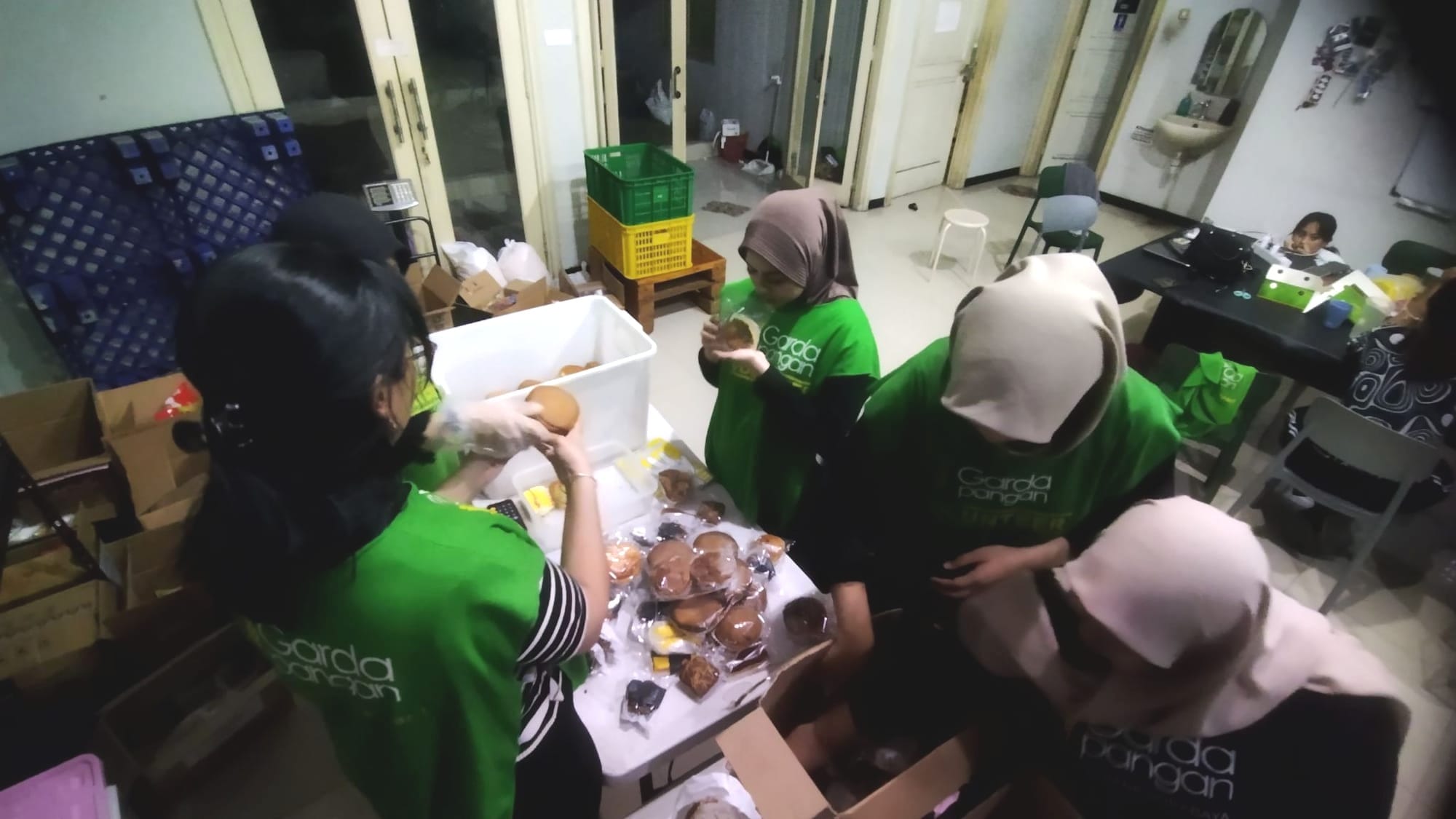
SAFA Nadira and three fellow volunteers rushed toward a long table as a colleague entered the room carrying two cardboard boxes and four plastic bags packed with various types of bread, cakes, and pastries. Slipping on a pair of plastic gloves, she urged her colleague to unpack the deliveries immediately.
The woman, wearing a traditional headscarf, meticulously sorted through the baked goods item by item—holding, smelling, and occasionally tasting them. Anything deemed safe for consumption and redistribution was transferred into a plastic container. After 20 minutes of sorting, the tally reached 71 items, including croissants, coffee buns, sponge cakes, lapis legit layer cakes, and banana bread.
“This sorting method is called organoleptic evaluation,” Safa said when interviewed at a rented house on Jalan Semolowaru Indah I No. J4, Surabaya, East Java, on Friday evening, October 23, 2026. Organoleptic testing is a sensory evaluation method that relies primarily on human sight, smell, and taste to assess products, particularly food and beverages.
According to her, savory or salty foods are excluded from distribution due to the risk of food poisoning if not consumed immediately. “Food that appears visually damaged is also unfit for distribution, even if it remains edible,” she explained. Such items are reserved solely for volunteers to eat on-site and cannot be taken home.
Safa is a core volunteer at Garda Pangan, a food bank foundation tackling food waste issues in Surabaya. Her sorting routine is part of a broader food rescue initiative aimed at salvaging surplus food generated by hospitality and food service businesses. The items rescued that day had been collected from four local bakeries and cafes just an hour earlier.
Three times a week—on Mondays, Wednesdays, and Fridays—Garda Pangan volunteers make rounds in a panel van to collect excess food from these four partners during late-afternoon runs. After being sorted at the group’s headquarters, the food is immediately distributed to underprivileged residents.
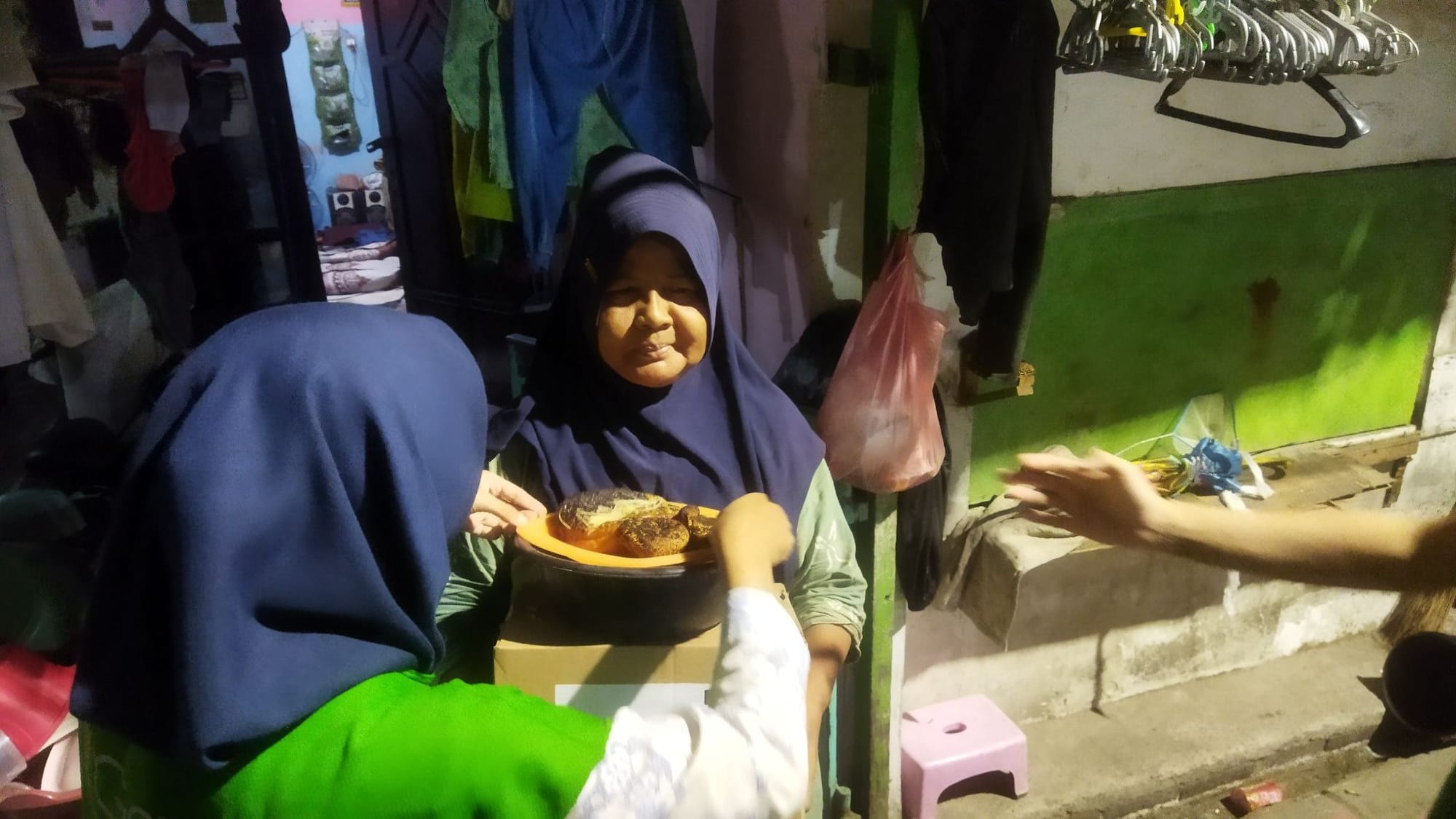
That evening, volunteers distributed the baked goods to around 30 families in the Tambak Deres area of Sukolilo District, Surabaya. In addition to pastries and cakes, residents received basic food staples donated by a corporate sponsor. “We distribute door-to-door, borrowing plates or basins from residents so we don’t create additional plastic waste,” said Safa, who has been volunteering with the group since 2022.
The arrival of Garda Pangan volunteers was warmly received by locals. Kasiati, 35, a neighborhood resident, said food donations mean a great deal to her family, given her husband’s unpredictable income as a scavenger. “It means the world, especially for the children,” the mother of two said.
Garda Pangan has regularly donated food in the area for the past two years, with zero reported cases of food poisoning. Kasiati and other residents understand that distributed food must be eaten right away. “Every time they distribute, the volunteers remind us,” she said, adding that she hopes the donations continue frequently.
DEDHY Trunoyudho, his wife Indah Audivtia, and Eva Bachtiar founded Garda Pangan in 2017. The initiative grew out of Dedhy and Indah’s experience running a family catering business, where they frequently encountered large quantities of leftover food following wedding receptions. For caterers, discarding leftover food is often the fastest, easiest, and cheapest option when event hosts decline to take it home.
Troubled by the practice, Dedhy and Indah looked to the food bank model widely established in other countries, seeking to redirect edible event leftovers to those in need instead of letting them go to waste.
That vision brought the couple together with Eva, an engineer and development consultant. “From there, we agreed to establish Garda Pangan,” said Dedhy, Co-founder and Chief Operating Officer (COO) of Garda Pangan.
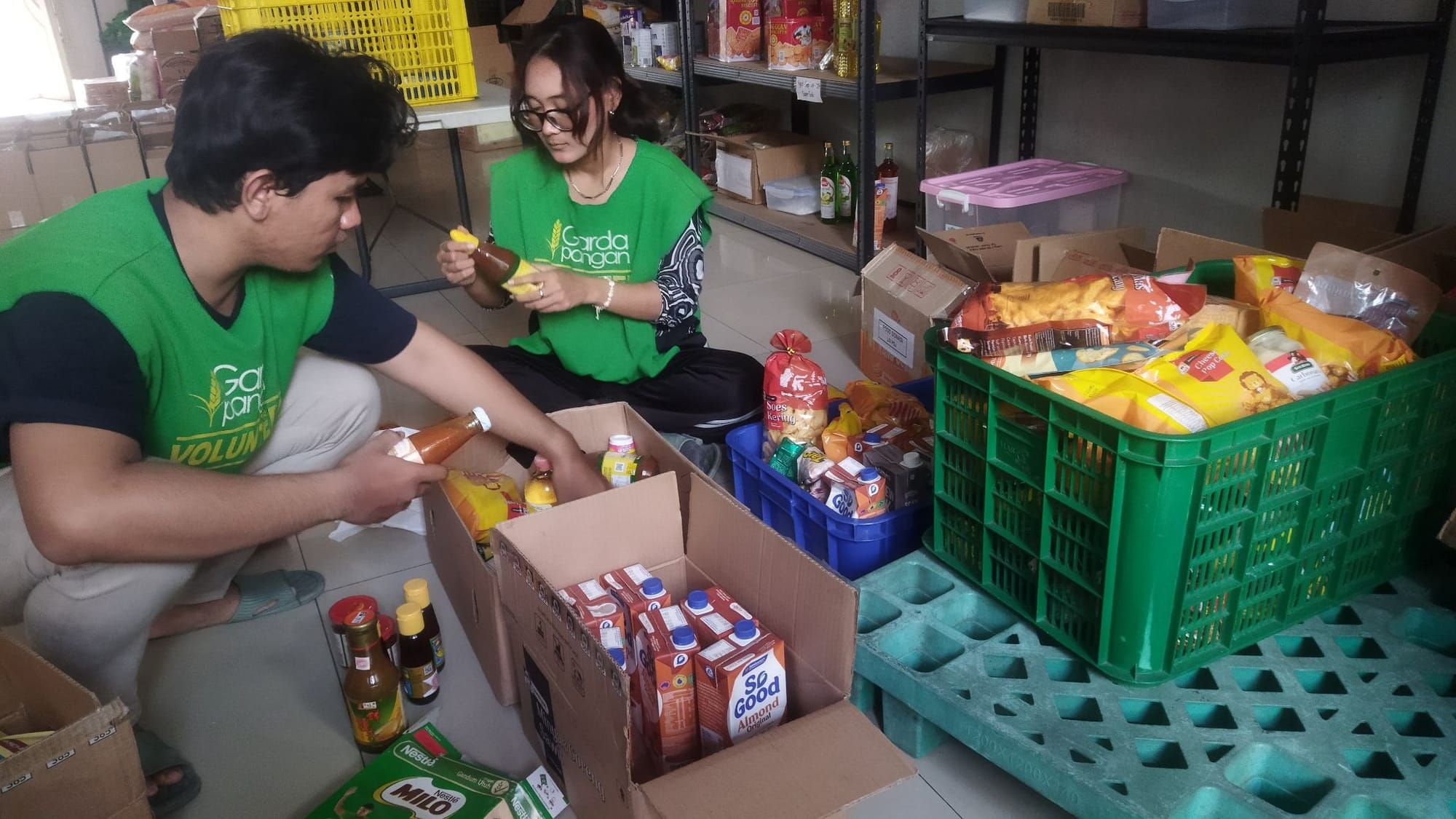
Running a food bank in its early days was no easy task, with the primary challenge being donor recruitment. At the time, the food bank concept was entirely novel and unfamiliar in Indonesia, particularly in Surabaya. Even after securing partners, new hurdles emerged: maintaining long-term commitment and professional trust for a pro bono initiative.
Resource constraints posed another hurdle. For the first year, Dedhy and Eva personally collected surplus food from partners using their private vehicle. Lacking an operational base or office, they distributed collected food directly to beneficiaries.
Over time, resource constraints gradually eased. Today, volunteers handle the entire operation, from food rescue to distribution.
However, Dedhy noted that gaining partner trust remains an ongoing effort, particularly regarding concerns over food safety standards and legal liability. To address these concerns, Garda Pangan advocates for the passage of the Food Bill to establish a clear legal framework for food banking operations.
Dedhy recalled that Garda Pangan’s first donor partner was a local Surabaya bakery chain—a partnership that remains active today. Most partners join voluntarily after learning about Garda Pangan through news coverage, he added. “Franchise operators with overseas headquarters usually grasp the concept faster because they are already familiar with food banks abroad,” he said.
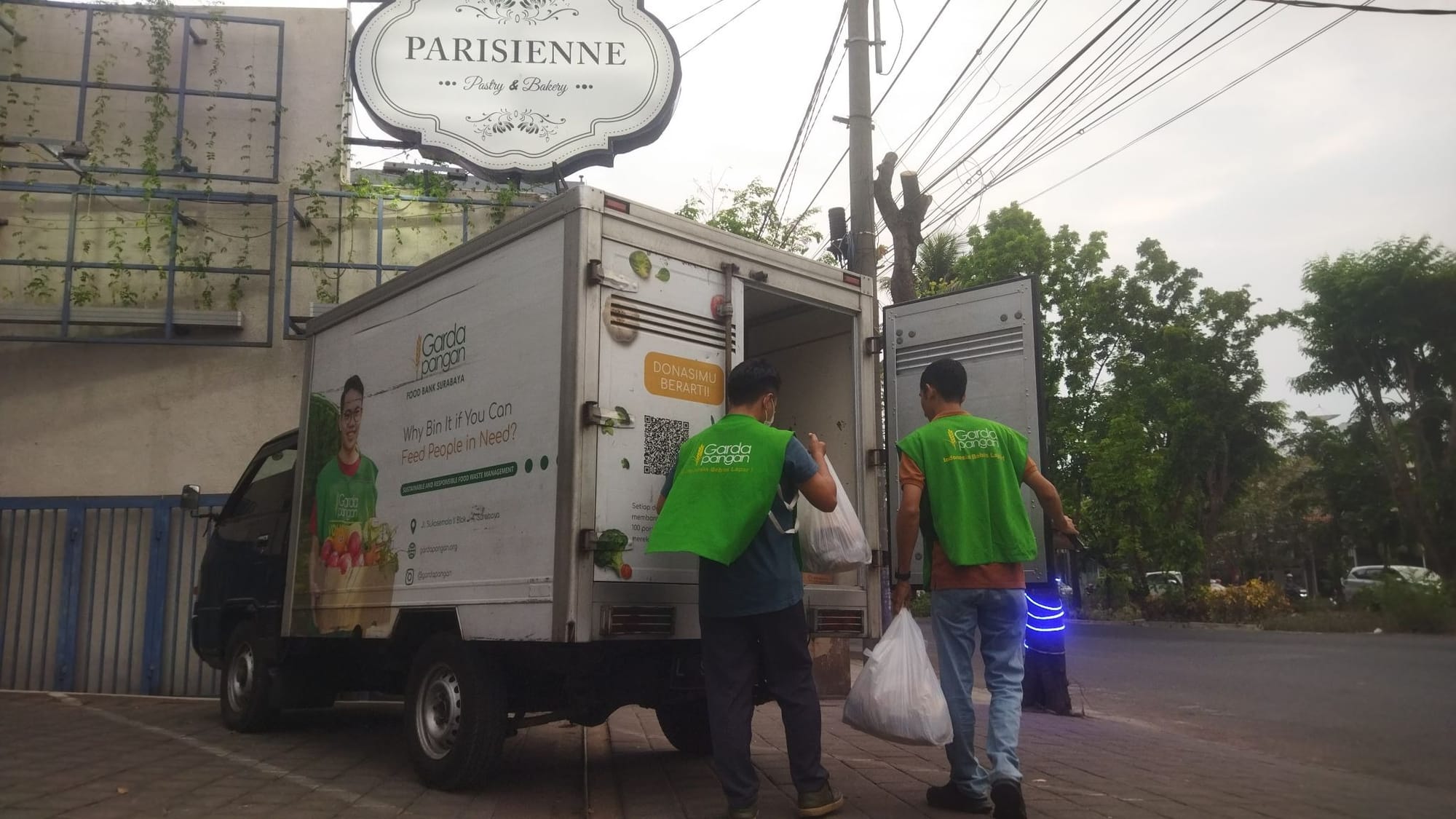
Partner feedback has been overwhelmingly positive, Dedhy noted. To ensure accountability, Garda Pangan provides donors with detailed reports outlining the types and quantities of food rescued. These reports help businesses audit surplus production, enabling them to adjust portion sizes, modify product dimensions, or reduce overproduction.
The food rescued by Garda Pangan extends well beyond baked goods, encompassing leftovers from hotels, wedding receptions, and packaged supermarket items nearing their expiration dates. The organization maintains strict quality control standards, applying organoleptic testing to prepared meals and checking packaged goods for physical defects like leaks, bloating, or dents.
Items with physical defects are set aside to preserve quality and dignity standards. Substandard yet safe items are consumed by internal staff, while inedible waste is diverted to maggot farming or composting facilities operated by Garda Pangan.
Food deemed safe for consumption is distributed to underprivileged communities across urban villages (kampung) in Surabaya. Before conducting distributions, volunteer teams perform preliminary surveys and field assessments.
Centering distributions on designated neighborhoods ensures clear record-keeping and recipient tracking. “We do not prioritize orphanages because they typically receive state support and have relatively small capacities,” Dedhy explained.
Beyond food rescue, Garda Pangan engages in agricultural gleaning—rescuing surplus crops at the farm level. In the agricultural sector, major food waste occurs during harvest peaks, when farmers sometimes destroy crops to stabilize market prices. To prevent this, Garda Pangan uses crowdfunding and crop-purchasing schemes to buy excess produce, delivering it directly to consumers or donating it to low-income communities. These gleaning operations span the Pasuruan, Malang, and Batu regions.
Since its inception, Garda Pangan has rescued 825,002 food portions and distributed them to 29,294 underprivileged individuals.
RECOGNIZING that downstream intervention alone was insufficient, Garda Pangan moved upstream into policy work by forming a dedicated research team focused on policy studies, public advocacy, and regulatory drafting. “That is what sets Garda Pangan apart from other food banks,” Dedhy said.
In 2025, Garda Pangan partnered with the National Food Agency (Badan Pangan Nasional) to conduct a baseline study quantifying food waste generation in the Special Capital Region of Jakarta and Labuan Bajo, East Nusa Tenggara. The study marked the country's first baseline food waste assessment using direct weighing methodologies.
The study revealed that food loss and waste across Jakarta’s five administrative cities reached 175,415 metric tons in 2025—equivalent to a 1.5-meter-high pile of waste covering an area equal to 27 Gelora Bung Karno Main Stadium pitches. This waste generated greenhouse gas emissions totaling 750,257,962 kilograms of CO2CO_2CO2 equivalent, incurring economic losses estimated at Rp 2.8 trillion ($178 million).
Food service businesses accounted for the vast majority of the waste at 143,589 metric tons (81.9 percent), followed by hotels at 14,290 metric tons (8.1 percent), retail outlets at 11,003 metric tons (6.3 percent), and Free Nutritious Meal Service Units (SPPG MBG) at 6,533 metric tons (3.7 percent).
Conducted between September and October 2025 across 81 sector samples, the study found that 116,149 metric tons (66 percent) of the waste ended up in landfills. Of the total, 91,058 metric tons (52 percent) comprised edible food, 53,495 metric tons (31 percent) had salvage potential, and 5,303 metric tons (3 percent) was suitable for direct donation.
This year, Garda Pangan and the National Food Agency extended the research to East Java. Alfian Muhammad Nur, Research Coordinator at Garda Pangan, said results are currently undergoing dissemination prior to public release. The research surveyed four representative areas—Malang, Surabaya, Madiun, and Lamongan—selected to represent East Java's 38 regencies and cities. “The report will be released this November,” Alfian said.
Alongside its research arm, Garda Pangan launched a commercial waste management business in 2024 at the Puspa Agro complex in Taman, Sidoarjo, aimed at addressing Surabaya's broader waste problem while achieving financial self-sufficiency. “The goal of this business unit is to ensure the foundation's operations remain financially self-sustained and independent,” Dedhy said.
The enterprise offers organic and inorganic waste management services to offices, factories, corporations, hotels, restaurants, and Free Nutritious Meal Service Units. Organic waste is sorted for maggot feed or composting, while recyclable inorganic waste is sold to scrap dealers.
With daily waste generation in Surabaya estimated at 1,600 metric tons, Garda Pangan currently processes between 6 and 8 metric tons per day. To date, the organization has processed 658,000 kilograms of food waste into animal feed, preventing an estimated 1,506,416 kilograms of CO2CO_2CO2-equivalent greenhouse gas emissions.
In addition to commercial services, Garda Pangan facilitates residential organic waste management. Through its Ogah Nyampah (“Refuse Waste”) initiative, the organization offers door-to-door collection for sorted household organic waste alongside a “Maggot Adoption” program to help residents process organic waste at home.
Noting that household waste remains the largest contributor to landfills, Dedhy expressed hope that residents will adopt decentralized organic waste processing through community waste banks, home composting, or black soldier fly larvae cultivation. “These efforts represent our approach to tackling waste and food surplus at the source,” he said.