
Saving Rojolele Rice from Becoming a Distant Memory
By Shinta Maharani
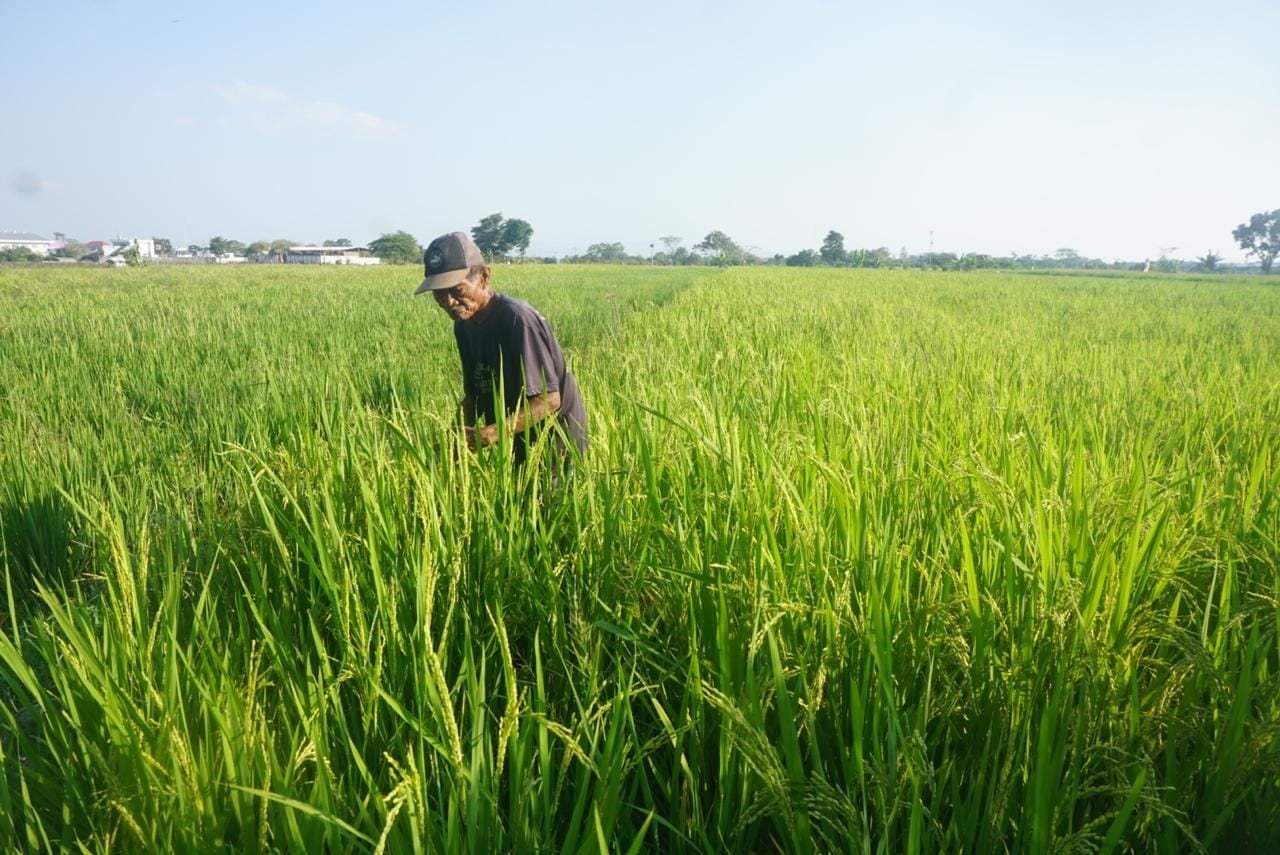
THE sun was scorching when Manto Pawiro recalled the former glory of the legendary Rojolele rice. The 84-year-old farmer leaned his hoe against a shady banana tree in Kaibon Hamlet, Delanggu, Klaten, Central Java. He was taking a break after clearing weeds from the embankment to keep pests at bay.
“Planthoppers are a farmer's worst enemy,” said Mbah Manto—as he is affectionately called—when met in Kaibon on Saturday, August 29, 2026.
Mbah Manto cultivates the Rojolele Srinuk rice variety across his two land plots totaling 3,300 square meters. However, his yields have become unpredictable due to climate-driven weather shifts. A single harvest nets him between Rp5 million and Rp10 million, depending on the weather. Whenever planthopper infestations surge, his yields plunge.
It is a far cry from his Rojolele harvests of the past. Having served in farmers' organizations as a young man—and recently returning to the fold— Mbah Manto vividly remembers when the fame of Delanggu's Rojolele rice echoed across Indonesia. Decades ago, Delanggu was celebrated as a rice bowl, renowned for producing a local variety celebrated for its soft texture and natural, fragrant aroma when cooked.
“Rojolele rice goes best with salted fish,” said Mbah Manto, who is now active in Sanggar Rojolele—an organization advocating for Delanggu farmers' independence, fair food distribution systems, and sustainable practices.
The prominence of Rojolele rice waned under the weight of the Green Revolution pushed by President Soeharto's authoritarian New Order regime. According to Eksan Hartanto, founder of Sanggar Rojolele, the Soeharto administration phased out the local Rojolele variety. The Green Revolution program mandated fast-yielding rice varieties to achieve national food self-sufficiency. By the mid-1970s, the government forced farmers into monoculture farming, requiring synchronized planting schedules alongside heavy applications of chemical fertilizers and pesticides.
Mbah Manto recalled that at age 15, he defied government bans by planting Rojolele rice on a 2,000-square-meter plot, despite official warnings about planthopper invasions. Officers from the village office suddenly raided his field when the crop was two months old.
“They slashed all the Rojolele down,” Mbah Manto said.
Before the Soeharto administration banned Rojolele, local farmers in Delanggu also grew traditional varieties such as Slamet and Bengawan Solo. Like Rojolele, these required a six-month growth cycle. They were eventually pushed out by the Peta Baru (PB) high-yield varieties developed by an institute in the Philippines, marking the dawn of Indonesia's Green Revolution. All farmers, including Mbah Manto, were forced to adopt PB varieties.
The government poured in PB seeds and distributed massive supplies of chemical fertilizers and pesticides. Indonesia achieved rice self-sufficiency in 1984 through intensive cultivation methods that accelerated the harvest cycle from twice to three times a year. However, indiscriminate chemical pesticide and fertilizer use caused planthoppers to mutate and develop resistance. Chemical pesticides eradicated natural predators and destroyed local biodiversity, leading to devastating pest outbreaks and crop failures. Simultaneously, heavy reliance on chemical fertilizers degraded soil fertility.
Mbah Manto compared current soil conditions to the pre-chemical era. Historically, farmland was fertile and loose, not hardened as it is today. Farmers relied solely on manure and plowed their fields with water buffaloes. Pest infestations were far less severe, whereas today, new pest variants continue to emerge alongside unpredictable weather patterns.
In the past, Mbah Manto remembered, farmers would haul home sacks of abundant Rojolele grain following a grand harvest. Household granaries ensured they never had to purchase rice or worry about shortages.
For Delanggu farmers, growing Rojolele was a matter of pride. The variety had been a favorite among Javanese royalty since the 18th century. The name Rojolele originated from the words rojo (king) and le. In the 18th century, Sunan Pakubuwono II of Surakarta visited Delanggu to observe rice cultivation. During his visit, the king interacted with local youths, calling them thole—a familiar Javanese endearment for young boys. The term evolved into Rojolele, symbolizing the close bond between the king and his people.
“Nobles from the Surakarta Royal Palace frequently visited our village,” Mbah Manto added.
AFTER Rojolele’s glory faded, Delanggu farmers pivoted to high-yielding varieties to maximize output. The current Rojolele strains—Srinuk and Srinar—are the result of a joint research initiative launched in 2013 by the National Nuclear Energy Agency (BATAN) and the Klaten Regency Government. The name Srinuk combines Dewi Sri (the rice goddess) and enuk (delicious), while Srinar pairs Dewi Sri with bersinar (radiant), echoing Klaten Regency's official slogan, Klaten Bersinar.
While the original parent Rojolele yielded 4.2 metric tons per hectare, Srinuk and Srinar produce 8 to 9 tons. Their growth cycle is also significantly shorter: the traditional strain required six months, whereas Srinuk and Srinar mature in just three. While traditional Rojolele fetched Rp12,000 to Rp14,000 per kilogram, the newer strains command up to Rp18,000 per kilogram. Additionally, while the original crop grew to heights of 160–170 centimeters, the engineered variants stand at 60 centimeters, making them far more resistant to lodging.
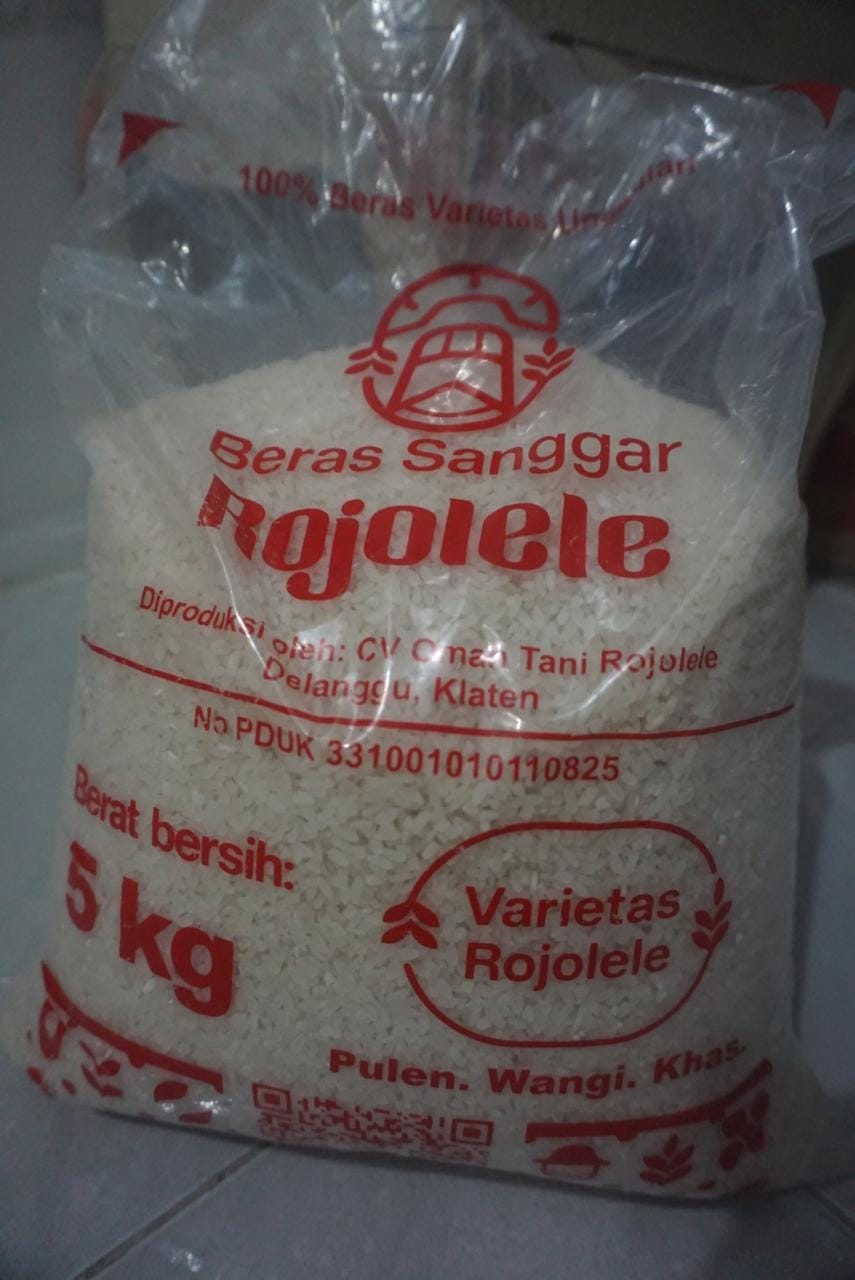
Efforts to revive Rojolele's heritage are now spearheaded by the Sanggar Rojolele community. Founder Eksan Hartanto noted that Delanggu Village’s farming population is shrinking rapidly. Village authority data indicates that active farmers currently account for less than one percent of the local population of roughly 5,800.
Data from Statistics Indonesia (BPS) shows Delanggu Village retains 69.15 hectares of irrigated farmland. However, this land is gradually being converted for residential and industrial use.
“It's a paradox,” Eksan said. “Delanggu has always been famous as a rice bowl.”
The crisis is compounded by a lack of generational renewal, as young people increasingly prefer factory jobs over agriculture, viewing farming as unprofitable and uncertain. Eksan, one of the few young farmers in the area, organized a group of 60 local agricultural workers, but only five are young farmers working directly in the fields. Many operate as tenant farmers under sharecropping arrangements rather than owning their land.
Alarmed by this declining interest among youth, Eksan and several local peers established Sanggar Rojolele in 2016. Prior to founding the group, Eksan worked in a manufacturing plant in Batam, Riau Islands. He returned home in 2015 to resume farming and organize local youth—initially drawn from the village youth group—into a cohesive collective.
Their mission is to build an independent agricultural community by establishing a cooperative, monitoring village farming policies, driving innovation, and hosting community events. They organize monthly Jagongan Tani (farmer gatherings) and the annual Mbok Sri Festival. Funded through community contributions, the festival aims to revive traditional Javanese values of communal solidarity and mutual aid (gotong royong). The 2026 festival is scheduled for September 26–27.
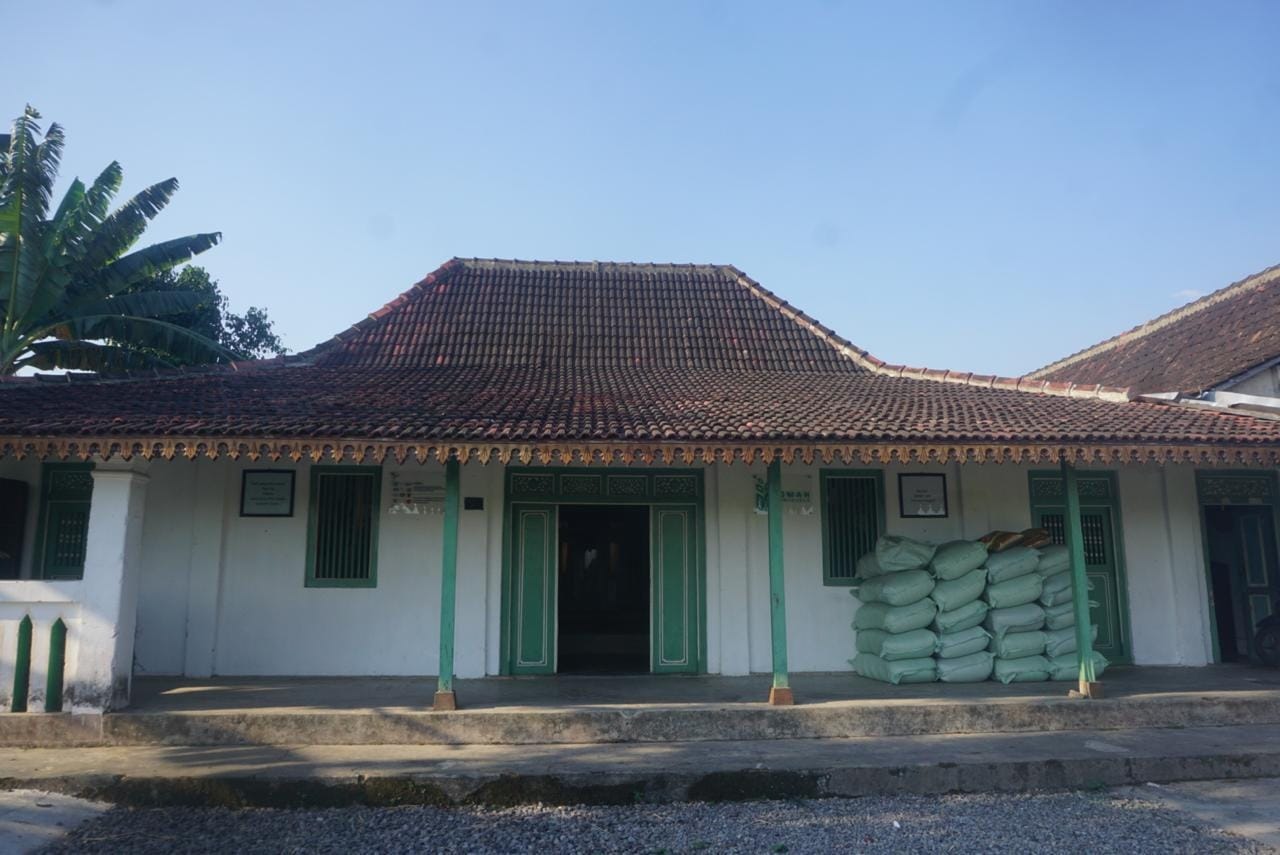
Sanggar Rojolele also serves as an educational medium, recalling Delanggu’s legacy as a producer of premium rice. The organization hosts cultural events and educational tours where visitors step directly into the paddy fields to learn about soil cultivation and pest management. Their headquarters—a traditional joglo house—exerts historical charm, displaying teakwood plows (luku) once pulled by buffaloes and annotated displays of Rojolele rice stalks.
Today, Eksan farms one hectare of Rojolele paddy. He and other members of the farmer group are gradually phasing out chemical fertilizers. Working collectively allows farmers to gain stronger bargaining power when selling their yields. Unhusked dry paddy currently sells for Rp7,500 to Rp8,500 per kilogram, while milled rice fetches Rp17,000 per kilogram. A one-hectare plot yields an average of 6 tons. In Delanggu Village, the farmers group manages a combined total of 20 hectares across the village.
Historically, Rojolele rice was primarily consumed locally, with the Klaten Regency Government once mandating civil servants to purchase it to support local growers.
The farmer group organized by Eksan collaborates with rice mill entrepreneurs through a partnership scheme. The millers supply Rojolele seeds and solid organic fertilizer to the farmers. Eksan hopes that Sanggar Rojolele will continue to mobilize farmers, empowering them to achieve self-reliance and sovereignty over their land.
“So that Rojolele rice doesn't end up as just a name and a distant memory,” Eksan said.