Women Guardians of Food Sovereignty
By Shinta Maharani
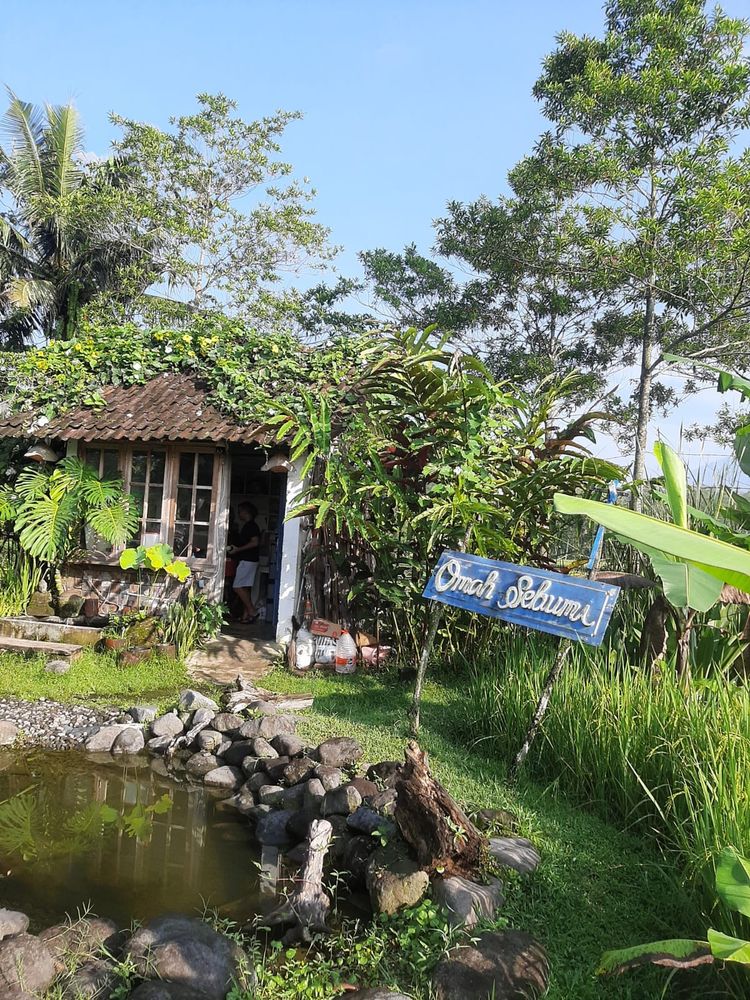
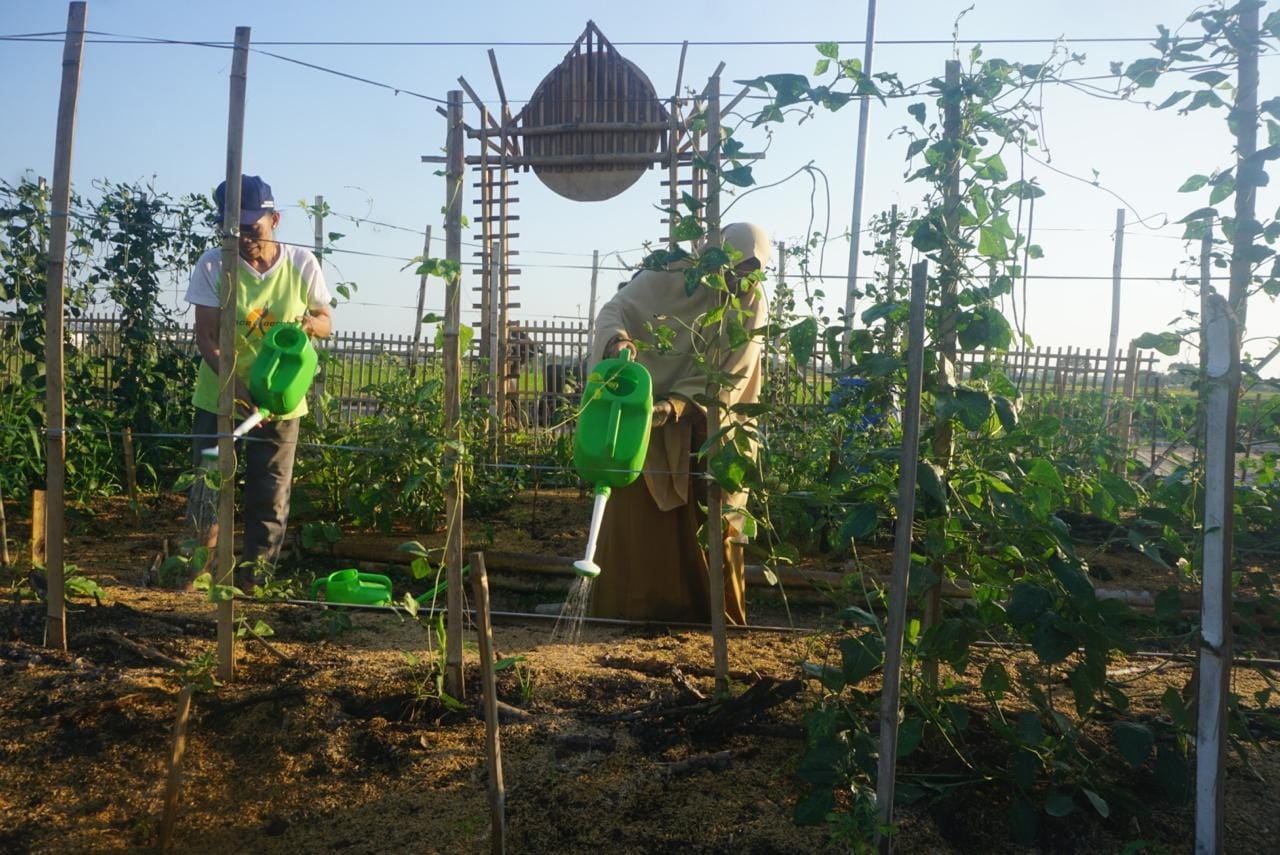
A GROUP of women was busy watering a vegetable garden in Kaibon Hamlet, Delanggu, Klaten, Central Java, on Saturday, August 29, 2026. Long beans, spinach, water spinach, mustard greens, and chilies grew lushly across the 500-square-meter plot. A bamboo-walled stall operated by the Women Farmers Group (KWT), which opens every Sunday morning, stood right inside the garden. The women set up a chalkboard listing prices for agricultural commodities and products, including Rojolele rice, spinach chips, cassava leaf chips, and chips made from banana stems.
Established in May 2026, the garden occupies a plot of land that had laid dormant under thick overgrown brush for over a decade. A total of 38 women from the KWT—mostly local housewives—grow organic vegetables to ensure healthy food access for their families and supplement their household income. The initiative spares them from spending money on store-bought greens. Whenever there is a surplus, the produce is sold, with all proceeds channeled into a jointly managed treasury.
The group gathers regularly to deliberate on crop selection, manage funds, and decide which processed goods to feature at their stall.
“The vegetable garden is managed communally based on consensus. This sets us apart from conventional KWT that are usually formed through top-down, hierarchical structures,” said Citra Megasari, a activist from Sanggar Rojolele, when met in Kaibon.
The garden was born out of a collaboration between Sanggar Rojolele, an organization advocating for Delanggu farmers' independence, fair food distribution systems, and sustainable practices, and Britania Sari, a food sovereignty advocate from Ketumbar Workshop. Britania leased the land for a two-year period, while the participating women joined through a community-driven initiative. The group also supplies fresh, healthy harvests to pregnant women, toddlers, and the elderly attending the local integrated health post (posyandu).
Mobilizing the women was no easy feat, Citra noted, as not everyone initially grasped the concept of a collective food sovereignty movement. Maintaining commitment to the agreed watering and maintenance schedules was another hurdle, causing active membership to trim down slightly from 40 to 38.
Shifting their mindset from buying produce to harvesting it directly was equally challenging. During meetings, Citra constantly reminds members to pick whatever vegetables they need for their home cooking without hesitation.
Because the garden has only completed two planting cycles, the group has yet to fully calculate the exact household savings. Nevertheless, the plot has become a living classroom for organic farming. For many of these women—despite coming from farming families—their past exposure was strictly limited to traditional paddy cultivation.
In Delanggu, finding women willing to work the paddy fields has become increasingly rare. While groups of female farmhands were once a common sight during planting seasons, few remain today due to low pay—earning a mere Rp50,000 a day.
Yanti, a member of the group, preferred tending the vegetable garden over field labor because it offers flexible hours. For her, the garden delivers tangible rewards: fresh, chemical-free produce without stretching the family budget. She beamed over the recent long bean harvest, noting that prices had surged from Rp5,000 to Rp14,000 per bundle compared to the previous season.
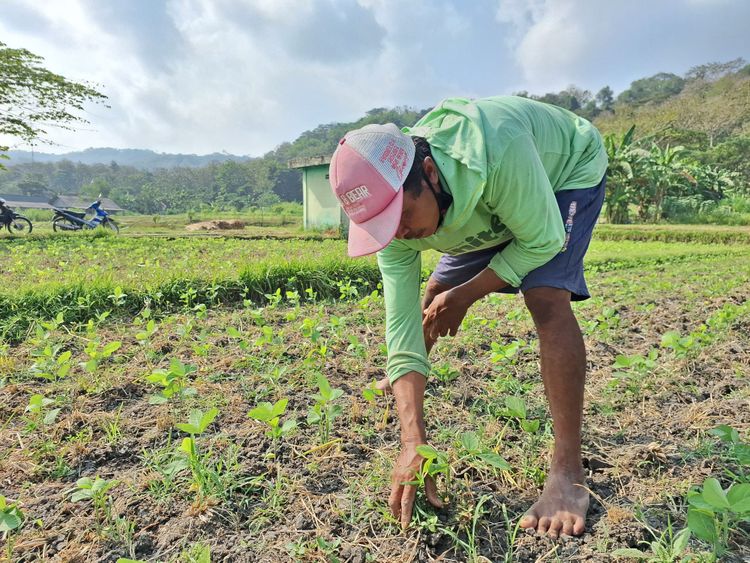
Adjacent to the garden, an intercropping patch features a variety of plants, including Rojolele rice, sorghum, corn, squash, eggplant, peanuts, luffa, green beans, papaya, and watermelon. This organic plot forms part of a family food research project managed by Muksin. Alongside his wife, the young Delanggu farmer tills the land through a shared division of labor: Muksin handles the tilling and heavy digging, while his wife handles watering and fertilization.
The concept stemmed from Ketumbar Workshop founders, Britania Sari and Stephanus Iqbal, who designed the garden to harmonize backyard ecology with daily household nutritional needs.
Muksin, a landless construction worker, was raised by a single mother who put six children through school through farm labor. His experimental plot now serves as a blueprint for household expenditure reduction. According to Muksin's calculations, harvesting his own produce saves his household Rp295,000 per week.
Before managing the plot, Muksin spent money weekly on at least five kilograms of rice, alongside additional costs for vegetables and side dishes. Now, his family harvests fresh produce from a 900-square-meter plot, preparing for their second Rojolele rice harvest this September.
“Vegetables grow quickly and cover our daily kitchen needs. Our savings have multiplied,” Muksin said.