
No Food Left Behind
By Sapto Yunus
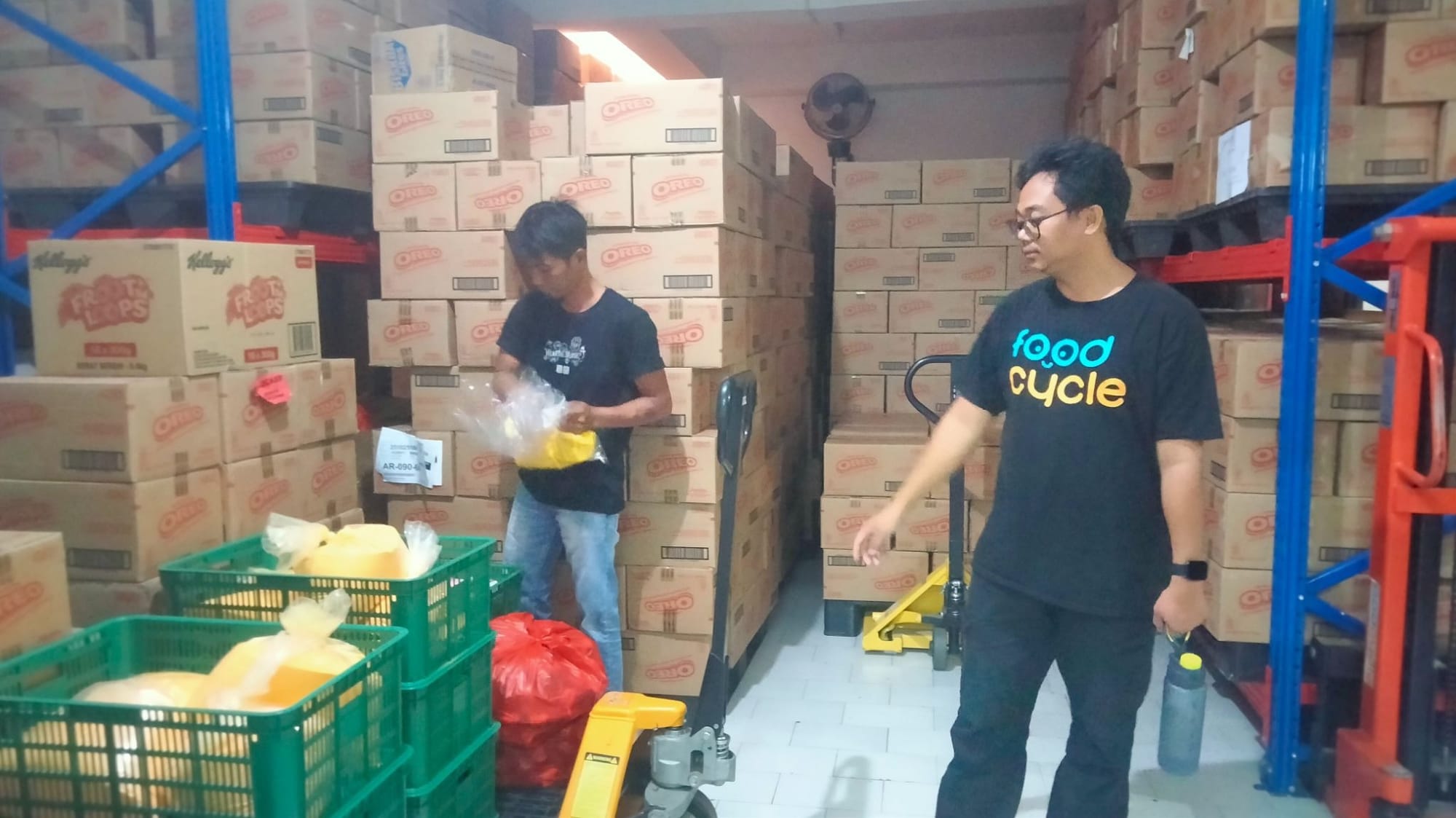
A staff member at FoodCycle Indonesia opened five cardboard boxes that had just arrived at the FoodCycle Hub in Palmeriam, Matraman, East Jakarta, on Friday morning, July 10, 2026. He carefully inspected the products—wrapped in plain aluminum foil packaging—checking both the condition of the containers and the quality of the newly delivered goods.
Once the inspection was complete, he and a colleague repacked the items into cardboard boxes and stored them in the food bank’s central operational warehouse. “This is powdered milk for children from a dairy manufacturer. It’s one form of food donation from an FMCG (fast-moving consumer goods) company,” said Kukuh Napaki, Data Monitoring and Reporting Officer at FoodCycle Indonesia, who oversaw the inspection.
FoodCycle is a non-profit organization operating as a food bank dedicated to breaking the cycle of hunger and minimizing food waste. Throughout its history of collaborating with the FMCG industry, Kukuh explained, the organization typically receives daily consumer staples from various manufacturers, including instant noodles, canned fish, and cooking spices. Most of these items are temporarily stored in the warehouse before being distributed to communities in need.
Kukuh noted that not all donors wish to disclose their identities. Consequently, donated items are often delivered in plain, unbranded packaging—much like the children's powdered milk received that morning.
That morning, inside the 135-square-meter warehouse, various foods and cooking ingredients sat ready for distribution. Dozens of cardboard boxes were filled with biscuits, while others held powdered milk, cereal, cheese powder, and basic food commodity packages (sembako) donated by bank employees. FoodCycle accepts all forms of food and financial assistance, provided the food remains fit for human consumption.
On one side of the warehouse, a cold storage room houses fresh fruits and vegetables. “For food donations requiring cold storage, we have a temperature-controlled room to prevent spoilage. Most of what we store, however, are packaged processed goods,” Kukuh explained.
Adjacent to the warehouse entrance lies a kitchen equipped with cooking appliances. This space is periodically used to process surplus or imperfect produce—which retains its nutritional value—into wholesome meals for orphanages and vulnerable communities. This initiative served as the precursor to their Masak Bareng Berdampak (Impactful Cooking Together) program.
FoodCycle Indonesia was conceived and founded in Jakarta in 2017 by Astrid Paramita and her husband, Herman Andryanto. They were inspired to launch the organization after watching a video about No Food Waste India, an initiative that redistributes surplus wedding food to those in need.
Astrid explained that their motivation stemmed from two starkly contrasting realities coexisting in Indonesia: massive food waste on one hand, and widespread hunger on the other. “The core philosophy isn't just handing out food; it’s about breaking the link between waste and hunger itself. That’s why we named it FoodCycle—there is an inherent cycle to it,” the CEO of FoodCycle Indonesia stated in a written release on Wednesday, July 8, 2026.
She cited 2020 United Nations Environment Programme (UNEP) data showing Indonesia generated approximately 20.94 million metric tons of food waste. This figure is frequently cited as the second-highest globally, although other reports ranked Indonesia fourth that same year, behind China, India, and Nigeria.
Meanwhile, the UNEP Food Waste Index Report 2024 revealed that Indonesia generates roughly 14.73 million tons of food waste annually—the highest in Southeast Asia. Indonesia, Astrid noted, consistently ranks among the world’s top food-wasting nations.
“Ironically, this volume accounts for nearly 9 percent of global greenhouse gas emissions due to decomposition in landfills. This drives the sense of urgency behind FoodCycle’s work,” she added.
Shortly after its inception, FoodCycle launched its debut program, "A Blessing to Share." The initiative was established through a partnership with wedding marketplace Bridestory, which helped market the program to engaged couples and wedding organizers aware of surplus food from receptions.
According to Kukuh, if a couple agreed to donate their reception leftovers, Bridestory notified FoodCycle of the wedding schedule. Bridestory would then reach out to FoodCycle during the event if surplus food was available. “It was strictly on-call, per event. Only when there was a surplus would we head out,” he recalled.
After verifying the condition and quality of the food, FoodCycle distributed it to underprivileged communities across Jakarta. Some portions were delivered immediately after the event, while others were stored in freezers to be recooked and served the following morning.
Initially, Kukuh said, Astrid and her husband managed all the operations themselves. Over time, more partner organizations joined to assist in distribution. As the program expanded, they coined the term "food rescue" to describe all efforts aimed at saving food from going to waste. FoodCycle eventually expanded its reach beyond weddings to include birthday parties and Iftar gatherings.
The collaboration with Bridestory stalled when the COVID-19 pandemic hit Indonesia in early 2020. Strict social restrictions prevented gatherings in hotels, venues, and public spaces. “There were isolated cases—we maintained contact with wedding organizers who had worked with us before—but after that, activity dropped significantly,” said Kukuh, who joined FoodCycle in 2020.
FoodCycle—now a member of the international network The Global Foodbanking Network—does not limit itself to prepared meals from weddings, hotels, restaurants, cafes (Horeca), or corporate lunches. It also accepts raw ingredients and packaged goods from FMCG companies, bakeries, and supermarkets. Prepared meals are immediately delivered to front-line organizations (FLOs) due to their short shelf life, while packaged items with longer shelf lives are managed through the central warehouse before distribution.
Kukuh explained that FLOs serve as crucial partners because FoodCycle operates with a modest team of just 22 staff members, who coordinate the rescue of roughly 250 to 300 tons of food annually. “Our fleet is limited, so we cannot reach every region, remote area, or city on our own,” he said.
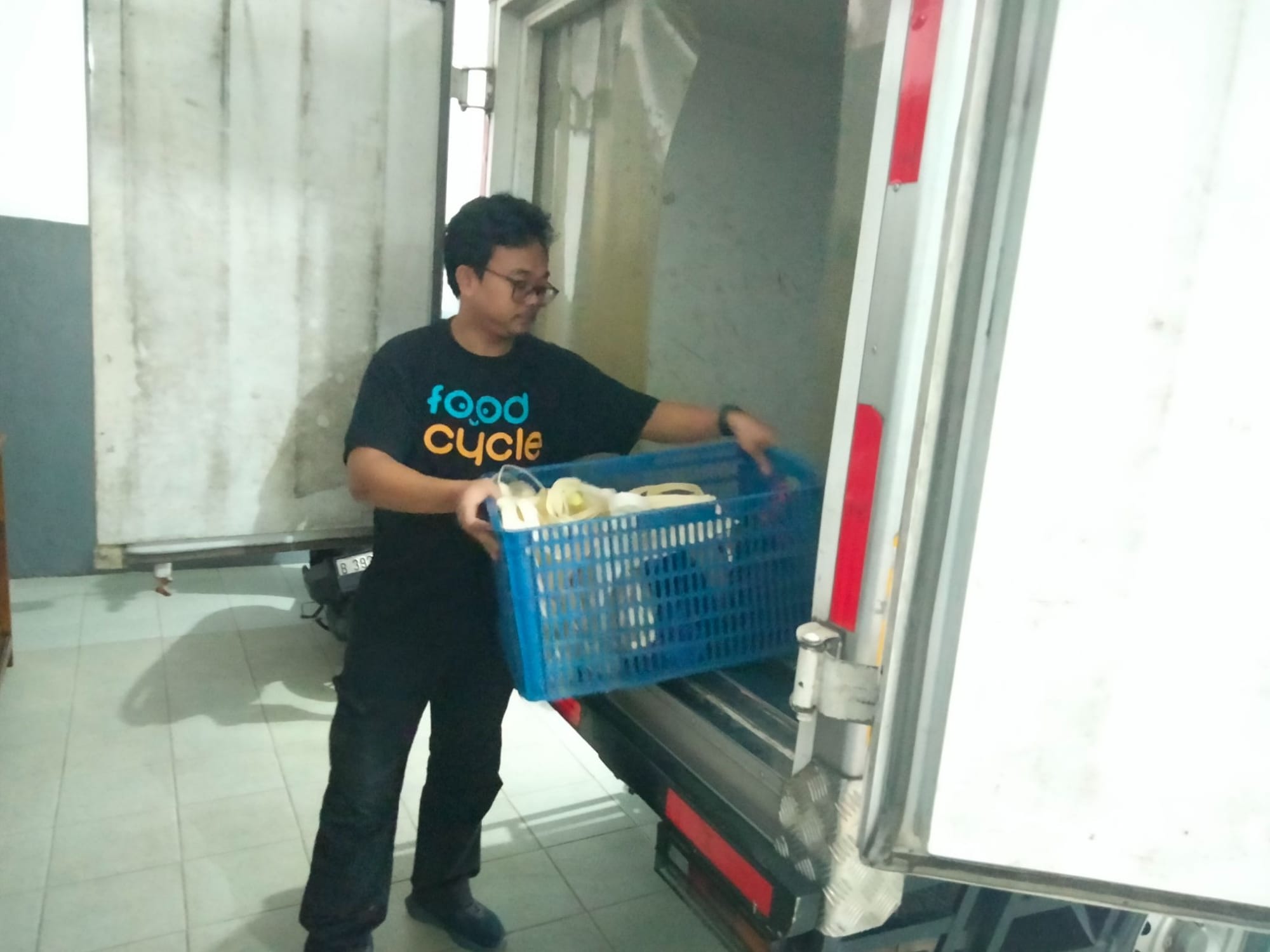
The source of food varies widely—from catering leftovers and bakery goods to near-expiry FMCG products, hotel buffets, and surplus items from supermarkets. “Currently, we partner with over 120 donors, including bakeries, FMCG firms, and supermarkets,” Astrid said.
On the beneficiary side, Astrid noted that FoodCycle regularly distributes food to more than 300 FLOs and community groups, ranging from orphanages and nursing homes to refugee communities, interfaith organizations, and shelters for street children.
FoodCycle enforces strict criteria. For donors, the food’s origin must be traceable and safe according to food safety standards set by the UN Food and Agriculture Organization (FAO). For beneficiaries, priority is given to verified FLOs with direct access to underprivileged groups and accountable distribution systems to ensure prompt, targeted delivery.
All food is acquired free of charge from partners. However, operational costs remain, including transportation, courier services, packaging, and vehicle fuel. “That is the core of our food bank model. But we also purchase food when necessary for programs requiring supplemental ingredients,” Astrid said.
During the COVID-19 pandemic, she added, FoodCycle received substantial cash donations, which were used to buy basic food packages for affected residents and support operations, warehouse upkeep, fleet logistics, and personnel.
Astrid explained that FoodCycle operates under three pillars of food rescue. First, redistribute. Safe, untouched food is directly distributed to beneficiaries. For consumable items, they use the term "surplus food" rather than waste or leftovers.
Second, reprocess. Imperfect or raw ingredients that remain nutrient-rich and safe are transformed into fresh meals.
Third, recycle. Inedible food waste is converted into compost or animal feed via FoodCycle Farm, the organization's agricultural division. Inedible items are classified as actual waste and processed using bioconversion and natural composting techniques. Proceeds from FoodCycle Farm are reinvested into sustaining their programs.
Astrid noted that food sorting is handled by operational staff and volunteers following standard food safety protocols. They inspect physical appearance, packaging, expiry dates, texture, smell, color, and taste prior to redistribution. For technical food safety and nutrition evaluations, they collaborate with experts, leveraging guidelines from The Global Foodbanking Network.
Kukuh added that FoodCycle operates beyond Greater Jakarta (Jabodetabek), partnering with local networks in major cities such as Yogyakarta, Solo, Surabaya, Bandung, Denpasar, Medan, Lampung, Palembang, and Makassar. Because manufacturers hold facilities across the country, local partnerships are key. “We don’t need to send teams from Jakarta to collect food. We simply connect with local FLOs who share our mission and already have beneficiary rosters,” he explained.
Food factories usually donate products close to their expiration dates or visually rejected items with imperfect packaging whose contents remain safe to consume.
FoodCycle also accepts agricultural surplus, partnering with farmers in Lembang and Garut, West Java, to salvage unharvested or unsold produce. According to Kukuh, farmers often let crops rot in the fields if harvesting costs exceed market prices for sub-standard yields.
In such cases, farmers donate the crops to FoodCycle, which covers harvest, transportation, and delivery costs. A single harvest can yield anywhere from 500 kilograms to a ton of produce. “We call this program 'Agriculture Recovery'—rescuing food directly from the farming sector, where conditions often create waste,” Kukuh said.
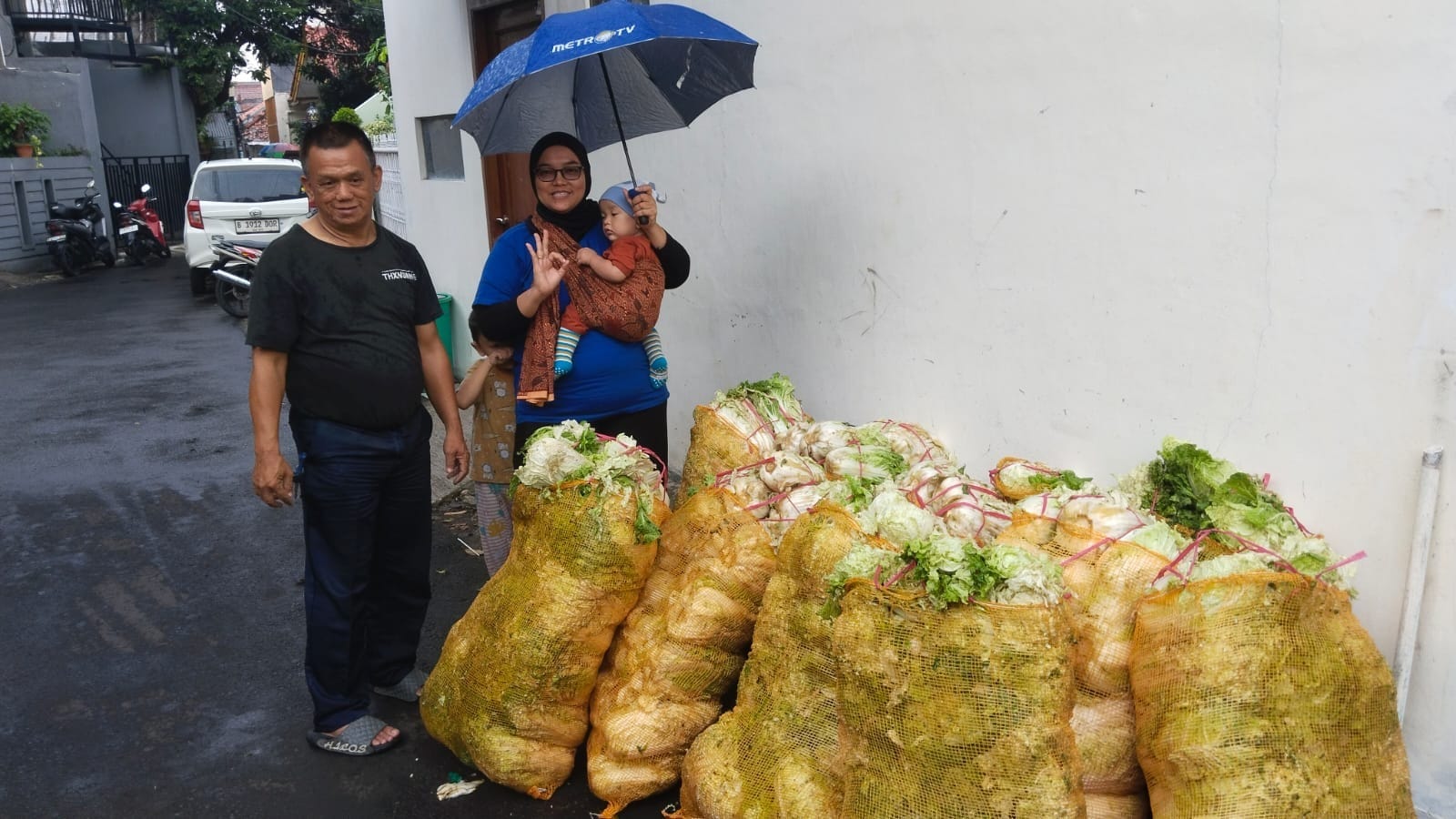
FoodCycle also collects sorted produce. When farmers sort vegetables to meet strict buyer size requirements, the rejected yet edible portions are typically discarded.
According to Astrid, like many non-profits, FoodCycle has faced resource constraints—budget, talent, and technology—from the beginning. Early on, a tiny team managed all operations, which worked for small campaigns but proved challenging for larger projects requiring multi-partner coordination. “This prompted us to launch fundraising drives and volunteer programs to support our operations,” she said.
Another challenge is logistics and timing. Prepared meals have a very narrow window before spoilage, making precise coordination with distribution partners and FLOs essential.
The most memorable period for Astrid came during the Covid-19 pandemic. They opened their warehouse just as the outbreak began, forcing them to pivot into emergency food relief for healthcare workers and vulnerable residents while launching Semangat Pagi Indonesia, a breakfast program for underprivileged children. “Since then, disaster response has become an ongoing part of our work, as emergencies extend far beyond Covid-19,” she said.
One beneficiary of FoodCycle Indonesia’s initiatives is the Solidaritas Jaga Ojol Community (SJOC). Based in Jakarta and Bandung, the community was established in 2025 and consists of around 50 ride-hailing driver members from various platforms.
SJOC founder Pipit Pitriasih shared that her community became a partner of FoodCycle in September 2025. She first met Astrid Paramita in 2023 through crowdfunding platform Kitabisa.com while active with another group. “At the time, FoodCycle wanted to collaborate with ride-hailing driver communities, but it was only realized in September 2025,” she said via a messaging app on Wednesday, July 15, 2026.
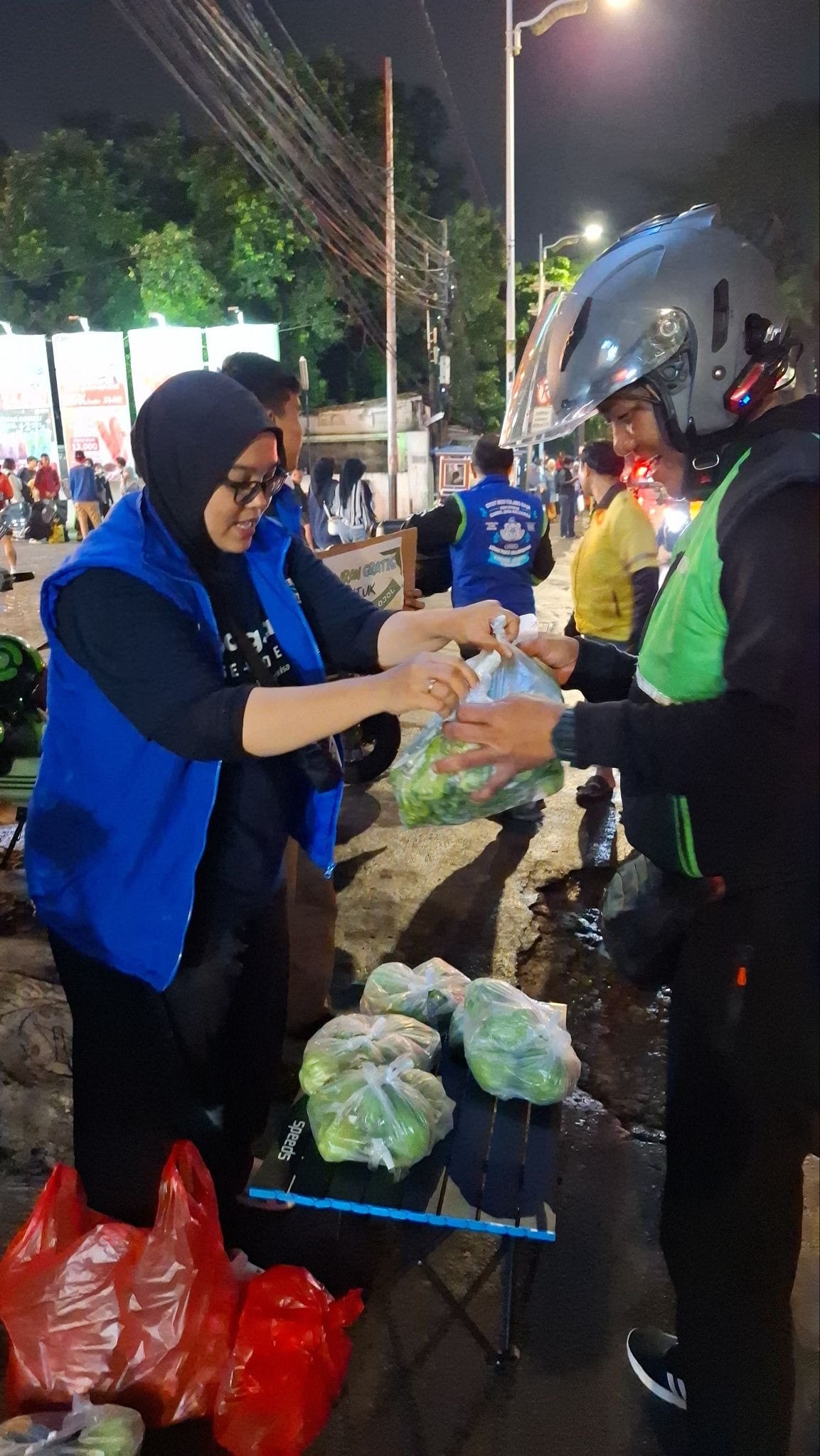
SJOC has received food and ingredient aid from FoodCycle, including vegetables (chayote, mustard greens), biscuits, snacks, and bread. During the recent Ramadan, they also received takjil (fast-breaking snacks) and cooked meals. “Distribution mostly happens on the streets, handed directly to passing drivers or pedestrians,” the 40-year-old said.
Before sending produce or snacks, FoodCycle checks whether SJOC can accept them. According to Pipit, SJOC has never turned down an offer.
On average, SJOC receives food aid 5 to 8 times a week in varying quantities. “Bread is the most frequent item—we get it every week. We even asked if more snack donations were available, as more driver communities want to join our sharing activities using FoodCycle’s donations,” Pipit noted.
Pipit emphasized that SJOC serves as both a beneficiary and a distribution partner. Although her core team consists of about 50 drivers, she recruits additional drivers from her network when larger distribution drives require extra hands.
FoodCycle's support helps ease drivers' daily meal expenses, allowing them to take home more earnings for their families. “It has been immensely helpful, creating a widespread positive impact through this partnership,” she said.