Profiting from Toek Cultivation
Febrianti
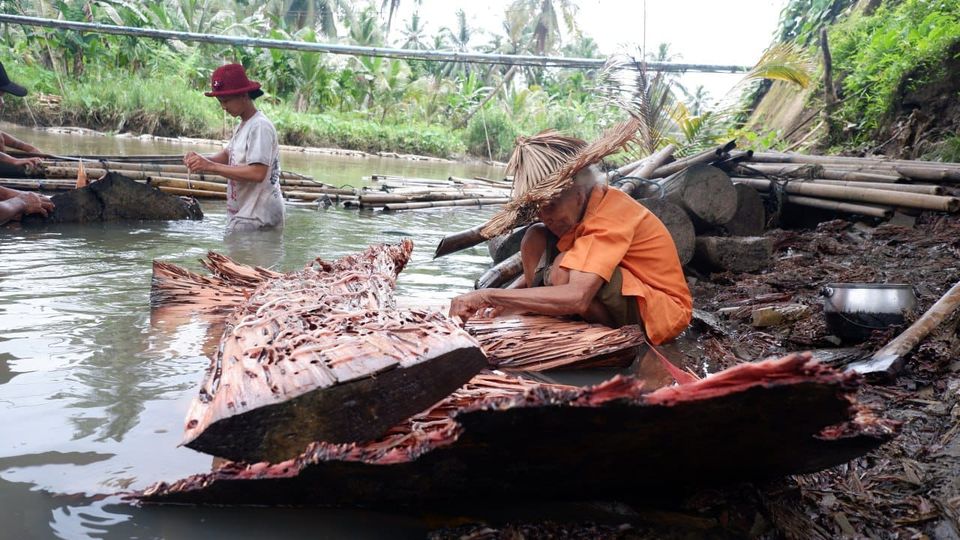
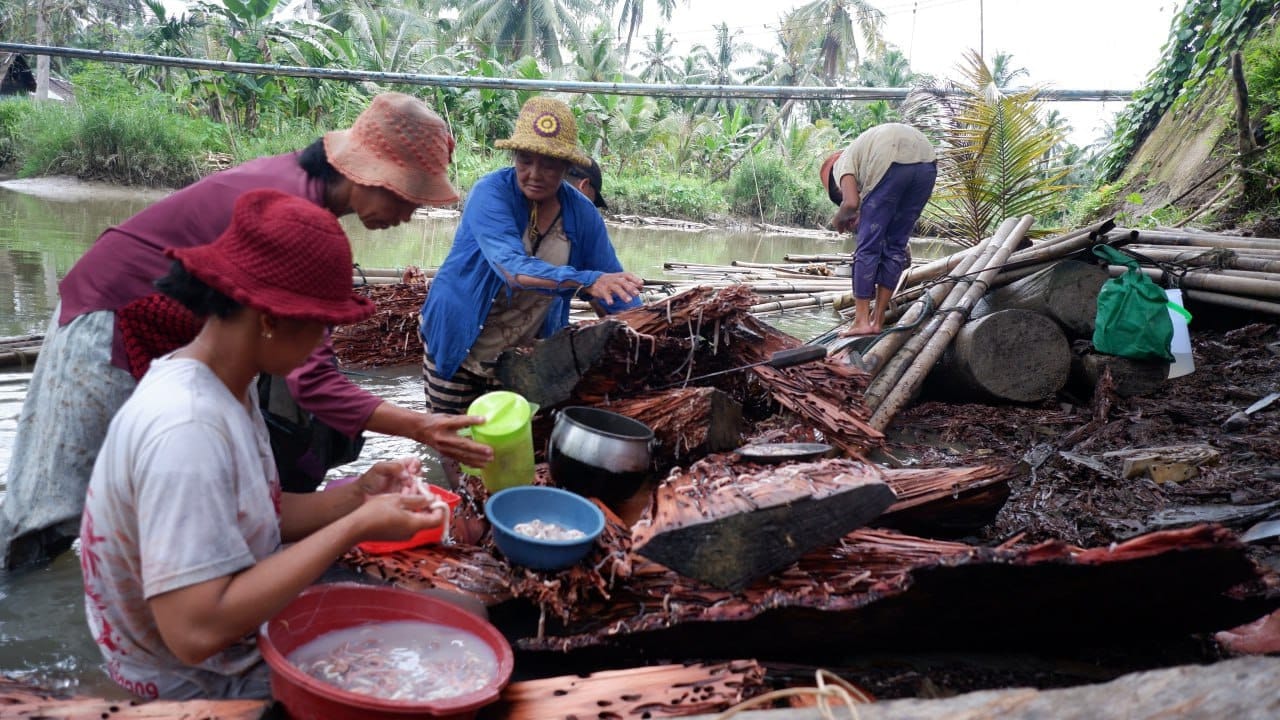
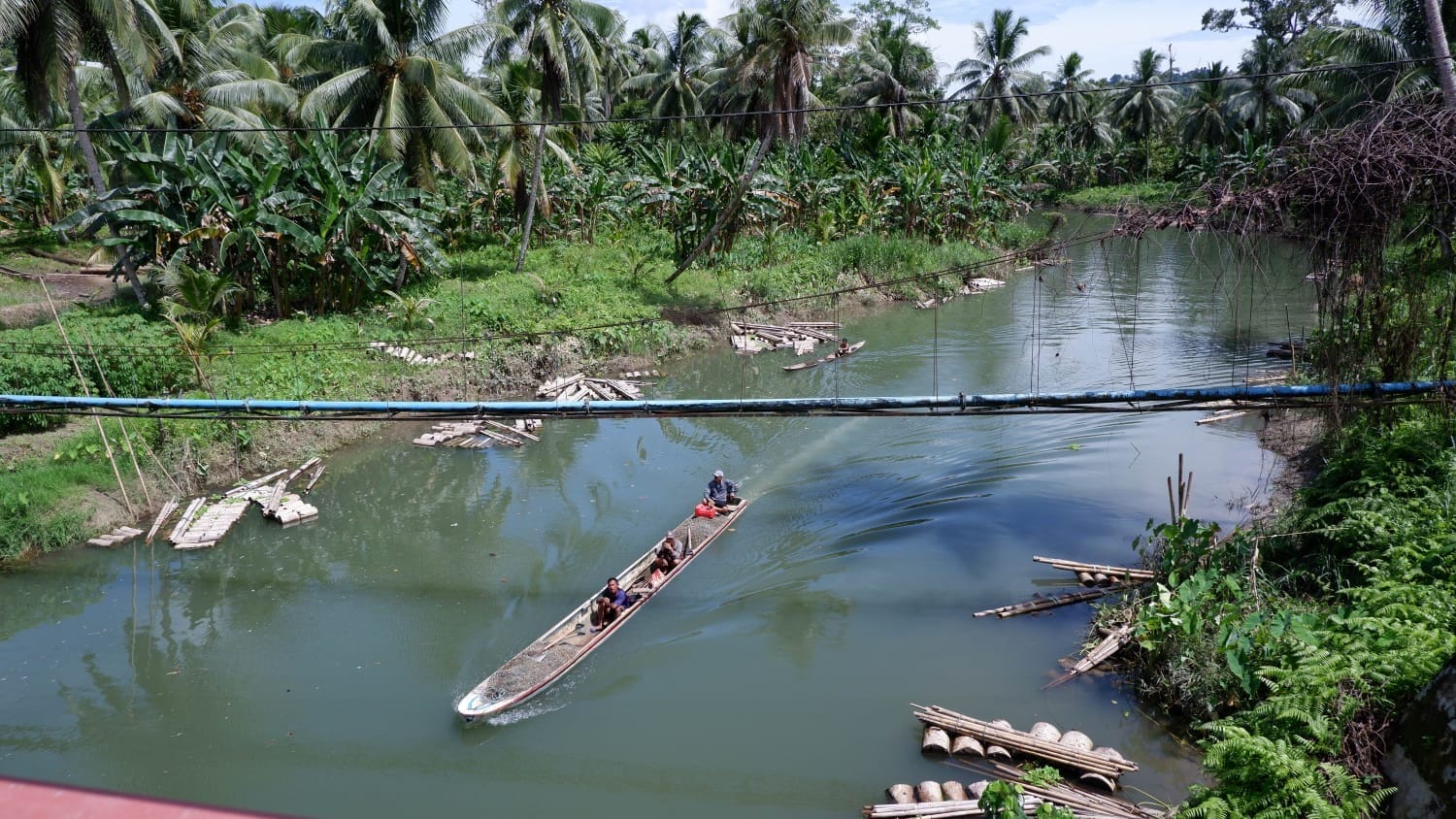
On a Sunday after church, Rita Maspita and a few of her neighbors gather along the riverbank beneath the Saureinu Bridge in Saureinu Village, South Sipora, Mentawai Islands. Submerged along the river’s edge, a dozen logs lie lined up in the water. These wooden logs serve as nests for toek, which are ready for harvest today.
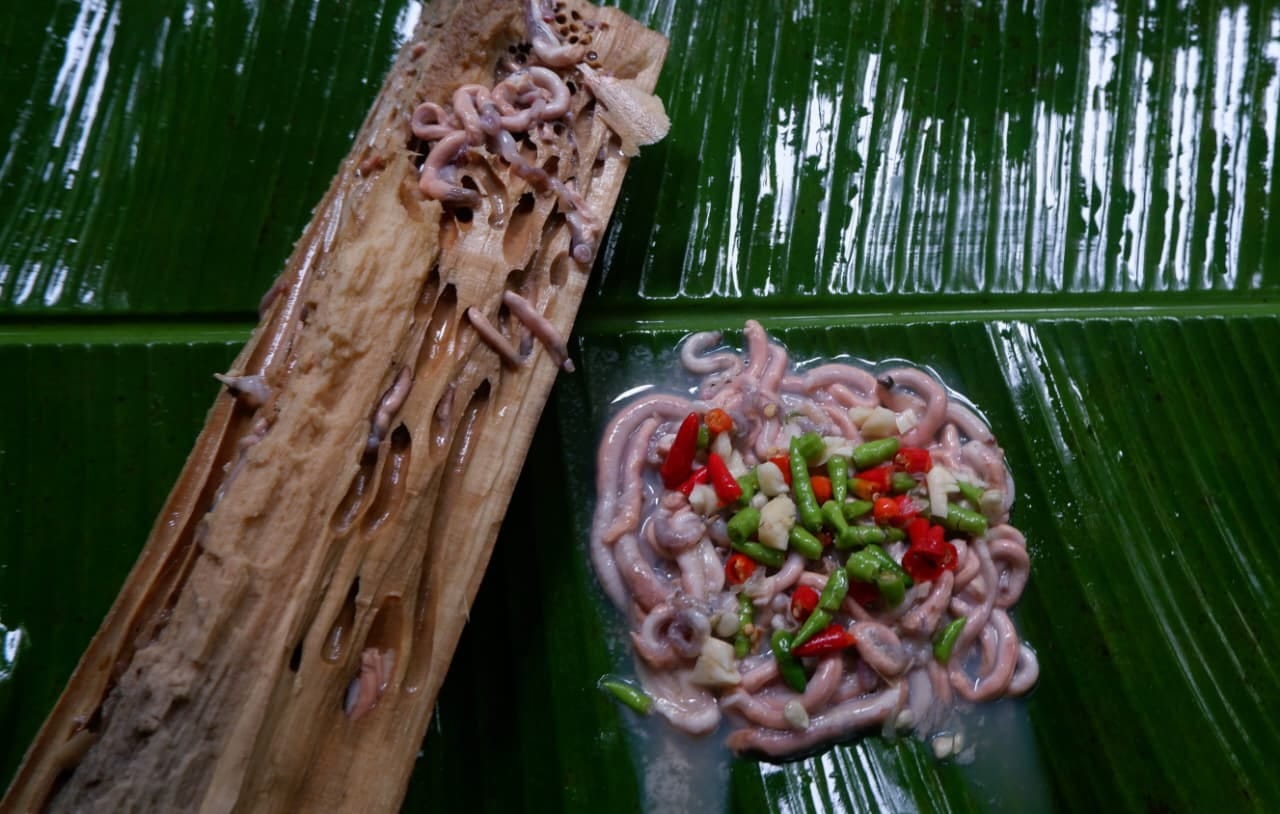
Toek (Bactronophorus sp.) are a species of worm-like mollusk. Belonging to the bivalve class, these creatures typically inhabit dead wood in brackish river waters. The largest toek reaches the size of a pinky finger and measures about 30 centimeters in length. They have soft, translucent white bodies rich in fat and are a local delicacy among residents.
On that Sunday, July 19, 2026, the 37-year-old Rita waded into waist-deep water. She checked her harvest by flipping the bundled logs over and tapping their surfaces with a machete. Air bubbles surfaced from small holes in the dark, slippery bark. From several openings, the white tails of the toek (Teredo navalis) wriggled outward.
Rita untied the ropes binding two round logs and dragged one toward the shore. Grasping an axe, she split the log in a single swing. Hanging inside were white, soft toek, occupying a labyrinth of hollow channels within the wood.
She pulled a single toek from the log, cleaned it, and prepared to eat it.
"Try one, toek tastes best while your feet are still submerged in the river," Rita said, offering a piece of log containing the mollusks alongside a small plastic container filled with sliced bird's eye chilies, shallots, citrus juice, and salt for seasoning.
I pulled a plump, white toek from the wood and dipped it into the dressing. It tasted fresh, similar to raw squid.
That day, Rita was pleased with her harvest. "Selling toek helps cover family expenses, or we can use the money to buy personal items like clothes and powder," she said.
Nearby, other women were busy harvesting their own logs, occasionally pausing to eat their catch dipped in lime juice, chili, and boiled taro. The scene felt almost like a riverside picnic.
According to Rita, for the women of Saureinu, toek is like a savings account submerged underwater.
"Only daughters are taught by their mothers how to raise toek," she said.
She does not know when the tradition of toek farming began in Saureinu, nor who started it.
"When I was little, my mother fed me toek because it was a common side dish," Rita explained.
It was her mother who taught her how to farm them. As a child, she accompanied her mother and grandmother to the riverbank to watch them construct the nests. As a teenager, she began joining them on trips into the forest to gather timber for the logs.
Creating a toek nest requires hard labor. It begins with collecting wood in the forest, cutting it down, rolling it to the river, and binding it using nails and rope before submerging it.
"We only hire men to fell and slice the timber using a chainsaw," Rita said.
The most common trees used for nests are bak-bak and tumung. Once felled, the wood is sliced into lengths of 50 to 80 centimeters, yielding a dozen or so logs per tree. The logs are left to dry for two weeks until the sap drains. Afterwards, they are rolled to the river's edge, bound together with nails and rope, and left submerged in the water for months.
Typically, within three to eight months, the toek will nest inside. There is only one requirement: the river must receive high tides from the sea. In pure freshwater rivers, toek will not grow. Consequently, no one farms toek upstream. Cultivation is strictly limited to coastal villages.
Beyond personal consumption, the harvest is also sold. Rita typically sells toek cleaned and packed in plastic bags. She simply opens her smartphone, snaps a photo of the packaged product, and posts an update to her Facebook page.
"Toek available in the Saureinu area this afternoon at Rp20,000 per pack. Message me if interested," Rita writes on her profile.
Before long, buyers get in touch. "They come directly to my house to pick it up," Rita said.
In a single day, her earnings from toek range from Rp200,000 to Rp300,000.
"When I was younger, I worked as a radio announcer making Rp800,000 a month. Earning money from toek feels far more lucrative now. I can even save a portion of it," Rita said with a wide smile.
Another Saureinu resident, Mirawati, said she began cultivating toek along the Saureinu River when she was 17. Unemployed at the time, her mother invited her to join the business.
"The first time I earned money from toek , I felt so happy. I immediately used it to buy sugar and daily necessities," the 38-year-old said.
Today, she earns an average of Rp300,000 a day, which she uses to save and pay for her child's schooling.
Harvesting toek, however, is not without its setbacks. At times, floods wipe out the women's hopes for high income.
"During a flood, toek cannot be harvested because they absorb the river water, turning a reddish and muddy brown color. They taste like dirt and become thin instead of plump and white," Mirawati said. "Nobody wants to buy them then."
Severe flooding can also sweep the submerged logs straight out to sea.
According to Mirawati, extensive deforestation along the upper reaches of the Saureinu River is a primary driver of these floods, alongside heavy rainfall.
"Logging upstream should be stopped because it severely disrupts our toek farming. The flooding reaches my house as well," Mirawati said.
Saureinu Village Head Tirjelius Taikatubutoinan acknowledged that large-scale land clearing upstream two years ago—conducted by a timber company—had a direct impact on the women's livelihoods.
"As a result of logging, the Saureinu River turns muddy during floods because the headwaters are damaged. This logging threatens toek cultivation as a local food source," he said.
Tirjelius argued that local and central authorities should revoke large-scale logging permits on Sipora Island.
Flooding severely affects both a critical protein source and a vital economic driver for the community. Out of 425 families in Saureinu Village, roughly 150 farm toek along the river.
"Saureinu has long been known as a producer of toek. Every family living near the river has women who cultivate it," Tirjelius said. "Toek in Saureinu has become a mainstay for local food security and female income."
Harfiandri Damanhuri, a fisheries expert from Bung Hatta University in Padang, noted that toek are elsewhere known in Indonesia as kepang or tembelo. The creatures are notorious for boring into and damaging wooden vessels at sea.
Toek nest in dead wood submerged in seawater, mangrove areas, and brackish rivers. They inhabit the wood, feeding on it and breeding inside their burrows.
"Toek contains high levels of protein and are traditionally consumed by indigenous communities, not only in Mentawai, but also in Papua, Kalimantan, Sulawesi, and the Philippines," Harfiandri said.
The mollusks depend heavily on clean water to thrive. In addition to wood, toek consume microalgae carried into their nests by water currents. Harfiandri stressed that forest conservation is essential to protecting toek farming.
"If the forest disappears, the catchment area is lost. Water rushes straight into the river carrying sediment, disrupting the toek because they absorb the river water," he explained.
When rivers flood frequently and grow murky, Harfiandri added, sedimentation prevents toek larvae from surviving and growing in the water.