Post-Disaster Water Crisis in Aceh: Technical Hurdles Impose a Double Burden on Women

By Nanda Savira Ersa
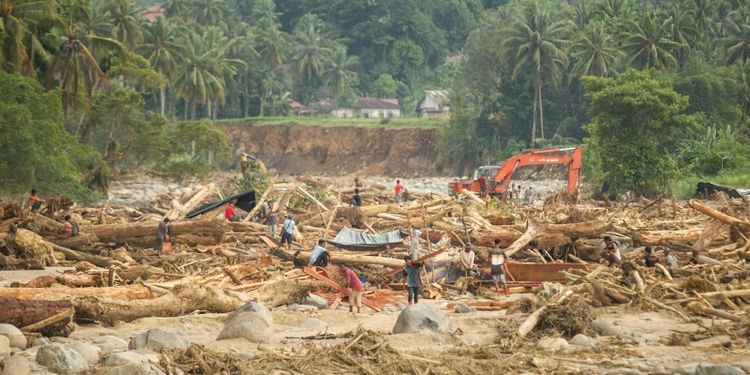
THE flash floods that swept across various regions of Aceh in November 2025 left widespread physical destruction in their wake: collapsed bridges, washed-away homes, submerged roads, and thousands of residents displaced into emergency shelter tents.
Yet, behind the visible ruins lies a silent but deadly crisis: the collapse of clean water supply systems and the loss of access to safe drinking water.
Research we conducted following the flash floods in rural Acehnese villages reveals that the clean water crisis stands as one of the most severe challenges during the post-disaster recovery phase. And once again, women are bearing the brunt of the burden.
According to our findings, post-disaster water often appears clear and odorless. However, its quality is dangerously low—contaminated with bacteria, sediment, organic matter, and heavy metals—making it unsafe for household use.
As a result, many women—who serve as the primary water providers for their households—struggle to secure safe water following the disaster.
Clear Water Is Not Always Safe
IN-SITU Total Dissolved Solids (TDS) measurements conducted during our research in January 2026 recorded TDS levels in raw post-disaster water reaching 291 mg/L.
Consuming or storing water under these conditions without scientifically tested treatment runs the risk of accelerating the spread of waterborne diseases, such as acute diarrhea and skin infections.
These risks escalate when water is stored in unhygienic emergency containers or kept over extended periods.
Without adequate treatment, communities are forced to rely on poor-quality water long after the disaster strikes. Consequently, the success of water relief efforts should not be measured merely by availability, but by guaranteed quality and safety.
Women Bear the Heaviest Burden
THE post-disaster water crisis presents a stark reality of climate injustice through a gendered lens.
In many rural areas across Aceh, women hold the primary responsibility for managing domestic needs, including securing water for their families.
In our study, 78 percent of women who serve as household water providers reported difficulties obtaining clean water after the disaster.
When access to clean water is disrupted, women are the first forced to find solutions. They must trek longer distances to fetch water, stand in long lines at aid distribution points, or spend hours purifying murky water to make it safe for their families to consume.
As a result, women's domestic workloads have surged significantly. Time that should be spent resting, recovering psychologically from the tragedy, or participating in community rebuilding efforts is instead consumed by meeting basic survival needs.
This phenomenon triggers a state known as “time poverty”—a condition where the vast majority of an individual's productive time is drained by basic survival tasks.
Consequently, women lose the opportunity to heal from psychological trauma, relieve mental stress, or participate in village recovery decision-making forums.
In the post-disaster context, time poverty highlights how the impacts of a water crisis are disproportionately distributed among community members.
Survey response data we gathered indicate that the most severely affected group comprises homemakers and low-income female farmers. This group stands on the frontlines, directly enduring the collapse of clean water infrastructure.
Inclusive Technological Innovations
OUR findings demonstrate that providing safe post-disaster water cannot be viewed merely as a technical problem. Water access is intrinsically linked to reducing women’s unpaid labor and building community resilience against future disasters.
In remote and hard-to-reach villages, relying solely on centralized water system repairs during recovery is impractical.
Therefore, we propose a solution using Rapid Mobile Water Purification units capable of reaching isolated disaster-affected areas.
This technology combines physical and chemical processes—including Ultrafiltration (UF) and Reverse Osmosis (RO) membranes to reduce turbidity, alongside UV disinfection to neutralize microbiological contamination. The automated units feature self-cleaning back-wash capabilities, directly alleviating the physical burden placed on women to process water. Because these mobile units can be deployed close to communities, they significantly ease the travel distance and effort required for women to provide water for their households.
Amid the rising frequency of climate-driven disasters, water security must no longer be defined solely as an infrastructure challenge, but as a matter of social justice. Ultimately, those who suffer the deepest impacts are often the least visible in decision-making processes: women.
Nanda Savira Ersa is an Environmental Engineering lecturer at Malikussaleh University
This article was produced in a collaboration between academic experts, CommsLab, and The Conversation Indonesia as part of a science dissemination initiative, and originally published in The Conversation on June 9, 2026.