
Rethinking Conservation: Empowering Local Economies for Aceh’s Forest Recovery
By Cut Maila Hanum
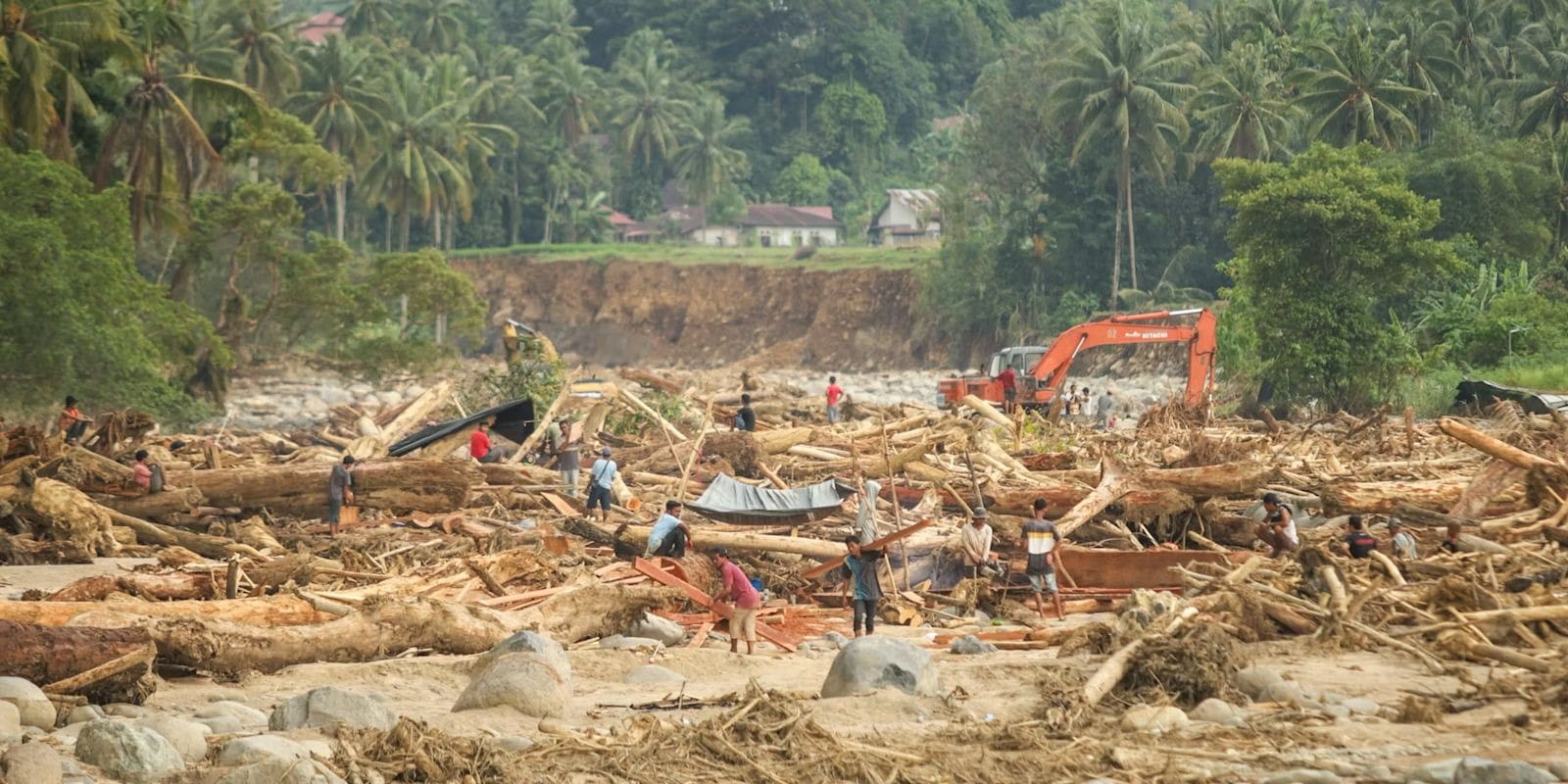
FLASH floods and landslides in Aceh late last year devastated the areas surrounding the Lingga Isaq conservation forest in Central Aceh. One of the hardest-hit regions was the Wihni Dusun Jamat, Central Aceh.
Hundreds of hectares of rice fields and coffee plantations—the economic lifeblood of local residents, accounting for up to 52.57 percent of household income—were buried under landslide debris and boulders or washed away by rushing waters.
Destroyed roads and bridges isolated the sub-district entirely. Residents could not produce rice because a lack of fuel left rice-milling machines inoperable.
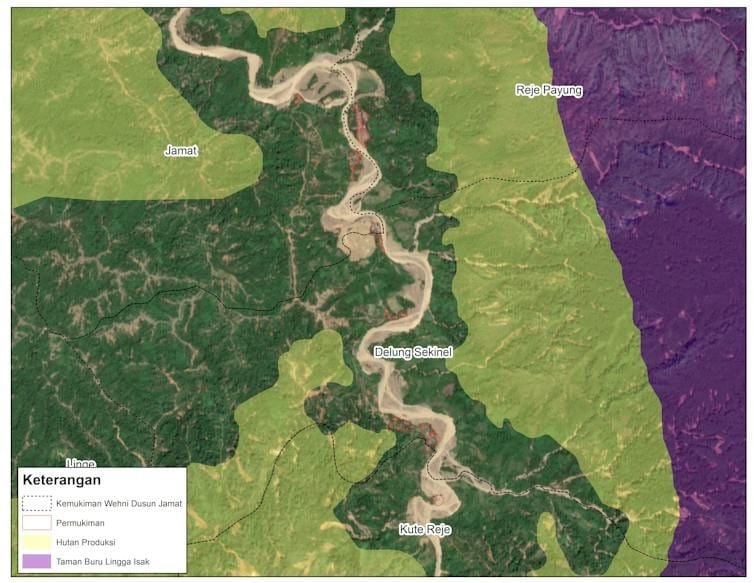
In the buffer landscape of the Lingga Isaq conservation area, the severity of the disaster was driven by more than just natural events like Cyclone Senyar. As a forestry researcher who has studied Lingga Isaq, I believe the primary factor lies in environmental degradation. This deterioration was fueled by a security-based conservation approach that alienated residents from nature preservation.
The Lingga Isaq residential area has now entered its post-disaster recovery phase. In my view, there is no better time than the present to initiate a "conservation reset." The goal is to ensure that environmental preservation genuinely sustains the local economy and prevents recurring disasters in the future.
Why a Conservation Reset Is Needed
THE Lingga Isaq conservation forest in Central Aceh is far more than an 86,704-hectare expanse dominated by pine stands.
For nearly five decades, this designated "game reserve" (taman buru) has served as the heart of the hydrological cycle for the Leuser Ecosystem Area. It shields four vital watershed headwaters—Jambo Aye, Meurebo, Tripa, and Peusangan—that sustain life all the way to Aceh's coastal regions.
An extraordinary biodiversity thrives within its boundaries. The Lingga Isaq forest is the living space for key species such as the sambar deer (Cervus unicolor), sun bear (Helarctos malayanus), helmeted hornbill (Buceros sp.), as well as critical wildlife like the orangutan and the Sumatran tiger, alongside Aceh's endemic pine trees and Rafflesia acehensis.
Unfortunately, since gaining conservation forest status in 1978, the area has relied on an outdated preservation style: restricted community access and strict policing rather than community partnerships. Consequently, the potential for restorative economics—which prioritizes both community livelihoods and environmental conservation—has never been fully realized because residents live under the constant threat of arrest and criminalization.
Conversely, this exclusionary approach provoked legal violations as residents were forced to encroach on the forest to hunt, farm, and survive. As a result, approximately 90.56 hectares of secondary forest cover (natural forest touched by humans) in Lingga Isaq degraded into scrubland. Mixed garden areas also expanded, overtaking 53.38 hectares of scrubland.
Economic activity also takes place in the buffer zones and areas immediately surrounding the Lingga Isaq conservation forest, right next to residential settlements. However, my research shows that these activities have backfired, endangering both the conservation area and local communities.
For example, monoculture pine farming in production forest zones disrupts slope stability. Based on my spatial analysis, Wehni Dusun Jamat is dominated by extreme topography, with 75 percent of the region featuring steep to very steep slopes exceeding 25 percent inclination.
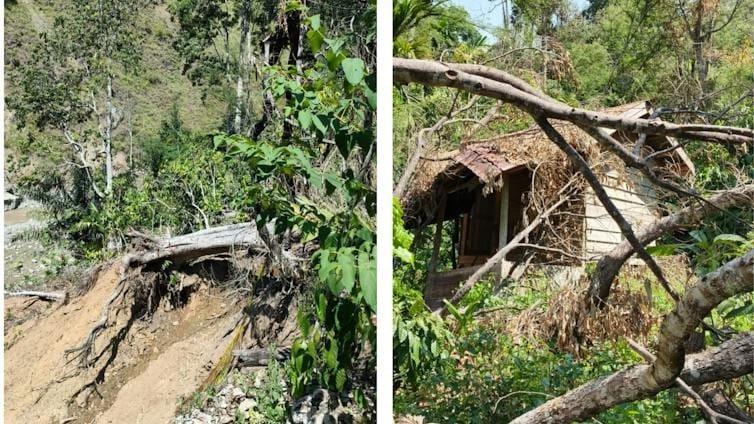
Coffee farming has also begun encroaching directly into the Lingga Isaq conservation zone.
These risks are compounded by gold mining operations within the sub-district, which actively alter the landscape and overtax the environment's carrying capacity.
The combination of extreme slopes, homogeneous vegetation, land-cover changes, and extractive mining activities served as the primary fuel for massive landslides when extreme rainfall struck.
How Should the Lingga Isaq Park Be Managed?
MY findings indicate that current conservation approaches have failed to keep pace with land-use changes on the ground. One of the factors is the lack of integration between area protection policies and the economic needs of local communities.
Thus far, the government has largely permitted residents to practice monoculture coffee farming on steep, landslide-prone slopes. Yet, if the authorities were willing to open forest conservation partnerships with local communities, existing coffee farming could be reinforced through agroforestry or mixed-farming models.
Research proves that coffee is well-suited for agroforestry. To achieve optimal yields, coffee plants require soil nutrients supplied by surrounding vegetation, including native forest trees.
Forest conservation involving local residents has already been implemented in Linge Village (part of the Wehni Dusun Jamat region). There, residents receive mentoring from civil society organizations to cultivate coffee and pine sustainably through social forestry programs.
However, to strengthen forest conservation and restore ecosystems damaged by the disaster, this partnership model needs to be expanded. The government must take the initiative to engage communities in other buffer zones.
Beyond agroforestry, community involvement in preserving the Lingga Isaq forest must include evacuation route planning and emergency aid logistics when disasters strike. Moving forward, conservation management must align ecosystem protection with guarantees of safety and livelihood resilience for local populations.
Momentum for change already exists following the government's removal of the "Game Reserve" designation under the newly revised Law on the Conservation of Biological Natural Resources and Ecosystems.
This evaluation must serve as a catalyst to redefine boundaries and zoning functions based on current forest conditions in collaboration with local communities. The goal is to ensure that every plot of land in Mukim Wehni Dusun Jamat has clear, disaster-mitigation-aligned management protocols.
Cut Maila Hanum is a tropical biodiversity conservation lecturer at the Pante Kulu College of Forestry.
This article was produced in a collaboration between academic experts, CommsLab, and The Conversation Indonesia as part of a science dissemination initiative, and originally published in The Conversation on May 21, 2026.