Sustaining the Healthy Food Market in Yogyakarta
Pito Agustin Rudiana
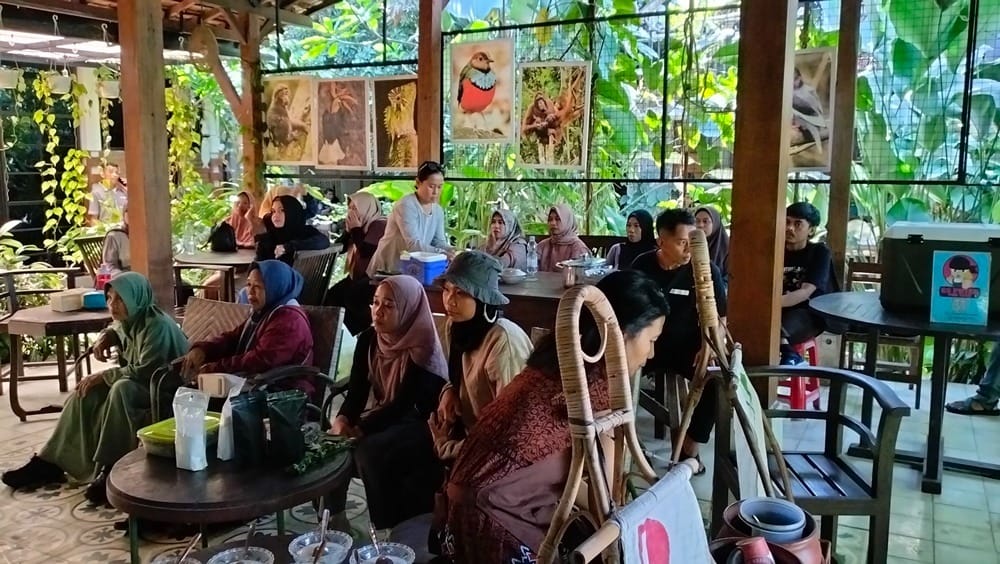
THE wooden joglo building at Animalika Society Space on Jalan Kaliurang Kilometer 9.3, Yogyakarta, was busier than usual. A large bus was parked in the yard of the venue, located in Gondangan Hamlet, Sardonoharjo Village, Ngaglik District, Sleman Regency. The bus brought a group of farmers from the Mendolo Women Farmers Group from Pekalongan Regency, Central Java, visiting the site that hosts a healthy market every Saturday: the Kepayang Healthy Market.
Unsurprisingly, on Saturday, August 29, 2026, from 10am to 2pm, the joglo buzzed with healthy food vendors and visitors from across Yogyakarta, made livelier by the Pekalongan farmers group.
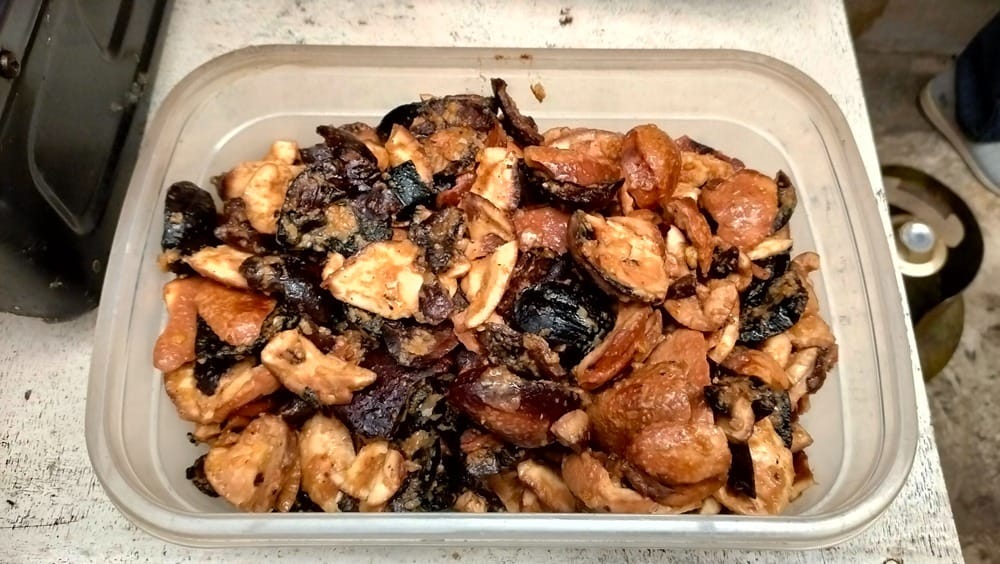
The women farmers did not come empty-handed. They brought various vegetables from their gardens, including kluwek (black nuts), kecombrang (torch ginger), cekokak (turkey berry), gadung (wild yam) tubers, pakis atal, pakis menir, and pakis ukel, as well as keji leaves for urap (seasoned grated coconut salad). They even brought a plate of blibar—processed kluwek served as a side dish—along with packaged gadung flour, gadung crackers, and yam-based pastries.
"We have trouble marketing our products. We came here to learn," said Kusmiri, one of the Mendolo farmers.
They engaged in long discussions with regular vendors at the Kepayang Healthy Market. Among them was Septi, who readily shared her experiences.
Since 2012, Septi and her husband, Budi, have run Karangkitri, a permaculture farm and livestock operation in Cangkringan, Sleman Regency. A variety of food crops thrive on their land. Animal manure from chickens and goats, along with kitchen waste, serves as natural fertilizer.
The harvest primarily satisfies their household needs, with the surplus sold at the Kepayang Healthy Market.
"My selling method isn't modern at all, and that has actually become our signature," Septi said.
For example, if unsold hibiscus flowers remain from her garden, she dries them to make tea, jam, or syrup, which are then sold in simple glass bottles.
"People find it appealing because it's minimally processed," she added.
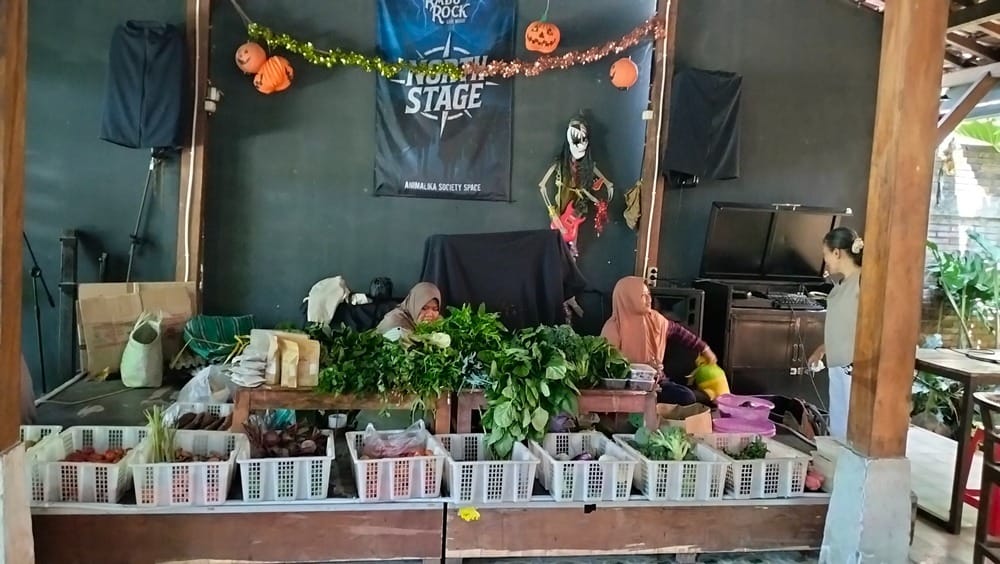
At the market, Septi sets up shop on a long, low stage typically used for live music performances inside the joglo. Leafy green vegetables are displayed on two small tables on stage, while tomatoes, red beets, cucumbers, root vegetables, broccoli, and lemongrass are arranged in white plastic crate baskets.
Wooden round and square tables accompanied by matching benches inside the joglo seat visitors eager to sample foods and drinks, while providing space for vendors to display their goods.
Septi serves both walk-in buyers and customers ordering via online courier services. Due to a ban on single-use plastics, she uses recycled cardboard boxes instead of shopping bags.
Other customers visit her home directly. "Buying straight from us cuts out middlemen, and builds trust," Septi said.
THE name Kepayang is inspired by the local name for the kluwek tree—known as kepayang in western Indonesia or pucung in Java. Although the plant contains cyanide, it can be safely processed into food and culinary spices, such as those used in brongkos beef stew.
"If processed incorrectly, it can make you dizzy or intoxicatingly infatuated (mabuk kepayang). Besides, the name sounds ear-catching," said the owner of Animalika, Ignas Dwi Wardhana.
The market adopted the name in May 2026, though it has operated since 2019. The rebranding replaced its former name, the Kamisan (Thursday) Market, coinciding with its operational shift from Thursdays to Saturdays between 10am and 2pm.
"That shift was driven by customer demand. Thursdays are working days, making it difficult for people to visit," Ignas noted.
It is commonly referred to as a "healthy market" because its vendors relocated from two predecessor markets that have since closed: the Milas Organic Market in Yogyakarta City and the Kamisan Market in Maguwoharjo, Sleman Regency.
Ari Susilowati, 48, a dawet ayu vendor at the Kepayang Healthy Market, began her business at the Maguwoharjo Kamisan Market. Initiated by Janti Wignjopranoto in 2014 on village-owned land, the market sold organic food and ingredients—free of preservatives, commercial manufacturing, or refined white sugar—using coconut oil rather than palm oil for frying.
Over time, local residents expressed interest in joining as sellers, but refused to comply with the health-conscious standards agreed upon by original vendors.
"Eventually, we moved here," recalled Ari, who sells dawet ayu (traditional iced coconut dessert).
Initially, 21 vendors filled the joglo at Animalika. However, the Covid-19 pandemic shifted consumer habits from face-to-face transactions to online purchasing, while some vendors returned to their hometowns. Vendor numbers plummeted from 21 to nine, leaving only six active sellers today.
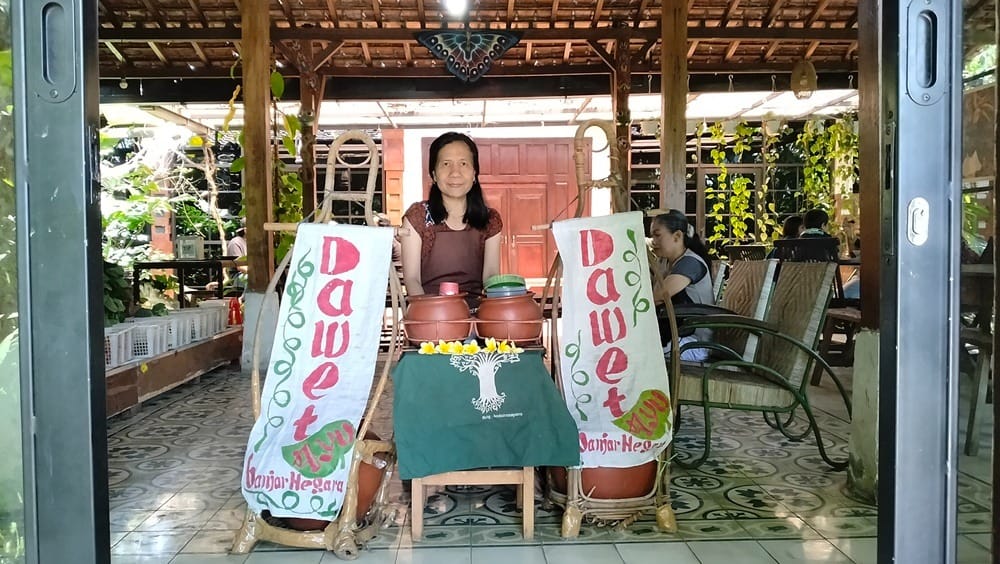
Beside Ari's organic rice-based dawet ayu, current offerings include organic vegetables from Septi and Budi’s garden, honey sold by Andika, and seasonings from Gunawan. Christiawan offers fruit-based es puter (traditional coconut milk ice cream), while Ninik Kiswondo sells homemade gado-gado (peanut sauce salad) and nasi jinggo (Balinese rice portions).
Ninik and Septi previously sold at the Milas Organic Market, managed by Milas Vegetarian Resto. Located on Jalan Prawirotaman—a well-known tourist district—the market catered largely to foreign tourists and expatriates.
"Before dining at the restaurant, visitors would usually browse the market first," Ninik recalled.
The label "organic" sparked internal debate at the time. Strictly speaking, organic standards cover not only natural fertilizers and pesticides, but also uncontaminated soil and water.
"Even if our farming methods are organic, if neighboring plots use chemical fertilizers, our crops risk contamination. The term 'organic' alone couldn't guarantee total purity," Ninik explained.
Obtaining formal organic certification was financially and administratively impractical for home-based vendors.
Consequently, vendors pivoted to the "healthy market" concept, prioritizing foods made without artificial colorings, MSG, or synthetic preservatives. Ninik sells modified Balinese nasi jinggo, naturally colored green with pandan leaves, alongside homemade vegetable noodles crafted from carrots and beets.
"I grind the ingredients myself," Ninik said.
She also prepares snacks made from local staples like pumpkin and cassava without artificial dyes. To comply with the zero-plastic policy, she serves food on banana leaf-lined plates.
Vegetable offerings highlight native varieties, such as cassava leaves, ferns, lengko, sintrong, winged beans, and diverse wild jack beans (koro uceng, koro beton, koro minthi, and koro merah).
The Covid-19 pandemic severely crippled the market, which had operated on Wednesdays and Saturdays since 2012 selling healthy food, vegetarian items, and handicrafts. In August 2021, the market shut down permanently.
"We were devastated, it was our main source of income," Ninik said.
Some Milas vendors moved to the Kamisan Market at Animalika, which eventually evolved into the Kepayang Healthy Market. Ninik joined them in 2025 after renting a house near Animalika.
A shared commitment to healthy, vegetarian, and plastic-free market principles has kept the Kepayang Market operational, despite its small core of sellers.
"Consistency and consumer awareness are the main hurdles facing this community moving forward," said Ignas, who has been a patron since the market's early days in Maguwoharjo.
By consistency, he means preserving the integrity of healthy food offerings.
"While centered on health, vendors aren't dogmatic vegetarians. Animal derivatives like milk, eggs, and cheese are still permitted," explained the wildlife photographer.
To maintain these standards, prospective vendors undergo screening by existing members to ensure their products meet health criteria.
Members also view the market as a platform to share knowledge and expand social networks, rather than purely a commercial venture.
Visitors at Kepayang Market often notice that vendors remain long after closing time at 2pm, gathering to discuss health topics and market sustainability.
"Even though consumer purchasing power has dropped, we choose to persist. It would be a waste to give up," said Ari, the dawet vendor.
The market doubles as an educational initiative, particularly as younger generations grow unfamiliar with—and reluctant to eat—native vegetables. Furthermore, many parents cite time constraints as a reason for relying on processed snacks rather than cooking healthy meals for their children.
"Even educating older adults about healthy eating is an uphill battle," Ninik noted.
Ninik incorporates native vegetables directly into her menu to educate patrons. She adds winged beans to gado-gado and koro uceng beans to pecel (spicy peanut salad), prompting curious buyers to ask about the ingredients and taste.
"It's ironic, but I explain that these native vegetables carry high nutritional value," Ninik said.
Many native crops have grown scarce in traditional Yogyakarta markets. Various koro beans, for instance, serve as protein-rich local alternatives to imported soybeans for making tempeh.
Ninik previously made soy sauce using fermented gude (pigeon pea) beans sweetened with palm sugar. However, gude beans—traditionally used in botok dishes—have become increasingly difficult to source.
"So production is temporarily halted," Ninik said.
Broader consumer adoption remains limited, keeping the niche market small. Foot traffic at Kepayang Market has slowed recently, leading to days where Ninik makes no sales despite using premium ingredients and labor-intensive, scratch-made preparations.
Fortunately, community members maintain alternative income streams. Ari sells LPG cylinders and bottled water, while taking custom dawet catering orders for religious gatherings and weddings.
Ninik fills catering orders for various events, while Christiawan—who launched his "Pak Man" es puter brand in 2023—has expanded his customer base through community market participation, securing bulk orders for events like wedding receptions.
"Foot traffic here isn't high and earnings are modest, but I make it a point to remain consistent," said Christiawan, who keeps his setup simple with a single cooler box containing three ice cream flavors.
Optimism persists as understanding of healthy eating slowly spreads across Yogyakarta. According to Animalika’s Ignas, several buyers visit while undergoing medical therapy, while others seek to prevent disease through diet.
Sumiyati, a domestic worker employed nearby Kepayang Market, frequents the market for organic produce because her employer strictly adheres to a healthy lifestyle. If supplies run low before Saturday, she purchases organic greens from local supermarkets. Her cooking avoids artificial seasonings and relies exclusively on coconut oil.
"My employer avoids refined sugar and wheat flour, soaks rice for nine hours before cooking, and works out daily," Sumiyati said, holding two bags filled with fresh produce.
Another regular, Kristina, visits every Saturday to purchase vegetables and traditional snacks. "I used to love the dawet, but I stopped drinking it after being diagnosed with diabetes. Now I focus mainly on vegetables," said the resident of Tiyasan, Depok District, Sleman Regency, who adopted a healthy lifestyle five years ago.
For those seeking organic options, the Mustokoweni Market offers an alternative venue. Located on Jalan A.M. Sangaji in Yogyakarta City, the biweekly market sells healthy food, organic produce, and eco-friendly artisan goods.