Healthy Food Products for Children
By Pito Agustin Rudiana
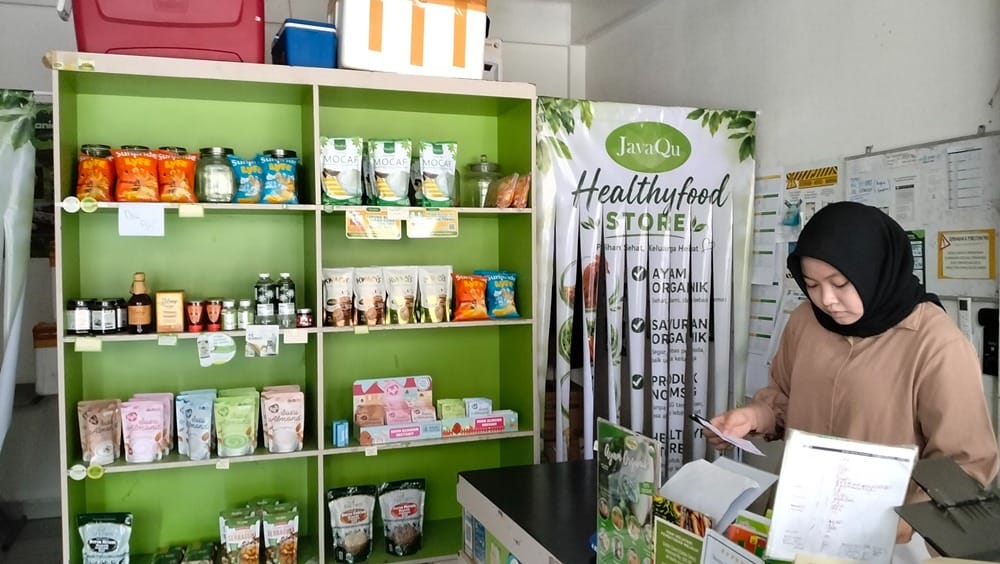
IRA Mucharina never intended to open an organic grocery store. However, an issue affecting her eldest child—swollen tonsils triggered by eating street food with synthetic flavor enhancers and preservatives—prompted her family to switch to a healthy diet. This journey eventually led her to establish JavaQu, a store supplying organic and natural food products.
When her child first experienced health problems in 2012, her family was living in Jakarta. She searched online and discovered homemade, MSG-free food options such as sausages, macaroni, and chicken nuggets.
"My child enjoyed them and tolerated them well, even though they tasted somewhat bland," Ira said at her store in Depok, Sleman Regency, on Friday, August 28, 2026.
Challenges arose when her family relocated to Yogyakarta, where sourcing healthy options proved difficult. Information regarding local markets, specialty shops, or small businesses offering healthy food was scarce.
Out of necessity, she ordered healthy snacks directly from Jakarta. Her child brought these items to school, where Ira introduced them to teachers and classmates.
"They really liked them, and soon people began placing orders through me to send to Jakarta," she said.
As her awareness of nutrition grew, Ira began seeking out organic vegetables, valuing their longer shelf life and freshness compared to conventionally grown produce. She noted that finding caterpillars was simply a matter of washing them off.
"I went searching through private gardens up in Kaliurang. I found organic vegetables, but they were only grown for personal consumption," she recalled.
In 2014, Ira opened JavaQu. Her new store provided organic vegetables harvested by farmers on the slopes of Mount Merbabu. Alongside standard market staples, the shop offered less common varieties such as okra, kabocha (Japanese pumpkin), red cabbage, arugula, and romaine lettuce. Harvested every Tuesday and Friday, produce was delivered to order every Wednesday and Saturday.
"They are certified organic," Ira said.
She also stocks certified organic rice varieties priced between Rp45,000 and Rp55,000 per kilogram. Her inventory includes white rice for children needing to gain weight, brown rice for added fiber, red rice for diabetic customers, and black rice. Other health products in her store hold official halal certification and registration with the Indonesian Food and Drug Authority (BPOM).
"Proper legality is essential. Customers today are critical, and it helps maintain their trust," she said.
Among her products, organic chicken meat remains the most requested item. Ordered from Kuningan, West Java, shipments arrive every 7 to 10 days. The poultry is raised without chemical injections intended to artificially boost weight. Once processed, the meat is lean, free of unpleasant odors, and naturally sweet, even when simply steamed without seasonings.
Portioned cuts are packed in heavy-duty plastic, ranging from chicken skin, heads, wings, livers, gizzards, and feet to whole chickens. The most popular cut is boneless, skinless breast fillet, priced between Rp89,000 and Rp136,000 per kilogram.
The organic poultry inventory satisfies demand for clean animal protein from cancer survivors and children with special needs, as standard commercial meats often carry antibiotic residues that trigger adverse reactions.
"It's also popular with gym-goers and people on strict diets," she added.
Many customers place orders online for home delivery or purchase through digital marketplaces.
However, perishable organic goods such as fresh produce face shipping limitations. Ira recalled receiving an order for tomatoes and tubers destined for Kalimantan. Despite being packaged to aviation cargo standards, the shipment was rejected upon inspection.
"Authorities were concerned the produce might carry bacteria that could spread at the destination," she explained.
Weather also impacts the shelf life of organic greens, particularly during heavy rainfall. Heavy downpours often damage leafy greens like mustard greens and lettuce, rendering them unfit for shipment.
IRA noted that her product lineup evolves in response to customer requests. New patrons frequently visit the store seeking guidance on products tailored to their dietary needs.
"People don't just buy and leave; many stay to talk and ask questions about finding healthy food. Purchasing isn't mandatory," Ira said.
Beyond dietary support for specific health conditions, customers frequently inquire about complementary feeding (MPASI) for infants. First-time mothers, in particular, often seek advice on introducing solid foods.
"Some mothers mention their children have consumed organic food since birth," she noted.
When mothers ask for advice on transitioning six-month-old infants to solids, Ira recommends introducing one flavor at a time—such as finely ground red rice, which has a mild natural sweetness, or steamed vegetables like carrots and squash.
For subsequent stages, infants can be introduced to other flavors, such as homemade nuggets or meatballs crafted from organic chicken skin. For broths, she suggests simmering chicken bones; excess broth can be frozen in ice cube trays for future use.
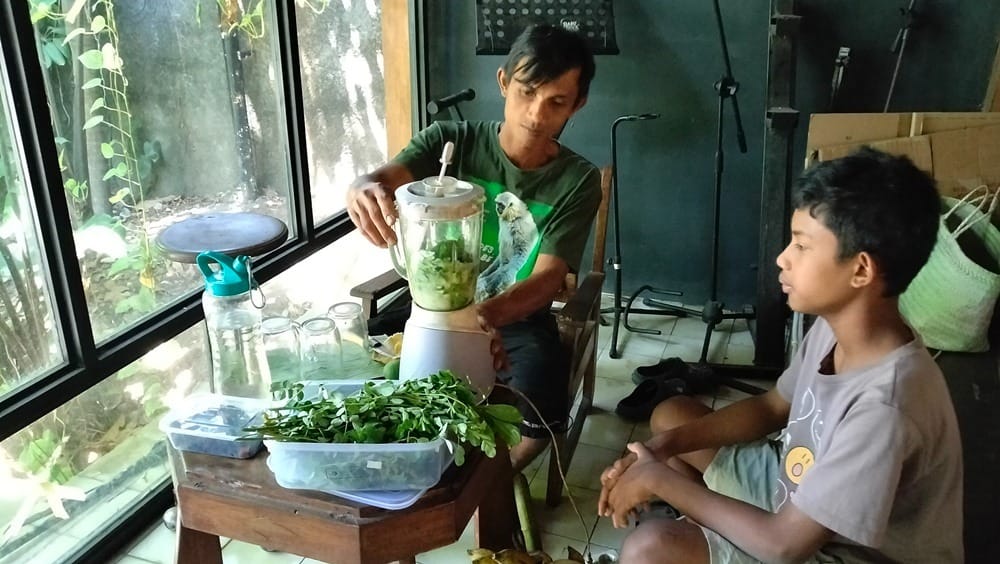
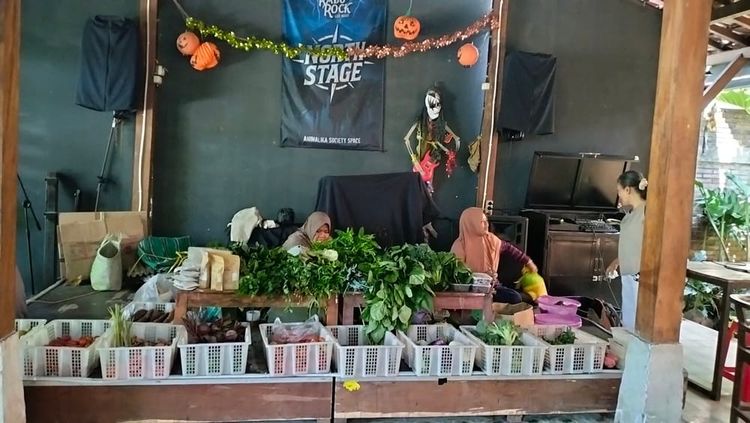
At the Kepayang Healthy Market, several vendors tailor their food offerings to appeal to children. Budi, for instance, prepares vegetable smoothies priced at Rp15.000 per glass. He blends moringa leaves, ginseng, basil, mint, and purslane, combining them with a cluster of bananas, fresh lime juice, and mulberries—all harvested from his permaculture farm.
"It's popular with parents whose children dislike eating whole vegetables," said Budi, who manages the Karangkitri permaculture farm and livestock operation.
The market also features traditional es puter (coconut milk ice cream), a child favorite. Christiawan, owner of Es Puter Pak Man, crafts the traditional dessert using natural ingredients. He avoids commercial coconut milk and refrains from using pre-grated market coconut.
"Coconut graters from market aren't always cleaned thoroughly," he noted.
Instead, he purchases whole coconut pieces, washes them under running water, then grates and presses the coconut milk himself.
Fruit purées provide natural coloring and flavoring, featuring options like durian, sweet jackfruit (nangka madu), kuweni mango, strawberry, and fermented black glutinous rice. Sweet jackfruit and kuweni are popular choices for children, with kuweni readily available locally in Yogyakarta at around Rp5,000 per kilogram.
To achieve a smooth texture without commercial additives, he uses a blend of three natural starches: mung bean flour (hunkwe), tapioca, and sago flour.
"Our es puter contains no dairy, making it safe for children with milk allergies," Christiawan added.
Meanwhile, Ari Susilowati offers Banjarnegara-style dawet ayu. Unlike conventional versions, Ari crafts her dawet jelly from organic or locally sourced unpolished rice shipped directly from Madiun, East Java. The rice retains its natural bran layer, giving it a light brown hue.
To color the dawet green, she uses natural juice from pandan and suji leaves, while sweetening the drink with palm sugar. She grates her own coconut for milk, using warm boiled water rather than boiling the coconut milk itself.
"Boiling breaks down the coconut milk and raises cholesterol levels. Many of my customers suffer from allergies or are cancer survivors," she explained.
To ensure freshness, Ari prepares the drink just hours before market opening.
"Before arriving here at 9.30am, I start cooking at 6am," she said.
To maintain authentic flavor, Ari omits fermented glutinous rice (tape), a common addition used by other sellers.
"I prefer to keep the dawet pure," she said.
Emphasizing tradition, Ari serves her dawet from small earthenware pots suspended from a traditional wooden shoulder pole (pikulan).