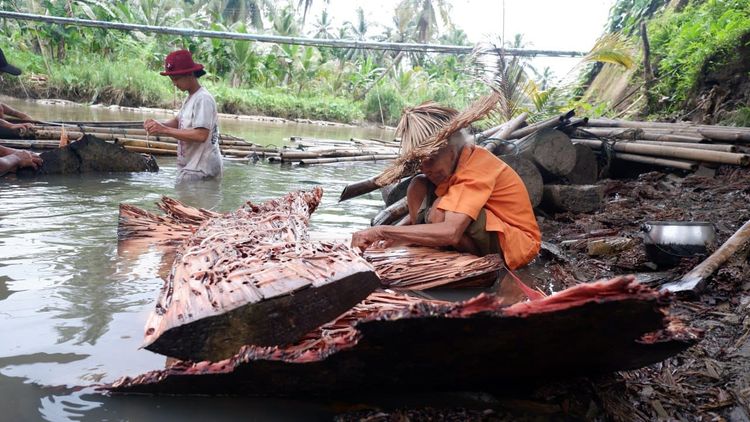
Salted Fish Processed by Women Fishers of South Pagai
By Febrianti
A motorized small boat pulled into the shores of Simatapi Island in Sinaka Hamlet, South Pagai, the Mentawai Islands, one late afternoon in mid-July. As the operator secured the boat’s line to a wooden post, seven women aboard quickly clambered out and walked along the beach. Rattan baskets were slung across their backs, their clothes soaked to the skin.
“We’ve been fishing off the island since morning. Today's catch isn’t bad,” said Reni Santi, one of the women, as she showed off her basket. “I got three kilograms of reef fish.”
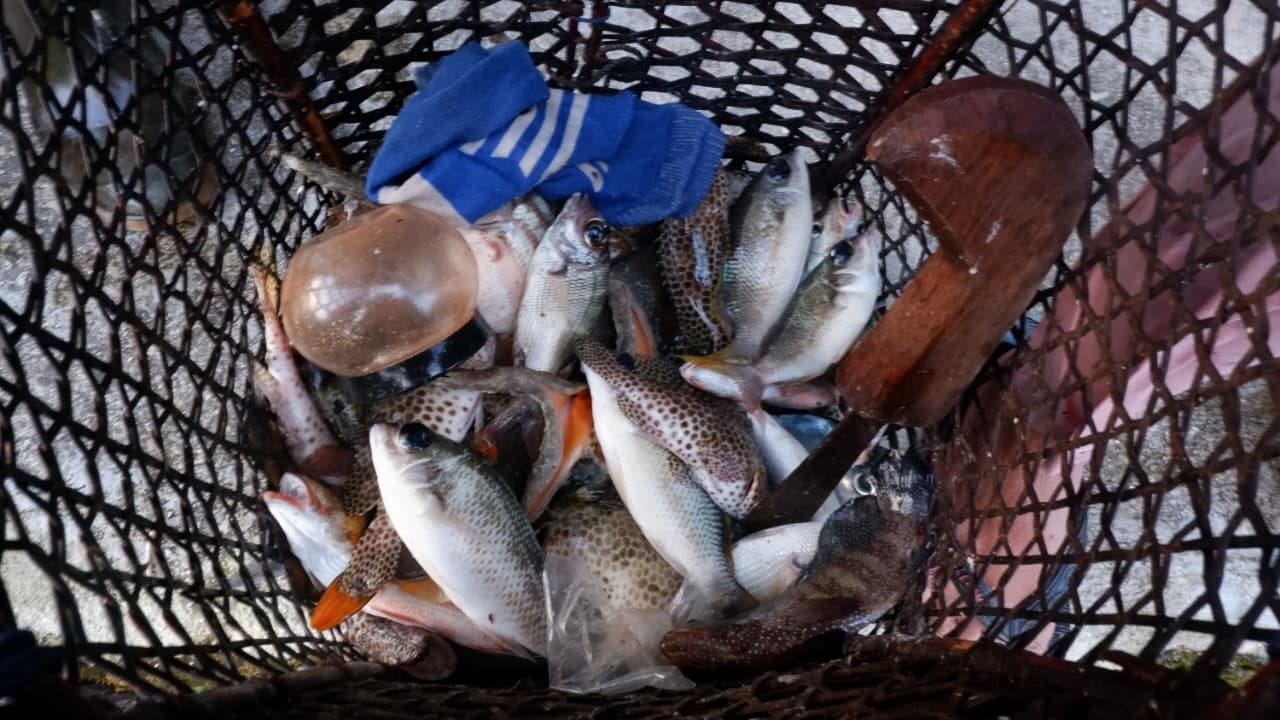
A variety of reef fish filled a quarter of the 23-year-old’s rattan basket. Among them were red snapper, grouper, and other species—glistening, fresh, and almost uniform in size, each about three or four fingers wide.
“We’re going to turn these into salted fish,” she said.
Reni and the six women who stepped off the boat are wives of fishermen in Sinaka Hamlet. They belong to a salted-fish production group operating under the Musara Simaeruk Savings and Loan Cooperative.
“We catch the fish together, and we process them into salted fish together,” she said.
According to Reni, she and her companions head out on a motorized boat at dawn to the small islets facing their hamlet, spending the entire day angling. For bait, they rely on hermit crabs gathered along the beach the night before.
“Standing on the reefs fishing all day leaves our legs pretty sore,” Reni admitted.
Upon returning, Reni and the crew bring their catch to a fish-processing site—a 4x6-meter permanent structure situated right on the beach, a short walk from their homes.
The facility features freshwater taps, concrete shelves, and washing sinks, provided by the Mentawai Islands Regency Fisheries Office in 2022. Along with the building, the members of the Musara Simaeruk Group were equipped with processing knives and basins.
Three women were already waiting at the processing facility. The fish were quickly unloaded, weighed, and logged by owner and weight.
The catch was then sorted: only reef fish of a uniform size, roughly three fingers wide, were set aside for salting.
“Take this red snapper home, it’s way too big,” joked Fitri Susanti, the woman tasked with weighing the fish.
The owner retrieved the snapper from the scale with a laugh. “Let me just weigh it in the cooking pot, then!”
Her catch handed over, Reni and her six companions headed home. That evening, a second crew of seven Sinaka women took over processing the day's catch. This group did not participate in the fishing trip; Fitri Susanti was among them.
Under the beam of flashlights and streetlamps, Fitri and her six crewmates gutted the fish, rinsed them with fresh water, and scrubbed away any remaining guts. They then coated the fish in salt. That night, they prepped 20 kilograms of fresh catch into salted fish.
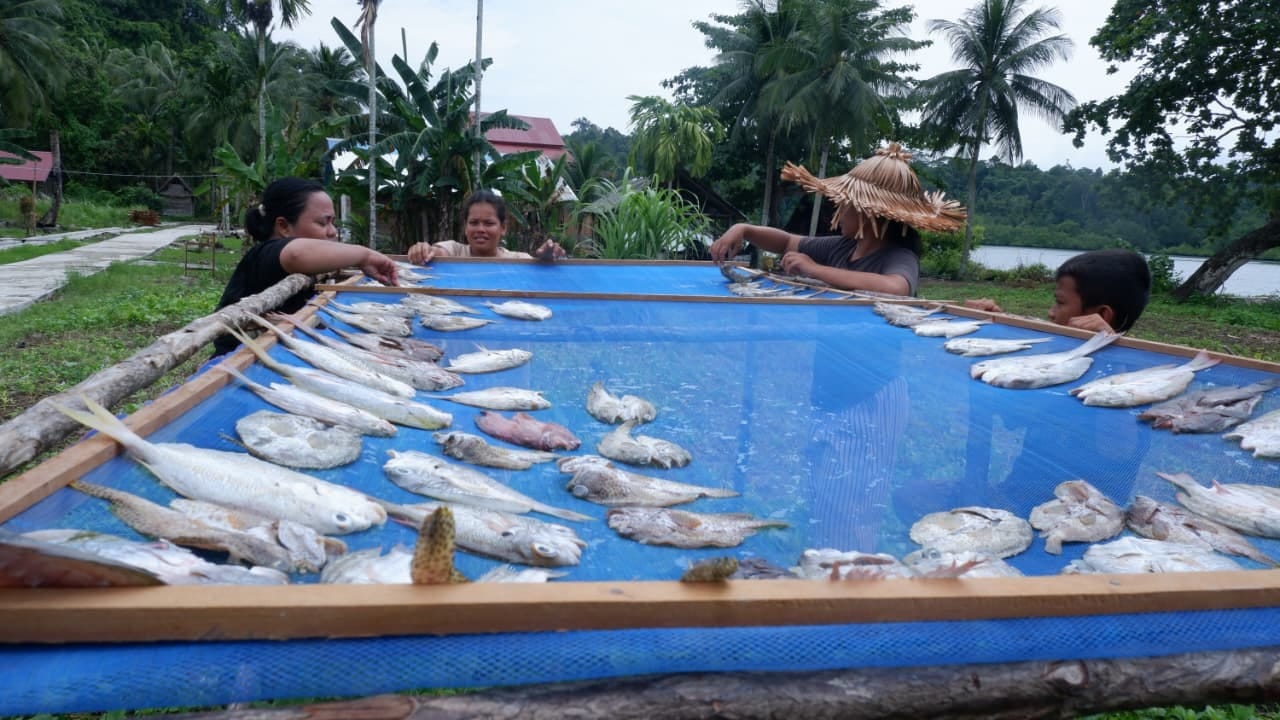
“Tomorrow, we rinse the fish again in fresh water and lay them out to dry,” Fitri said, noting that the drying process takes three days.
FITRI Susanti said that local women in Sinaka had previously formed a salted-fish business group, but it eventually disbanded as members got tied down with personal chores.
“Now we’ve reactivated it so we can earn extra money,” she said.
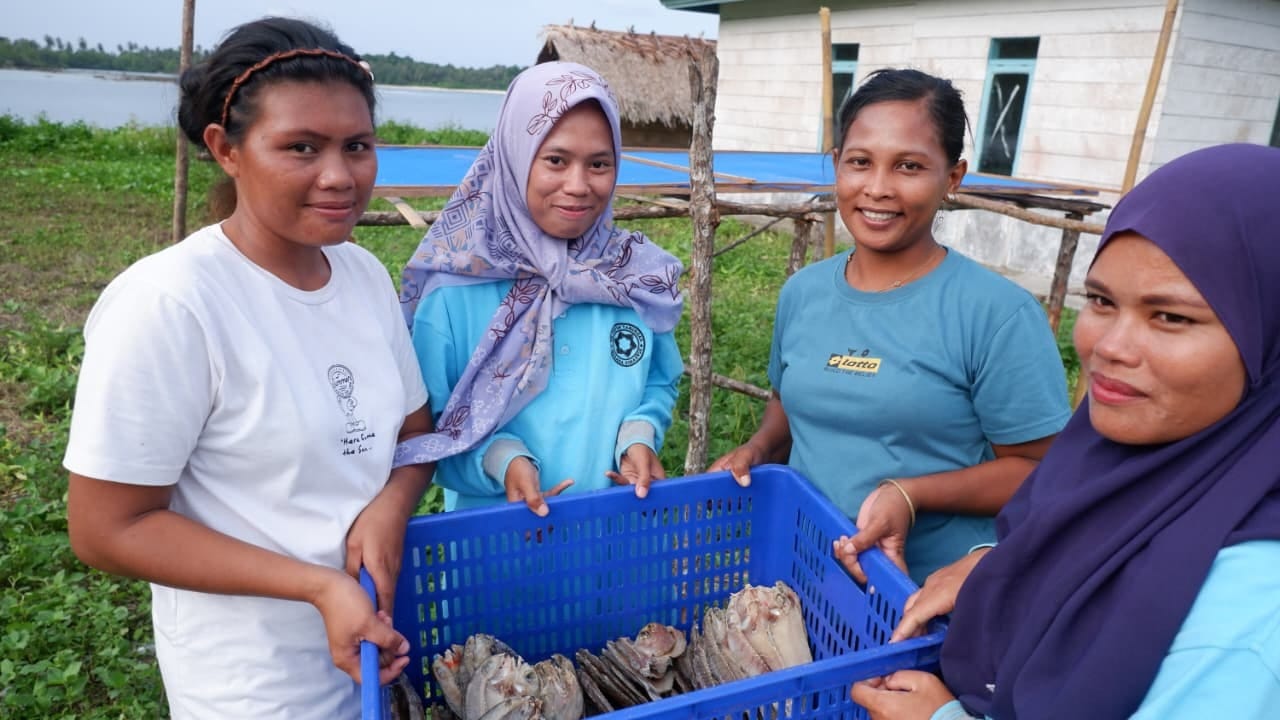
Today, the Musara Simaeruk Cooperative has 22 members. Georgerius Baleuma Sakailoat, a facilitator from the Citra Mandiri-Mentawai Foundation (YCMM) who mentors the cooperative, said the initiative began three years ago as a micro-finance project to help local women save and borrow money. Over time, it expanded into production.
“To grow the group’s enterprise, the women chose to make salted fish because raw fish is abundant and requires very little capital since they catch it themselves,” Georgerius said.
There were other motives, too. According to Dina Hanifatul Julia Sinta, Head of the Musara Simaeruk Group, processing salted fish provides both food security and supplemental income during storm seasons.
“Previously, our only income came from the octopus our husbands caught. But when storm season hits, they can't catch octopus,” she said.
Income dries up, leaving households struggling to meet daily needs.
Helentina, another group member, pointed out that storm seasons can linger. “Sometimes from June through October, the waves are massive,” she noted.
Sinaka is widely known as the largest octopus producer in the Mentawai Islands. During peak octopus season, a fisherman can average Rp500,000 a day. Daily routine sees the men gathering octopus and spearfishing for sale and consumption.
The women are hardly passive observers. They frequently forage for additional food, angling for fish and gathering clams or snails in the nearby mangrove forests.
Helentina noted that while their husbands' earnings from octopus fishing are substantial, the money evaporates quickly because catches are unpredictable—especially without savings.
“During octopus season when cash is flush, we used to head off to Sikakap (capital of Sikakap Subdistrict) and buy everything, needed or not,” the 22-year-old admitted. “That's why the money ran out so fast.”
She now regularly deposits savings with the Musara Simaeruk Cooperative and actively participates in its programs, including the salted-fish venture.
For Helentina, the salted-fish business holds promising prospects. Raw materials are abundant, particularly reef fish that thrive around the mangroves and coral reefs.
“Reef fish that command high prices elsewhere have almost no value here; people just eat them because there are no commercial buyers. So turning them into salted fish makes sense—it commands a higher price,” Helentina said.
From 20 kilograms of fresh fish, three days of drying yields seven kilograms of salted fish. The price is Rp50,000 per kilogram.
“We will keep producing salted fish and look for buyers in Sikakap. There is bound to be high demand for salted reef fish,” Dina said.