Traditional Porters at Yogyakarta Markets
By Janika Irawan
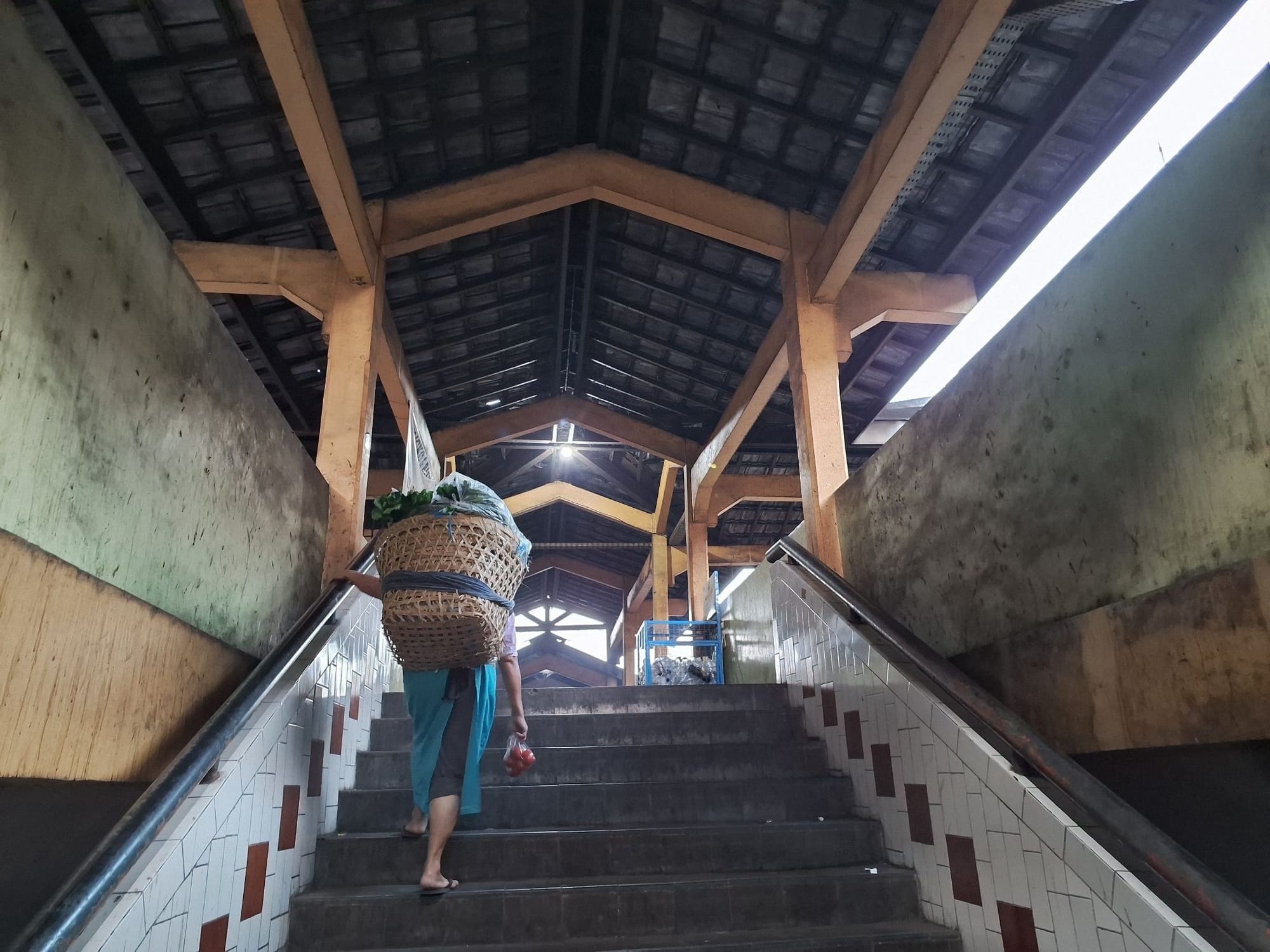
Sunday morning had barely broken, yet Siti Aminah already looked exhausted, a heavy basket of groceries strapped to her back. Mustard greens, cabbages, tomatoes, chilies, and various other goods filled the bamboo basket resting against her spine. With slightly trembling legs, she took slow, calculated steps up the stairs leading from the second to the third floor of Beringharjo Market. She could not afford to be distracted.
One haul was followed by another. It was only about two hours later that the 65-year-old woman finally made her way to a food stall on the second floor of the market—a popular pit stop for tourists visiting the Malioboro area in the city of Yogyakarta.
"At most, I get 10 hauls a day," said the resident of Ngentakrejo, Lendah Sub-district, Kulonprogo Regency, on Sunday, June 21, 2026. "That brings in about Rp50 thousand."
Siti Aminah, who now lives alone, leaves her house around 4 a.m. About half an hour later, she arrives at the market, ready to look for her first gendongan (haul). Every day, she trudges up and down the stairs of Beringharjo Market, delivering goods for traders and shoppers alike. From the first floor to the second, up to the third, and back down to the ground floor.
The cargo she carries varies widely, as does its weight. Sometimes, the woman—who has spent roughly 20 years working as a buruh gendong (traditional woman porter)—carries loads of 20 kilograms or more on her back. For a single trip, she usually earns Rp5,000, though it ultimately depends on the client. Occasionally, a generous shopper gives her a little extra.
Siti Aminah is far from alone. Many others, predominantly women, earn a living providing porter services at Beringharjo Market. Among them are Ponirah—known as Isah—and Surajiyem. Some start their day at 5 a.m., while others arrive later, like Isah, who usually clocks in around 9 a.m.
On a good day, they manage to secure numerous hauls. But when the market is slow, they get very few—sometimes returning home empty-handed.
"Sometimes I get a haul right away; other times I have to wait until 10 or 11 a.m. for something to come up," Isah said when met at Sentong Endong-Endong, the designated resting area for the market porters.
Like Siti Aminah, Isah’s income is highly unpredictable. When the market is bustling, she can bring home Rp50,000, but during quiet stretches, she might pocket just Rp20,000. There are even days when she fails to secure a single load.
According to Isah, the decline in clients began with the Covid-19 pandemic a few years back. The fierce outbreak left the market deserted, shifting transactions toward online shopping.
Furthermore, Isah noted that besides serving direct consumers, Beringharjo Market functions as a wholesale hub. Online ordering systems have spoiled consumers. Not only does it save them time, but it also cuts costs, as the price of buying directly at the market versus having items delivered remains the same.
"They don't have to spend money on gasoline or pay for a porter, so they prefer to just have it delivered," Isah explained.
Surajiyem experienced this drought firsthand on Tuesday, June 23. The 60-year-old woman sat quietly on a bench by the third-floor entrance corridor. It was nearing midday, and she had spent over four hours sitting and pacing from one market stall to another. Still, no one had hired her.
"I haven't had a single haul today. It’s just a slow month right now," said the resident of Tuksono, Sentolo, Kulonprogo.
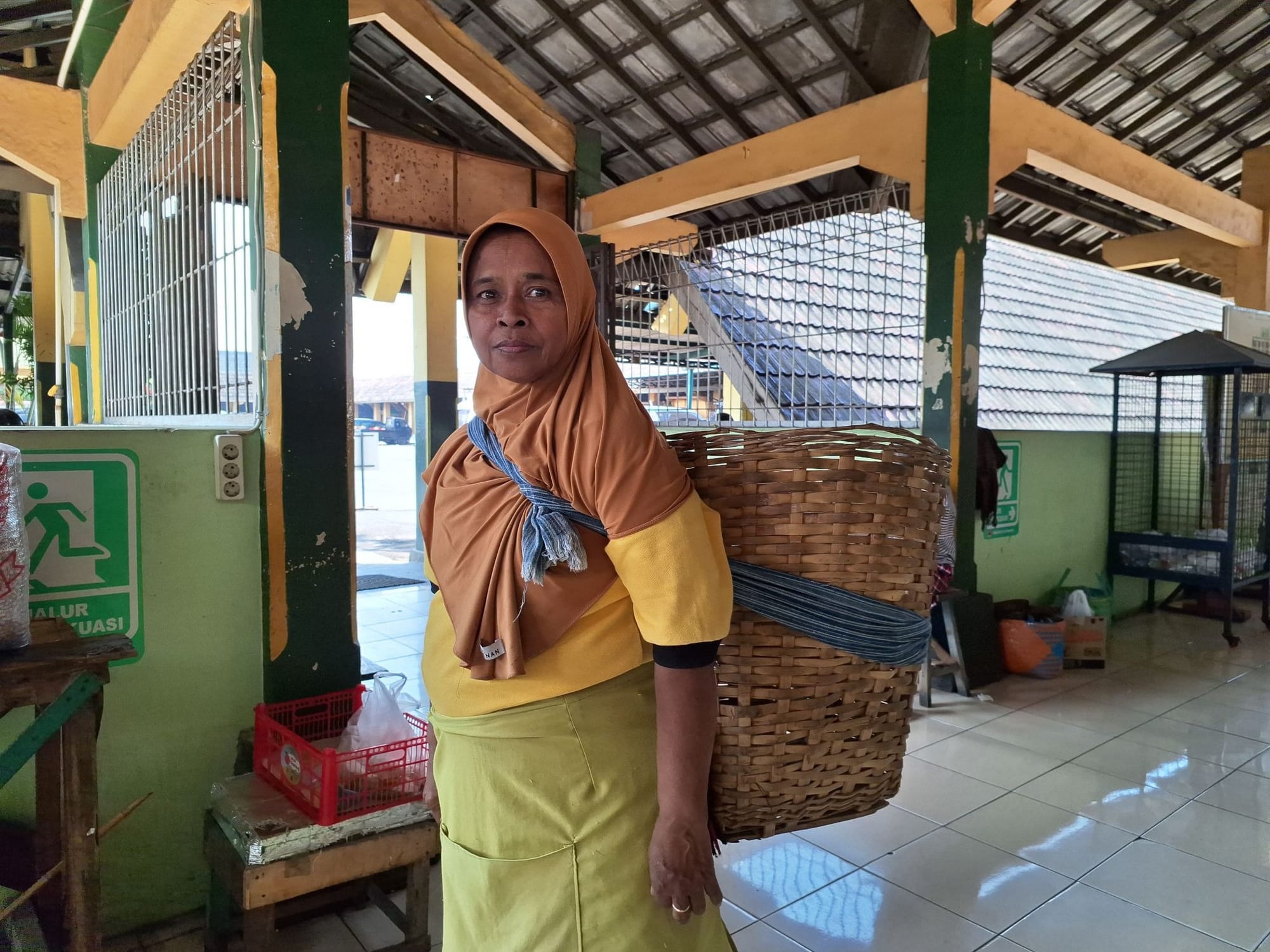
During these lean months, Surajiyem only works at the market two days a week. She spends the remaining five days helping her husband in the fields. However, when business picks up, she returns to the market daily.
On an average day, Surajiyem pockets between Rp30,000 and Rp40,000. After deducting roughly Rp20,000 for transport, the remainder goes toward daily necessities.
Though the income is meager, she views it as a vital supplement to her family's finances. It also helps cover unpredictable social obligations, such as wedding gifts or buying tokens of condolence at funerals.
The presence of Siti Aminah, Isah, Surajiyem, and their peers is a major convenience for both vendors and shoppers.
"They are genuinely indispensable, especially since this market has three floors. Sometimes we park on the third floor but shop on the first. Having someone help carry the load is a lifesaver," said Vita, a frequent client.
This Yogyakarta resident noted that she shops at Beringharjo two to three times a week. When her purchases accumulate, she always opts for a porter, saving her from making multiple exhausting trips back and forth to her vehicle.
Moreover, no fixed tariff means she never thinks twice about hiring them. "I gave her Rp15,000 just now because she made two trips," Vita said before driving her minibus out of the third-floor parking area.
While the porters provide a crucial service, their earnings remain dismal, averaging just Rp30,000 to Rp50,000 a day. Once round-trip transportation costs are factored in, they often take home only half that amount.
To make ends meet, several porters have turned to side hustles. Surajiyem, for instance, passes the time waiting for clients by selling peanut brittle (peyek) and occasionally tamarind.
"I get the peyek from a neighbor. Selling these can bring in an extra Rp10,000 to Rp20,000, if they sell," she said.
Siti Aminah finds her extra income elsewhere. She helps prepare goods at a stall selling bean sprouts and spices, working from 9 a.m. to 2 p.m. This side gig brings in an additional Rp40,000 to Rp50,000.
"If it's busy, I get Rp50,000; if it's slow, it’s Rp40,000," Aminah shared.
Similarly, Isah has had to think to boost her earnings so she doesn't rely solely on carrying loads. She and several other porters sell packaged wedang uwuh (a traditional herbal spice beverage).
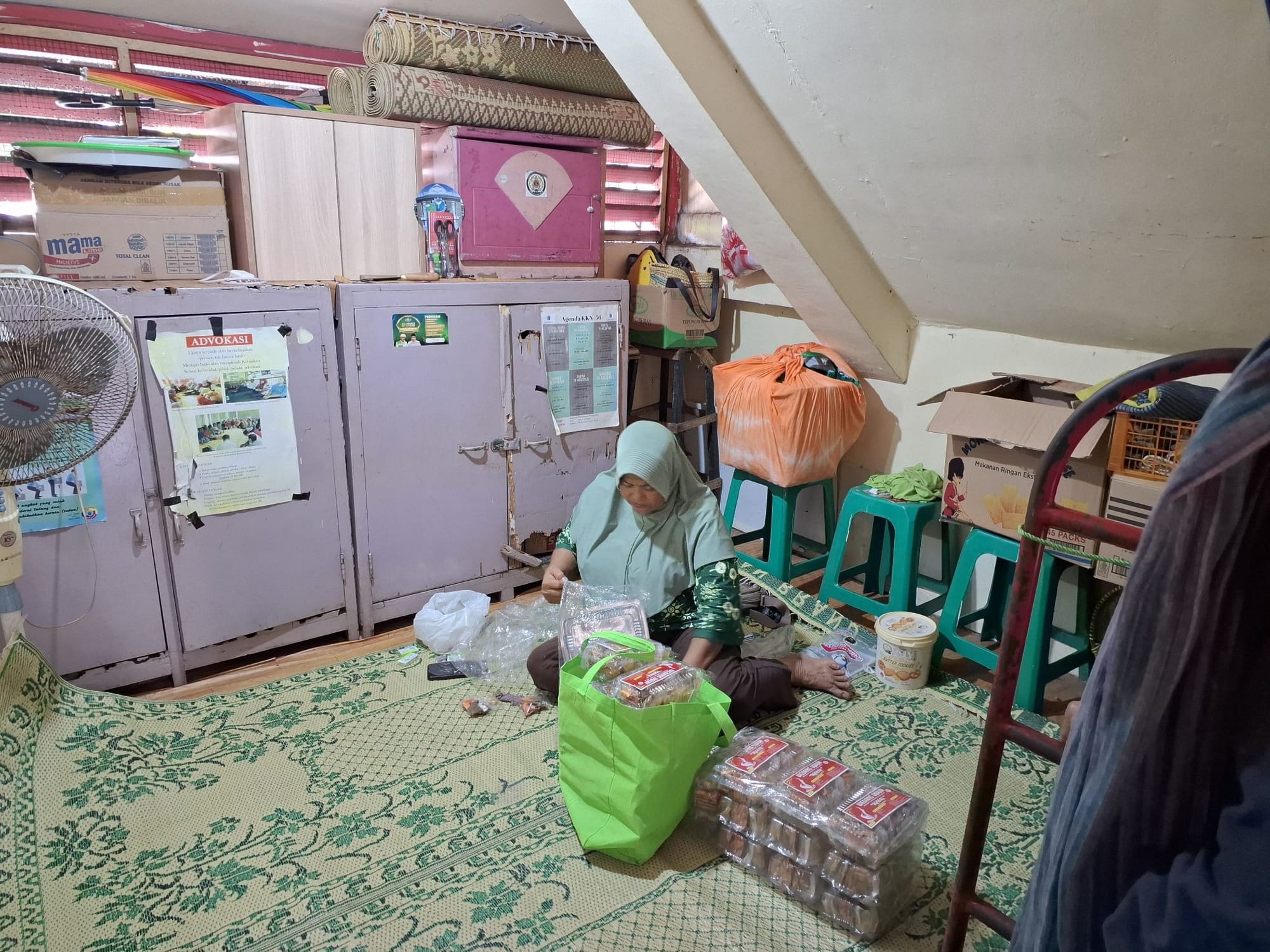
Isah began selling wedang uwuh in 2020, right when Covid-19 began spreading across Indonesia. Herbal drinks were in high demand at the time.
"Traders were running out of stock. I told the stall owner I usually help out every day, 'Mbak, I'll make some wedang uwuh to display here.' Over time, it actually started selling well," Isah recalled enthusiastically.
During the peak of the craze, Isah could move five to ten packs over a single weekend. Each pack contained 10 sachets and was sold to stall owners for Rp120,000, netting Isah a Rp20,000 profit per pack.
While the business continues today, sales volume has dwindled. "I bring them in every morning if there are orders. If the stall's inventory is still full, I don't bring any," she said.
To improve their working conditions and financial security, the porters unionized under the Paguyuban Sayuk Rukun (Sayuk Rukun Association). The association unites porters across four major markets in Yogyakarta: Beringharjo Market, the Giwangan Fruit and Vegetable Wholesale Market, the Gamping Fruit and Vegetable Wholesale Market, and Kranggan Market. It boasts around 370 members, with the largest contingent—192 people—based at Beringharjo Market.
The association was founded in the 1990s through the initiative of the Annisa Swasti Foundation (Yasanti), an NGO focused on empowering female workers. Yasanti Executive Director Nadlrotussariroh explained that the association serves as a vital network to keep these workers connected.
Through organized efforts, Yasanti aims to elevate the porters' welfare. This led to the creation of a Joint Venture (Usaha Bersama or UB), which functions as a pre-cooperative. Operating like a traditional cooperative, it requires both mandatory and principal savings from its members.
The UB provides the porters with a secure framework to save money, secure business capital, or access emergency loans. "The goal is to keep the economy circulating from them, for them. They shouldn't have to borrow from banks," Sariroh said at the Yasanti office on June 24, 2026.
Borrowers are given immense flexibility, allowing them to determine their own repayment schedules. "For example, if we borrow Rp1 million, we can split the payments up to ten installments. Sometimes it's paid off in fewer than ten months if our earnings are high," said Isah, who serves as the coordinator for the second floor of the Beringharjo Market Porters Association.
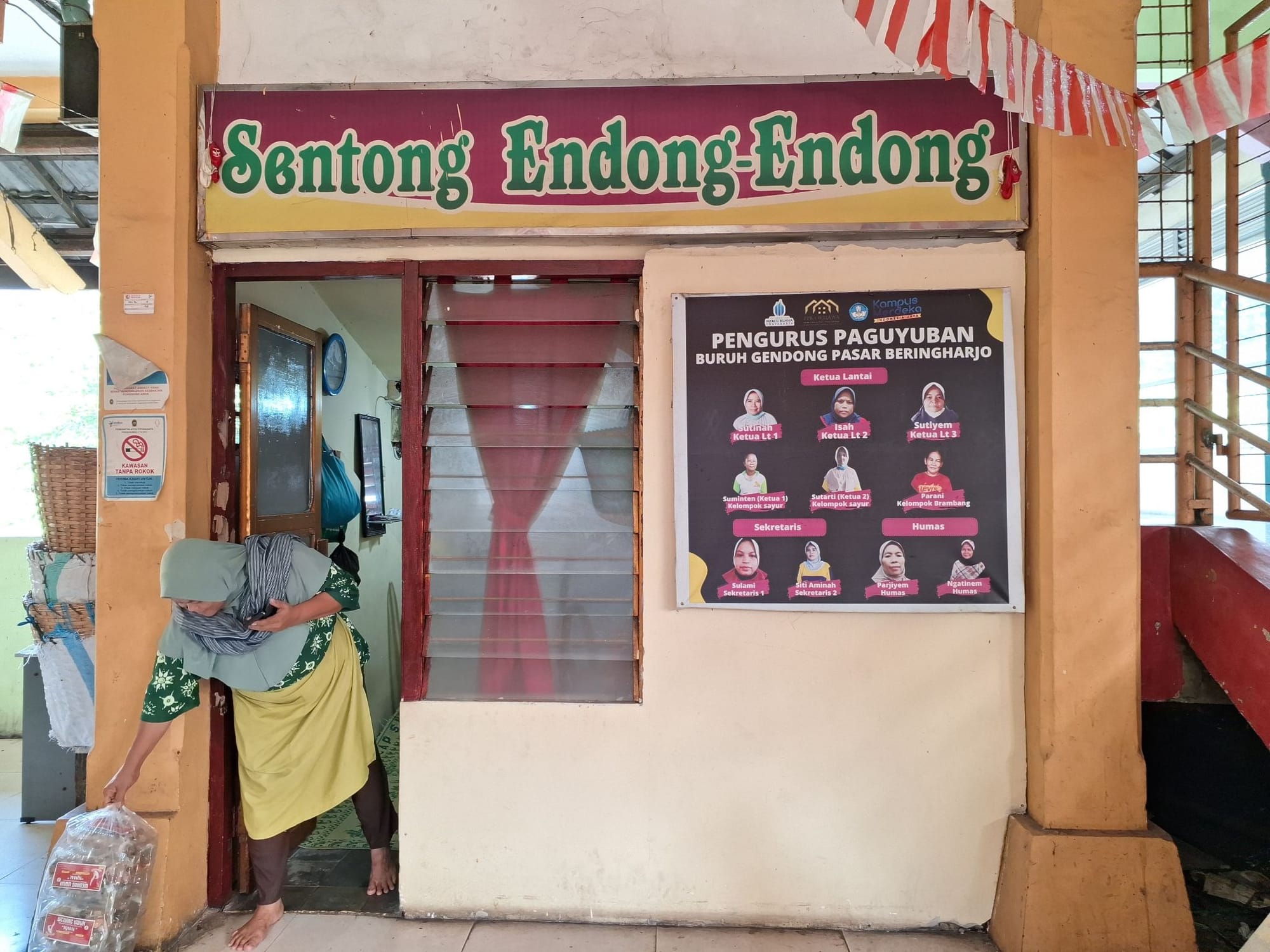
Organizing collectively has also streamlined their advocacy efforts. One notable success is the creation of Sentong Endong-Endong, their dedicated rest area. They have also secured access to the Trade Agency’s third-floor office hall for community activities like Islamic study gatherings. Their latest milestone, achieved at the end of 2025 after years of lobbying, was securing free access to the market toilets.
Despite their long-standing presence in the market ecosystem, these porters remain marginalized. Their wages are inadequate, and their labor lacks formal recognition. Sariroh hopes that in the future, manual porting will be legally acknowledged as a formal profession.
"We will continue to fight for formal recognition. With recognition comes protection, at the very least," Sariroh emphasized.
Amid ongoing discussions regarding revisions to the national Labor Law, Yasanti remains hopeful that informal workers, including these market porters, will be deliberated in the legislation.