Climate-Resilient Coffee Is No Longer a Pipe Dream
Dody Hidayat
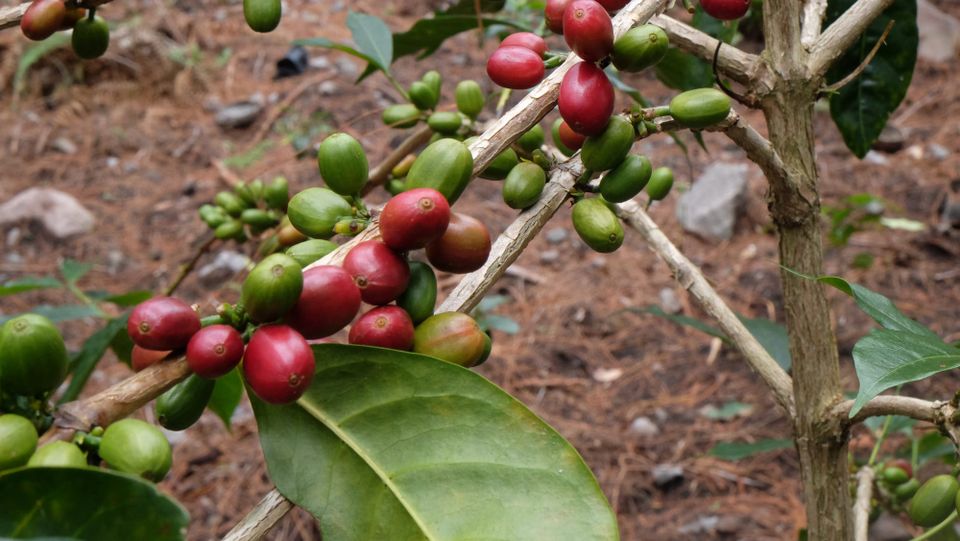
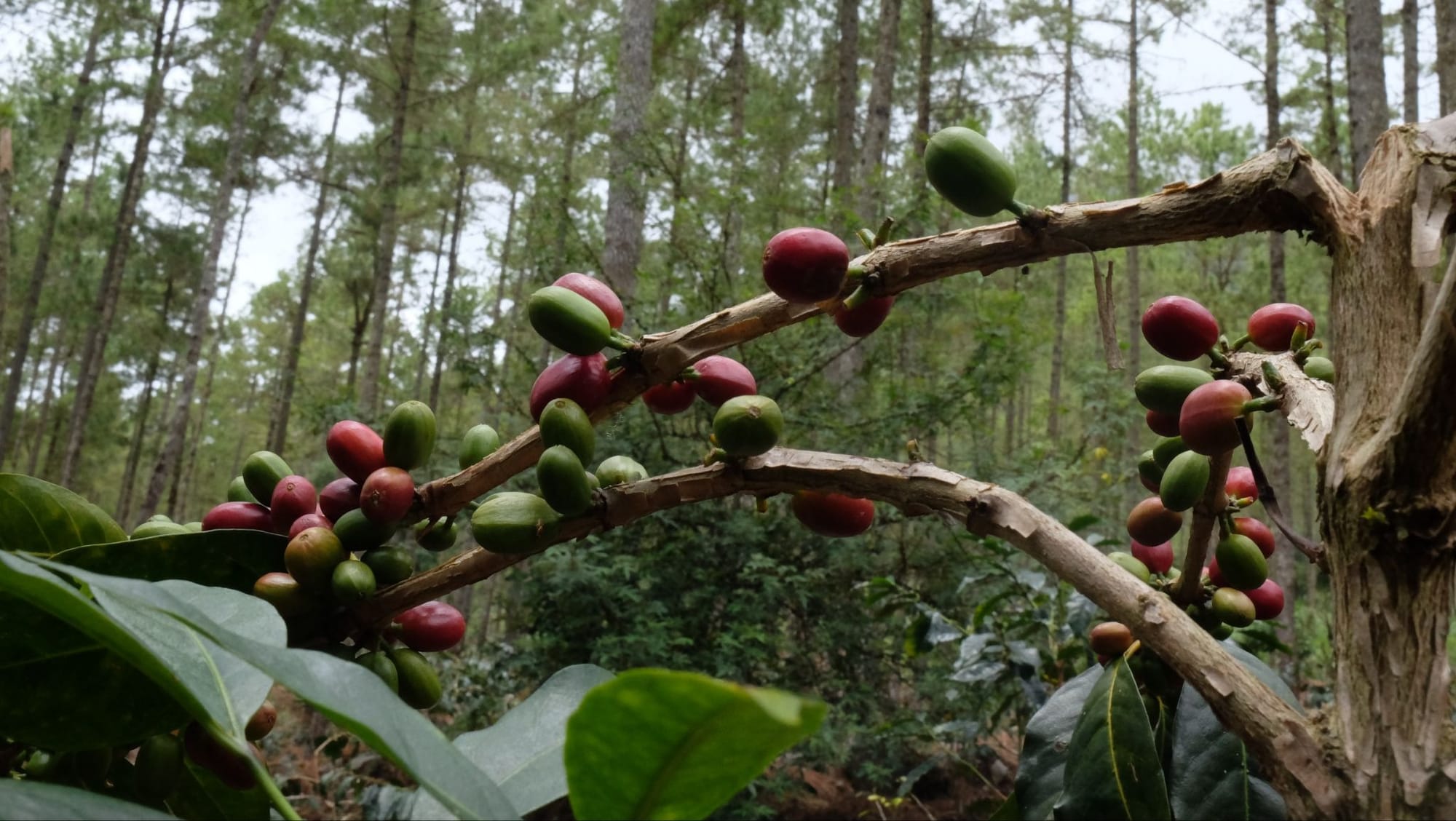
Three years after planting coffee trees in his orchard sitting 1,500 meters above sea level, Hendra Sudrajat was alarmed to discover that his Arabica cherries were infested by the coffee berry borer (CBB). The farmer from Bale Redelong Village, Bukit Subdistrict, Bener Meriah Regency, Aceh, refers to CBB as the "needle-prick pest," named for the pinhole entry marks left behind when the female Hypothenemus hampei beetle deposits her eggs inside the fruit.
"It's not widespread. At most, only about one percent of the crop is affected," Hendra said during an online interview on Friday, July 17, 2026.
Even so, the discovery came as a shock to Hendra because Bale Redelong is located at a high, cold altitude. "At 800 to 1,000 meters above sea level, CBB attacks are common because the beetles thrive in warmer weather," he added.
Hendra attributes the onset of the needle-prick pest at 1,500 meters directly to climate change.
"It means temperatures in Bale Redelong are getting hotter. In the past, morning fog used to blanket the area much like in Dieng, but now it's gone. It’s heartbreaking to see," Hendra lamented.
Coffee farmers at lower elevations across the Gayo Highlands have long wrestled with the needle-prick pest. The Ministry of Agriculture previously distributed traps paired with an attractant formula branded Koptan. The aroma draws female CBB beetles directly into the traps.
"We just didn't get the gear because CBB didn't exist at our elevation in Bale Redelong," Hendra said.
Rahmat Alfajri, a Good Agricultural Practices Specialist at World Resources Institute (WRI) Indonesia, noted that no coffee varieties—particularly in Aceh—have been proven resilient or tolerant to the impacts of climate change.
"Farmers can no longer rely on the local varieties they developed themselves. There needs to be specialized varieties that are genetically engineered to withstand climate change," Rahmat said via Zoom on Friday, July 17, 2026.
Abubakar Karim, Head of the Coffee and Cocoa Research Center at Syiah Kuala University in Banda Aceh, corroborated Rahmat's statement regarding the lack of climate-resilient coffee varieties. According to Abubakar, who also lectures in the Soil Science Department at Syiah Kuala University's Faculty of Agriculture, the Aceh Highlands feature three recognized local Arabica varieties: Gayo 1, Gayo 2, and Gayo 3.
"These three varieties emerged naturally in farmers' fields, which we believe to be the result of crossbreeding between Arabica varieties cultivated locally," Abubakar explained via email on Wednesday, July 15, 2026. "We believe this natural crossbreeding will continue to yield new Arabica varieties among Gayo farmers."
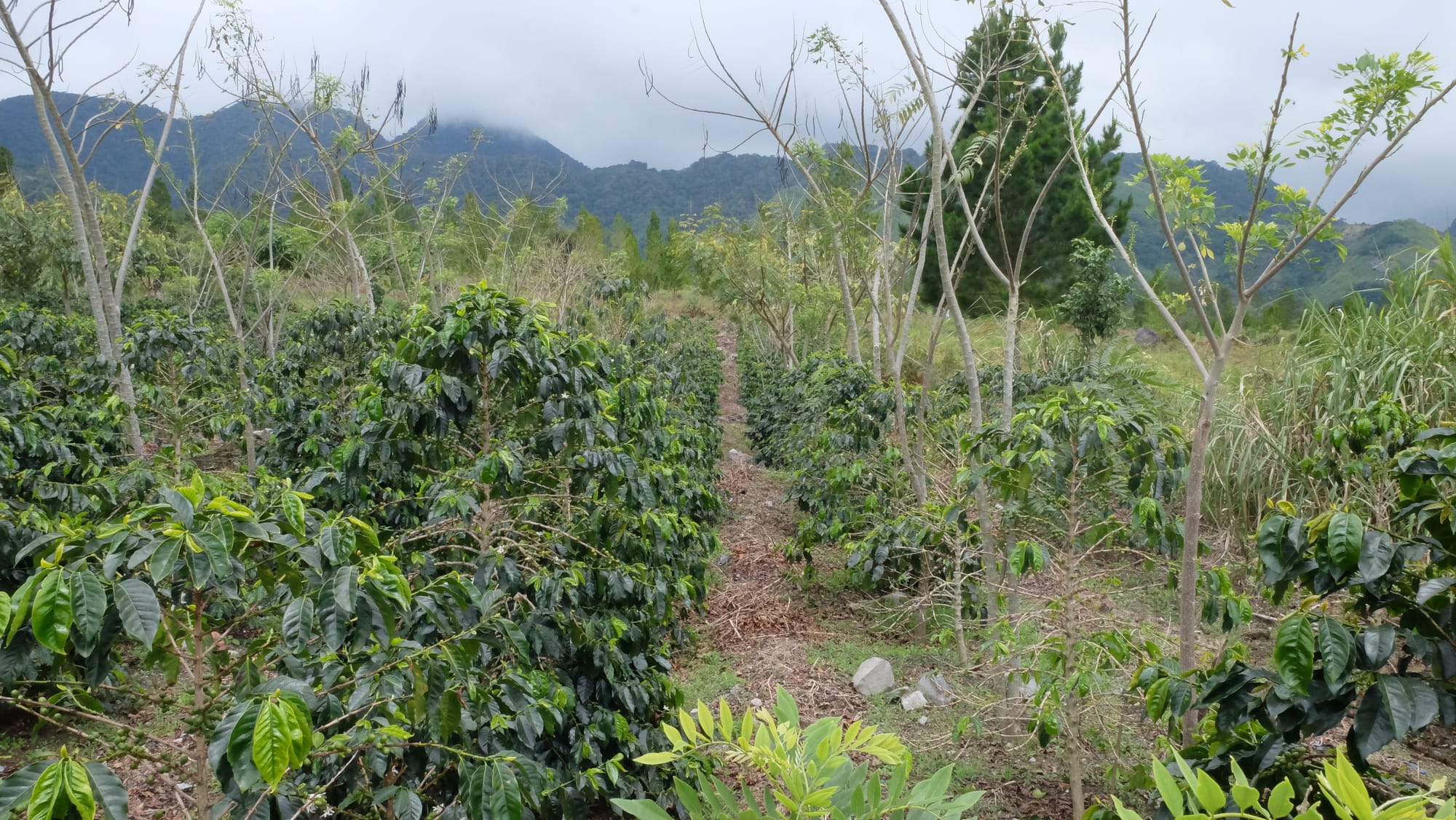
Researchers from the university's Coffee and Cocoa Research Center, along with faculty members, have collaborated with local government agencies to select high-yielding, high-performing varieties. Studies on these three strains evaluated how well their habitat elevation matched yield productivity, cup quality, and resistance to coffee leaf rust.
According to Abubakar, Gayo 1 produces higher yields, superior flavor, and relative resistance to leaf rust when grown between 800 and 1,200 meters above sea level. Gayo 2 performs best at 1,200 to 1,400 meters, while Gayo 3 thrives above 1,400 meters.
"All three varieties produce high yields and excellent flavor when cultivated above 1,000 meters," he noted.
Abubakar emphasized that plant breeders must continuously construct new Arabica varieties as a long-term climate change mitigation strategy. Rahmat Alfajri chimed in, noting that research institutes and international coffee traders outside Aceh have already begun doing so. Ecom Agroindustrial Co. Ltd., a coffee trader headquartered in Pully, Switzerland, is one example.
"I know a bit about that collaboration from my previous work within the Ecom group," said Rahmat, an Aceh native. "There is indeed a variety developed through genetic engineering. If I recall correctly, it’s named EC16."
According to a coffee variety catalog downloaded from Ecom's website (ecomtrading.com), EC16 was created through a joint research effort between Ecom and the French Agricultural Research Centre for International Development (CIRAD). The goal was to produce a new Arabica strain more adaptable to climate change and 30 to 50 percent more productive than conventional varieties.
Global efforts to develop climate-resilient coffee varieties are also being spearheaded by World Coffee Research (WCR) through its Innovea Global Breeding Network. Indonesia participates in the initiative, represented by the Indonesian Coffee and Cocoa Research Institute (Puslitkoka) in Jember, East Java. Launched by WCR in November 2022, Innovea is the world's largest collaborative coffee-breeding network.
The network enables national coffee institutes across 11 participating countries to adopt modern breeding techniques, collaborate, and share data, tools, and expertise. The ultimate goal is to continuously supply better coffee varieties tailored to the unique needs of local farmers, responsive to global market demands, and resilient to climate change.
Ari Wibowo, a plant breeder at Puslitkoka, stated that his institution has a longstanding partnership with WCR. "Prior to joining the Innovea Global Breeding Network, we collaborated on global Arabica multi-location trials planted across several countries under the International Multi-Location Variety Trial (IMLVT) program," Ari wrote in a response received by Tanahara on Monday, July 27, 2026.
According to Ari, the Innovea program grew directly out of evaluations from the IMLVT initiative. "Initiation and agreements began in 2022 during a meeting in Rwanda, Africa. The program officially rolled out in 2023 across several nations. In Indonesia specifically, planting of these new varieties is scheduled to begin this year, in 2026," Ari explained.
The varieties planted under the Innovea program are the result of artificial Arabica crosses carried out in El Salvador, with parent plants selected based on data from previous trials.
"We hope to obtain at least three key traits from these varieties: high productivity, resistance to coffee leaf rust, and a specialty flavor profile with a cupping score above 80," Ari said.
Ari clarified that WCR performed artificial crossbreeding between high-performing varieties, after which the resulting F1 offspring were distributed for trial planting across participating countries, including Indonesia.
"The Innovea program does not use genetic engineering—only artificial crossing. The goal is to identify superior new Arabica varieties that adapt well across coffee-producing nations and demonstrate resilience to global climate change," he said.
Indonesia received 28 hybrid lines. "These lines will all be planted at a single site in Bondowoso Regency, East Java," Ari said, referring to the F1 offspring of the crosses. "For this program, all parent varieties originated from the WCR team to ensure the offspring planted across different countries remain identical."
Explaining why the Innovea program prioritizes resistance to coffee leaf rust over the coffee berry borer, Ari noted that leaf rust resistance is far more attainable.
"To date, no Arabica variety has been found to resist CBB attacks. Current mitigation relies on attractants containing insect pheromones and the application of Beauveria sp. fungus to target the pests," Ari concluded.