Ecotheology-Driven Zero Waste at Krapyak Boarding School
By Pito Agustin Rudiana
Muhammad Hisyam Maulana was still an 11th-grade student at the Ali Maksum Foundation's Krapyak Islamic Boarding School (pondok pesantren) when the Piyungan Integrated Waste Disposal Site (TPST) closed in July 2023. Waste management trucks from the Bantul Regency Environmental Agency stopped coming to haul away the two tons of garbage generated daily at the school. Garbage piled up at the boarding school's temporary disposal site, forming a small mountain. A foul stench wafted through the air, drawing swarms of flies.
As fate would have it, the disposal site sat directly in front of the dormitory of his supervisor, Muhammad Andika Nuur. Driven by the eyesore, Andika asked Hisyam to help manage the mess. The mountain of garbage was spread out across the yard of a rented, former private hospital building currently used by the pesantren. Together with several other santri (students), they began sorting through the waste.
"Whatever could be sold, we sold. What couldn't, we burned. We just thought to get rid of the garbage," Hisyam recalled when met at the Krapyak boarding school's waste processing site in Krapyak Hamlet, Panggungharjo Village, Sewon Sub-district, Bantul Regency, on Friday, June 19, 2026.
Unsalable trash was incinerated in the hospital's old incinerator at the back of the building. Today, that incinerator site serves as a warehouse to store scrap materials like plastic and paper before they are sorted and collected by junk dealers.
Unbeknownst to him, Hisyam's wrestling match with waste lasted well until his graduation. He is now a mathematics major at a state university in Yogyakarta, though he still resides in the pesantren.
"It’s just unpleasant to look at dirty things," said the 19-year-old, who is now a member of the Krapyak Waste Care Team, founded and led by Andika.
Without hesitation, Hisyam dives headfirst into handling the grime. To ward off bacterial contamination and the stench, he wears three layers of gloves: a plastic layer, followed by cloth, and topped with rubber.
"After getting all dirty, I take a full ritual bath," the stocky student said, breaking into a cheerful laugh.
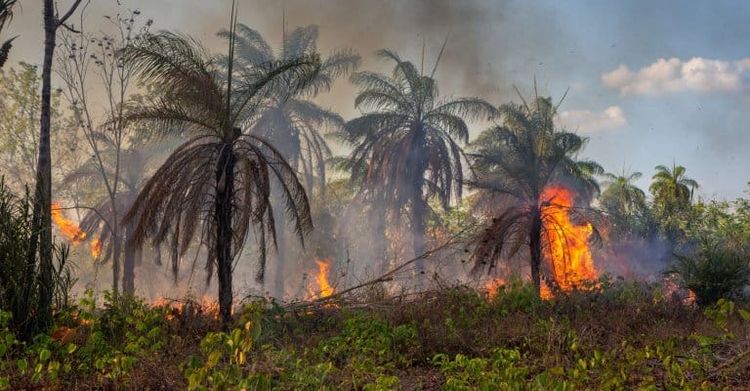
The 2023 garbage crisis was the catalyst for the birth of Krapyak Peduli Sampah (Krapyak Waste Care). Muhammad Andika Nuur kicked off the initiative with a ritual of spiritual endurance (tirakat). He wept as he burned the piles of garbage caused by the Piyungan TPST closure. The burning took place gradually from 6 a.m. to 6 p.m., processing 50 kilograms at a time. This went on for weeks.
Burning trash was no easy feat, especially since most of it was wet and stubborn to light. Meanwhile, Andika and his team, who knew absolutely nothing about waste management, suddenly had to deal with two tons of garbage a day. Previously, the pesantren spent up to Rp30 million a month just to have its waste hauled to Piyungan.
"O, God, managing waste is so heavy. In my 20 years of life, I’ve never experienced anything this difficult," he said back then.
His distress led him to consult the pesantren’s leaders, Kiai Muhammad Nilzam Yahya and Nyai Diana Jirjis. Beyond sharing his grief, Andika proposed that the pesantren handle its own waste. The first step was sorting waste through the lens of ecotheology—emphasizing spiritual responsibility, stewardship of creation, and religious education in environmental conservation.
With this concept, the school leaders agreed to become uswah and qudwah—role models who embody the teachings of Prophet Muhammad and lead by good example.
"So the students had no reason to refuse sorting their waste, because the Kiai and Bu Nyai were already leading by example," said the Director of Krapyak Peduli Sampah.
This exemplary behavior by the leaders laid the groundwork for educating the students on waste separation. The leaders themselves had no objections; they began sorting waste from their own residences, dealing with about 2 to 3 kilograms daily compared to the two tons produced by the school's 2,500 students.
"At the very least, the students realized: if Pak Kiai and Bu Nyai are willing to sort trash, why shouldn't they?" Andika hoped.
As it turned out, this ethos of uswah and qudwah had already been practiced by the pesantren’s late founder, Kiai Ali Maksum. He followed the Prophet Muhammad's traditions, which inherently involved waste management principles like reducing, reusing, and recycling.
From the stories passed down through generations among the students, Andika learned that during his lifetime, Ali Maksum had made it a habit to minimize waste. He liked to save used items that could be reused later. These stories were also passed on to his students.
One of Ali Maksum's wisdoms, which became the slogan for Krapyak Peduli Sampah, is: nek ora gelem ngresiki, ojo ngregeti (if you don't want to clean up, don't make a mess).
Since then, Andika has been determined to get the santri to experience the weight of waste management firsthand, just as he did.
"If you produce a lot of waste and litter carelessly, managing it becomes a nightmare," he told the students during educational sessions.
Andika's first step was shifting the students' mindset: waste is not filth, but gold. Discarded materials can be converted into income within a circular economy framework. The foundation lies in viewing waste as an asset and a resource.
"Before, waste was seen as dirty, smelly, and useless. Now, it's an investment," he said.
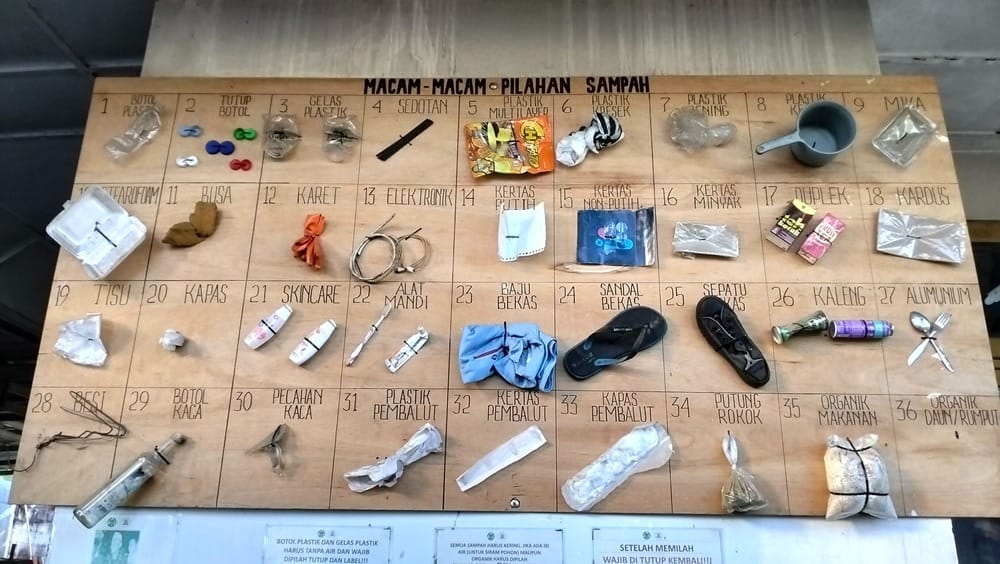
This was followed by the practical application of sorting waste right from their dormitories. Initially split into just three categories—organic, plastic, and paper—it expanded into 22, then 33, and finally 36 sorting categories. The additions were driven by student demand, as they generated waste like old clothes, worn-out sandals, broken watches, and cigarette butts.
"36 categories are the highest in the world. What’s fascinating is that the santri themselves are doing the sorting," Andika said proudly.
He compared it to Japan, where citizens sort trash into six categories, which then expands to 23 categories after factory processing.
"So we are genuinely applying zero-waste principles," he added.
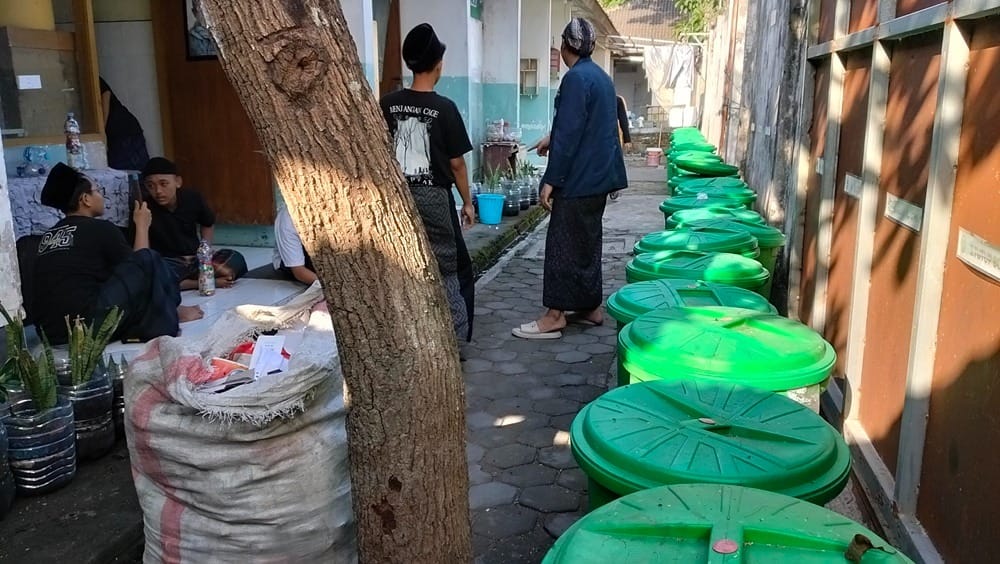
Muhammad Akmal Raziq Rasyifa, 18, had to break old habits in his dormitory. While he used to toss everything into a single bin, he now separates organic from inorganic waste. Throwing away a plastic cup from an iced drink means emptying any leftover ice or liquid before putting it into the bin. The same goes for paper food wrappers.
"We have to wipe down the paper. Leftover rice goes into the organic bin, while the wrapper goes into the inorganic bin. It’s a bit of a hassle, honestly," said Akmal, an 11th-grader.
Naurah Syifa, 17, also admitted she initially protested the rules, finding them tedious. Female students are required to sort cotton pads, tissues, and sanitary pads into dedicated bags. These items comprise the bulk of the waste in the girls' dormitory. During school events, the dormitory can generate up to two sacks of cotton pads and tissues in a single day. Sanitary pads must be meticulously disassembled into cotton, plastic wrapping, and paper liners, each placed in separate bags.
"We have to thoroughly clean the sanitary pads. It turns out the cotton can be used as planting media," Naurah said.
That afternoon, I was shown around the various waste processing workshops. One facility processes organic waste into biogas. Waste brought in during the late afternoon is processed either late at night or during the day outside of class hours.
Kitchen waste like vegetables and fruit peels is sorted, ground, and fed into an underground biodigester. The liquid byproduct is used as liquid organic fertilizer, the solid residue becomes planting media, and the gas is captured as biogas.
Meanwhile, cooked food scraps are collected by micro, small, and medium enterprises (MSMEs) for maggot feed. Given the massive volume of organic waste, the school operates two free nutritious meal (MBG) kitchens, which inevitably generate food waste. The pesantren also accept sorted waste from local residents free of charge.
A bucket of leftover food is sold to MSMEs for Rp5,000, whereas the market price can reach Rp10,000.
"We sell it cheap as part of our collaboration with local small businesses," Andika noted.
Food scraps are also used to feed catfish and tilapia reared at the pesantren.
"The harvest is for the students, or sent straight to the school kitchens," he explained.
Other MSME partnerships involve selling recyclable materials like paper, various plastics, iron, and glass. Scrap dealers come to the school to pick out what they need.
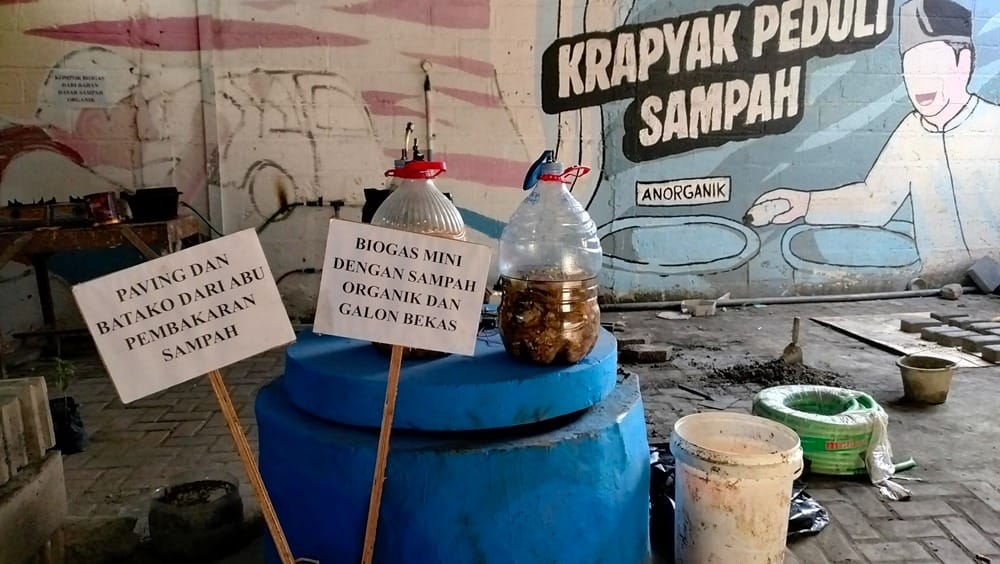
Recently, with the help of Eko Wantoro—a technician who maintains the school's waste machinery—the santri built portable mini-biogas units. Organic waste is placed in mineral water gallons to ferment for six days. The resulting gas is channeled via a hose to a specialized biogas stove.
"These biogas units can be used by food stall owners around the pesantren," Eko said.
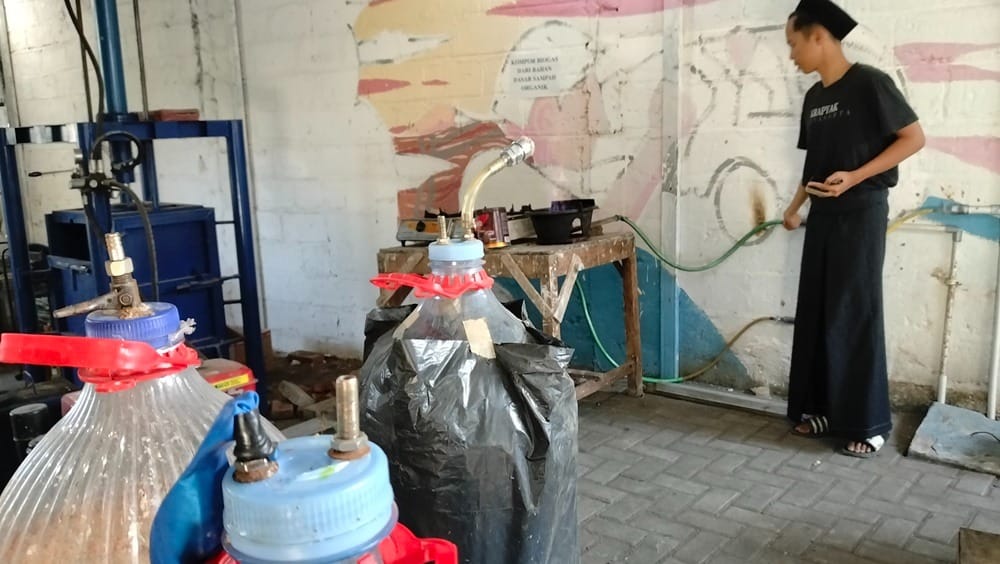
They also convert plastic waste into fuel—specifically gasoline and diesel—through pyrolysis. The diesel powers the organic waste grinders and paper/plastic balers, while the gasoline runs the plastic shredders.
"We can't use it for motorcycles yet; the RON hasn't reached 90," said Nabil, a student.
A variety of products are also crafted from waste. Cigarette butts are fermented into liquid organic pesticides, while cigarette ash and incinerator residue are mixed with cement to cast concrete blocks.
Used plastic bottles are shredded into flakes, then spun through a cotton candy machine to produce dacron for pillow stuffing. The students also make chairs out of ecobricks, selling each unit for Rp180,000. Meanwhile, used tissues, cotton pads, and sanitary pads are transformed into planting media.
"It retains water exceptionally well, so you don't have to water the plants too often," student Ahmad Alfa Mubarok explained while demonstrating the cotton's usage.
The school also collects wearable used-clothes to resell, mostly to the students themselves. During school bazaars, local residents snap them up too.
"This waste management enterprise brings in at least Rp15 million per month for our cash reserves," Andika concluded.