Keeping Local Soybeans from Falling Further Behind
By Janika Irawan
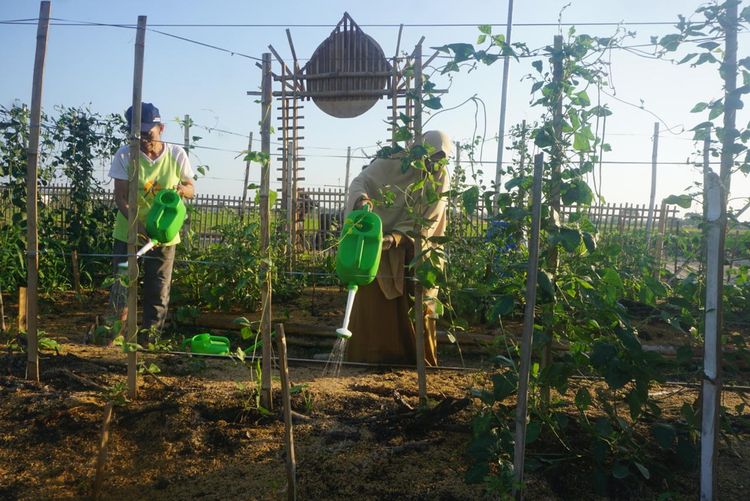
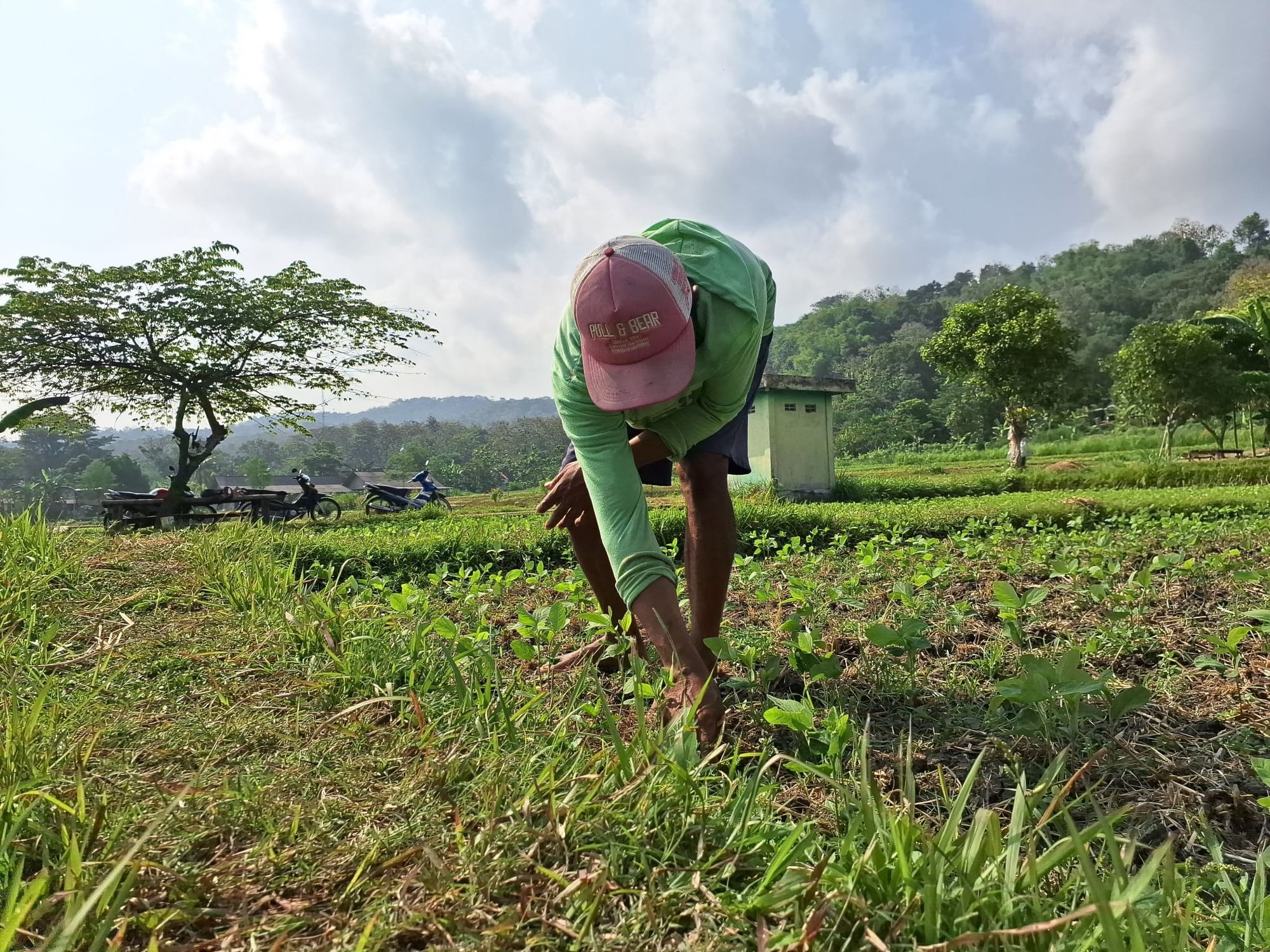
A bright morning brought a smile to Sunardi’s face as he watched the soybean seeds he planted two weeks ago thrive. Just the day before, he had cleared away the weeds that threatened to stifle his crop while loosening the soil.
"It feels good to see it this clean," Sunardi said while inspecting his 1,000-square-meter plot on Wednesday, June 24, 2026. "The growth is good. Everything looks fresh."
Since 2017, soybeans have vanished from the fields of Gamparan in Sumberharjo, Prambanan, Sleman, Yogyakarta. For local farmers, the crop was far from a lucrative venture. Productivity was dismally low, topping out at just 1.5 tons per hectare, coupled with equally depressed market prices.
However, in early June, they returned to cultivating the crop. Twenty-four farmers under the Gamparan farmers' association joined to grow the staple raw material for tempeh and tahu (tofu). Partnering with SAE Kedelai Smart (Smart Agro Enterprise Soybeans), the group’s members now manage four hectares of land.
"Reflecting on past experiences, it simply wasn't profitable. It made more sense to grow other crops," he admitted.
Yet, for Sunardi and his peers, the partnership with SAE Kedelai is a breath of fresh air. It promises not only a boost in yield but also a guaranteed market to absorb their harvest.
“Without market guarantees, farmers aren’t interested. If they sell at local markets, the prices are arbitrary,” he said. According to Sunardi, soybean prices vary—some are Rp7,000, Rp8,000, or at most Rp9,000. “So farmers lost interest in growing soybeans.”
SAE Kedelai is a management platform conceived by the Faculty of Agricultural Technology at Gadjah Mada University (UGM), Yogyakarta. The initiative was born out of a desire to rekindle interest in domestic soybean farming.
Atris Suyantohadi, the program lead at SAE Kedelai, pointed out several structural issues deterring farmers. Among them are a lack of post-harvest off-takers, stagnant technological inputs, low yield rates, and restricted capital access. To make matters worse, prices historically plummet during the peak harvest season.
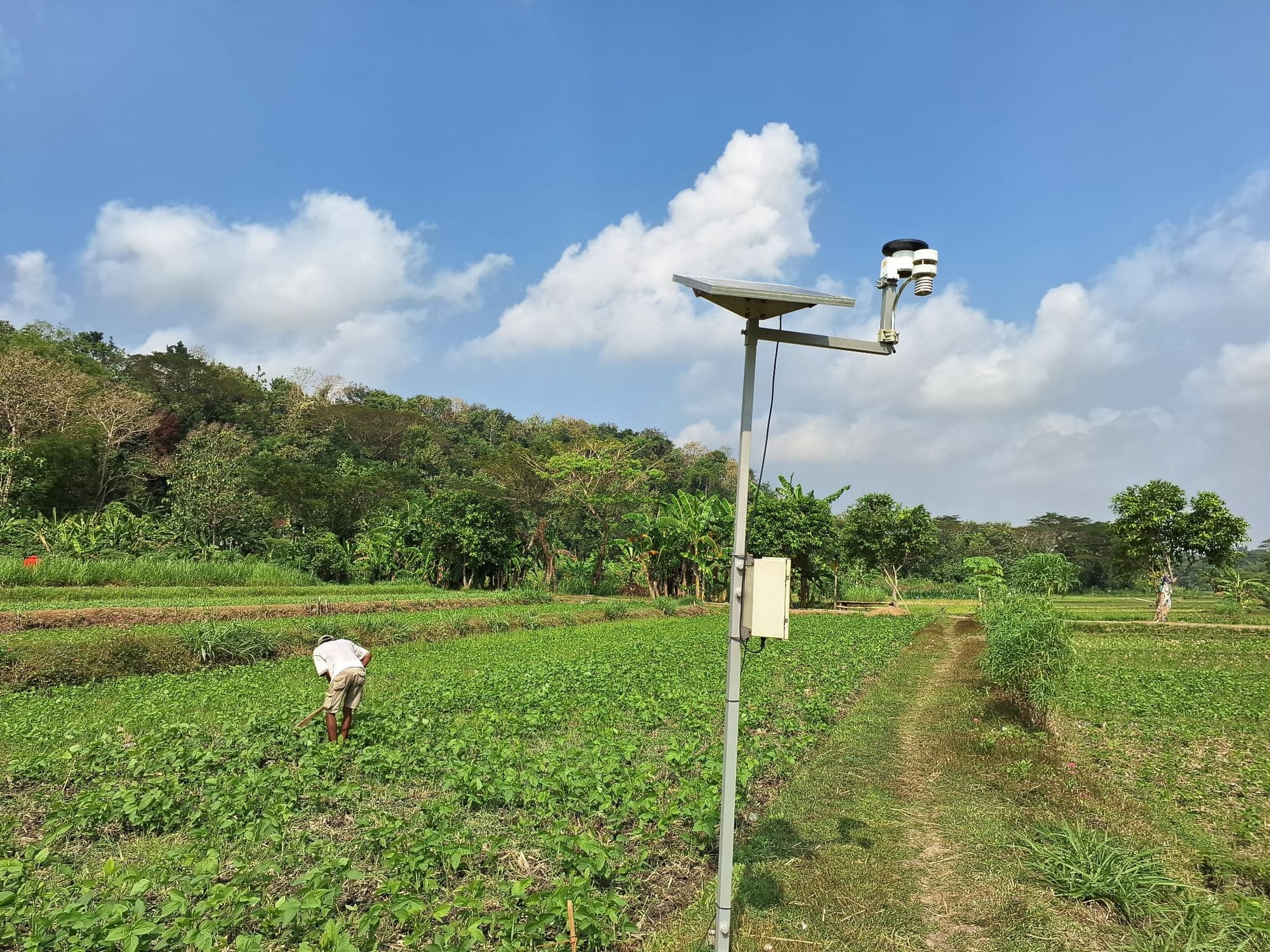
On the cultivation front, SAE Kedelai champions the use of a field monitoring system (FMS). This hardware captures real-time data directly from the fields—tracking wind speed, ambient temperature, air humidity, rainfall, solar radiation, soil moisture, and soil nutrient levels.
The recorded metrics feed into a data-driven decision support system. Consequently, issues like nutritional deficiencies can be remedied instantly.
"We designed the field monitoring system specifically to manage the nutritional demands of the crops," Atris explained.
He emphasized that nutrient levels—specifically nitrogen, phosphorus, and potassium (NPK)—must be carefully balanced, as an excess can backfire. Atris cited nitrogen, an essential nutrient during the vegetative stage (the initial growth phase). If the soil is overloaded with nitrogen, the subsequent generative stage (the reproductive phase where pods form) becomes stunted.
"When I measured the NPK levels in Gamparan recently, the soil profile looked great—scoring nearly above 100 percent. This means the land is inherently fertile," Atris noted. "Dosing it with heavy fertilizers would actually lead to over-nutrition."
According to Ministry of Agriculture data, the national soybean yield average lingers around 1.6 to 1.7 tons per hectare. By applying the stringent protocols mapped out by SAE Kedelai, Atris claims productivity can climb to 3 tons per hectare.
"By sticking to the SAE Kedelai SOP (Standard Operating Procedure), a yield of 3 tons per hectare is well within reach. This marks a significant upgrade. We are utilizing the Grobogan soybean variety," he stated enthusiastically.
Sunardi and his group remain hopeful for a bountiful harvest. He appreciated that the SAE Kedelai team visits the site weekly for hands-on field assessments.
"We will see what the final yield looks like. Hopefully, this 1,000-square-meter plot can yield at least three quintals," Sunardi hoped.
The Gamparan farmers' group is just one piece of the puzzle. To date, SAE Kedelai’s network has expanded to around 2,500 partner farmers spread across various regencies in Yogyakarta and Central Java, including Bantul, Kulon Progo, Gunungkidul, Klaten, Sukoharjo, Pati, and Grobogan.
Atris explained that the production process adheres to rigorous operational guidelines, encompassing seed quality control, soil testing, crop management, and post-harvest storage solutions. This guarantees that the harvest meets strict commercial industrial standards.
"The soybeans we cultivate alongside our partner associations are treated like industrial-grade commodities," Atris said.
Atris underscored that guaranteed markets and fair pricing are the primary incentives for farmers to stick with soybeans. To ensure this, SAE Kedelai assists them in pricing their crops higher than imported, genetically modified organism (GMO) varieties.
Currently, the annual yield from these partner farmers ranges between 400 and 600 tons. To absorb this volume, SAE Kedelai collaborates with major industrial off-takers on both national and multinational scales.
"The industrial demand is actually vast. Companies need soybeans for protein concentrates, protein isolates, and as raw materials for traditional staples like tempeh and tofu," Atris elaborated.

However, regulatory frameworks offer little protection. Current import pricing policies actively disadvantage domestic growers. This disparity is written directly into National Food Agency Regulation number 12 of 2024, which dictates the reference purchase prices at the producer level and reference sales prices at the consumer level for commodities including soybeans, shallots, garlic, bird's eye chilies, curly red chilies, consumer sugar, and beef/buffalo meat.
Under this framework, local soybeans are pegged at Rp11,400 per kilogram, while imported GMO variants fetch a higher reference price of Rp12,000.
“That’s not the way to go if you want to empower farmers. The price farmers get for soybeans should be Rp14,000, imported soybeans are cheaper,” said Atris.
GMO soybeans are grown en masse primarily for livestock feed, with the United States operating as a top global producer. China, Atris noted, is a major destination for American GMO exports. In Indonesia, however, these very imports are repurposed as the primary raw material for human consumption through tempeh and tofu.
Atris admitted that local production cannot yet meet aggregate national demand, leaving tempeh and tofu producers heavily reliant on imported GMO strains.
Every year, Indonesia requires 2.6 to 2.7 million tons of fresh soybeans to sustain its tempeh and tofu industries—foods deeply woven into the daily meals and cultural identity of the population. Yet, 90 percent of the raw supply is imported, predominantly from the United States. In 2025, US soybean imports to Indonesia was 2.5 million tons.
This overwhelming reliance leaves local food producers exposed to global volatility. The ongoing conflict involving Israel, the US, and Iran, coupled with disruptions in the Strait of Hormuz, has directly impacted local businesses by driving up import prices.
Sukamto, a tempeh maker from Panggungharjo, Bantul, Yogyakarta, felt the pinch. "Prices began climbing when the US-Iran tensions flared up. It has now hit Rp10,800 per kilogram," the 56-year-old said on Tuesday, June 16, 2026. Just three months prior, the price stood at Rp9,600.
Atris attributes this vulnerability to a long-standing failure by the government to regulate import dependence. He views this reliance as highly ironic for an agrarian nation like Indonesia.
"If this trend goes unchecked, it will inevitably erode our national food security and undermine our food sovereignty regarding soybeans," Atris warned flatly.
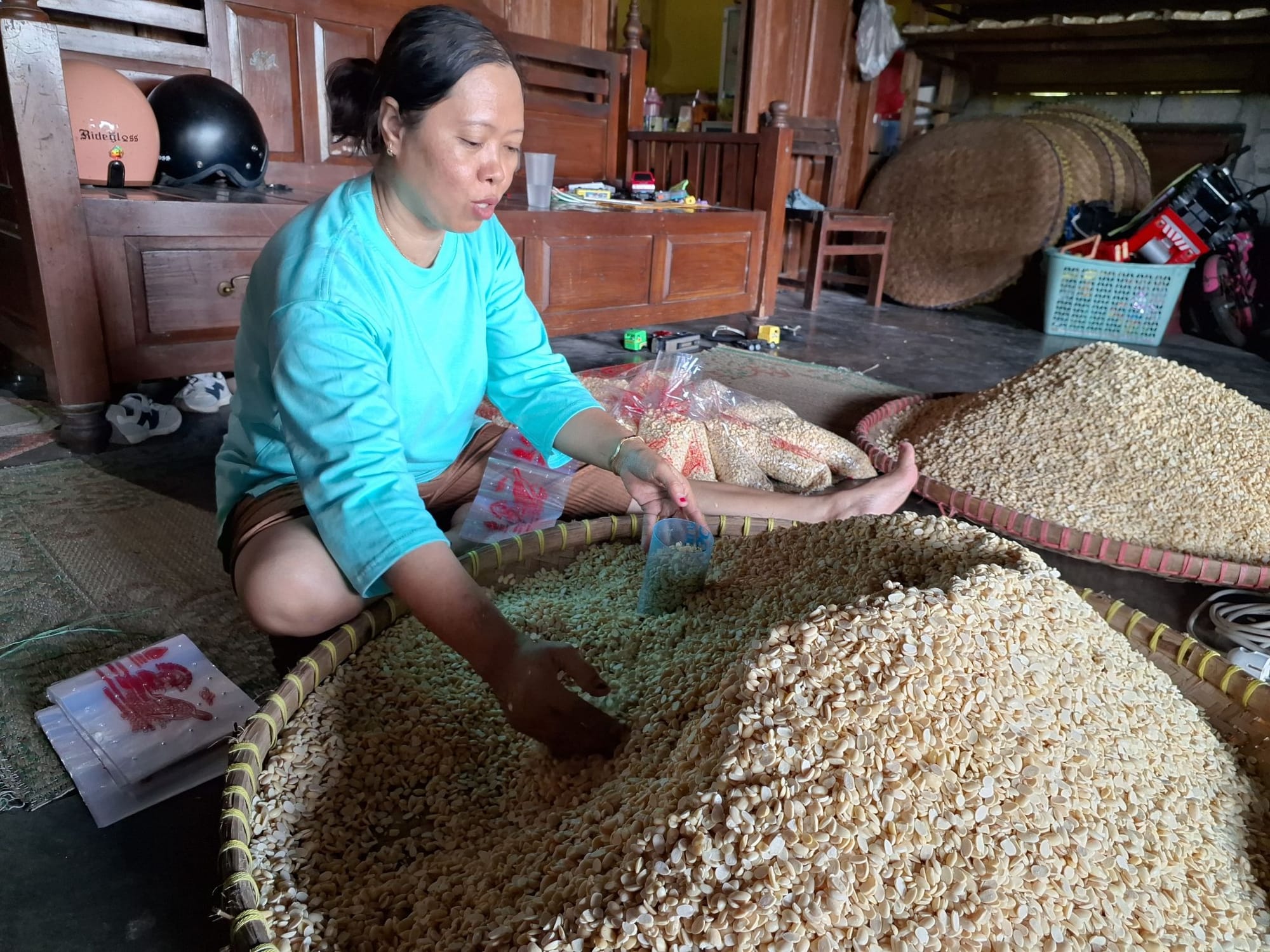
On that Tuesday morning, Sukamto and his wife, Winarti, were busy processing a new batch of tempeh. Winarti sat before a heap of soybeans mixed with yeast. Scooping the beans by hand, she poured them into a measuring cup before transferring them into plastic baggies. She sealed the edges with a heat sealer, flattened them onto a wooden board, and arranged them neatly on fermentation racks. Three days later, they would be ready for market.
Meanwhile, Sukamto was busily offloading older blocks of unfermented tempeh from the tier racks. One by one, he pressed down on the sides of the packages using his index finger, running it vertically from one end of the package to the other to shape the product. He repeated the motion on the remaining edges. The naturally rounded edges of the bags flattened out into crisp rectangles.
"I shape them like this to make them look larger. Otherwise, they turn out looking too thin. It's a trader's trick," he said while smoothing out the edges. Every day, the couple processes 1.5 quintals of soybeans.
Sukamto explained that this cosmetic adjustment is the only effective way to keep consumers satisfied without touching prices. "If I raise prices, my customers will walk away," he said.
Farmers like Sunardi and artisanal producers like Sukamto are caught in the crosshairs of an unhealthy supply chain. Farmers are forced to gamble on low farm-gate prices, while tempeh producers live in fear of losing their customer base if raw ingredient costs force their hand.
Atris believes state policy must step in to bridge this divide. One viable middle ground, he suggested, is a structured import quota system. For instance, initial imports could be capped at 70 percent, with the remainder sourced locally. This threshold could be adjusted incrementally until local crops replace 90 percent of the imported supply.
"When you import only 10 percent and supply 90 percent domestically, you achieve food self-sufficiency," Atris concluded. "It means domestic demand is largely taken care of, and a minor shortfall is perfectly normal. What is abnormal is relying on foreign nations to feed our population entirely."