Stay and Learn to Farm
By Shinta Maharani
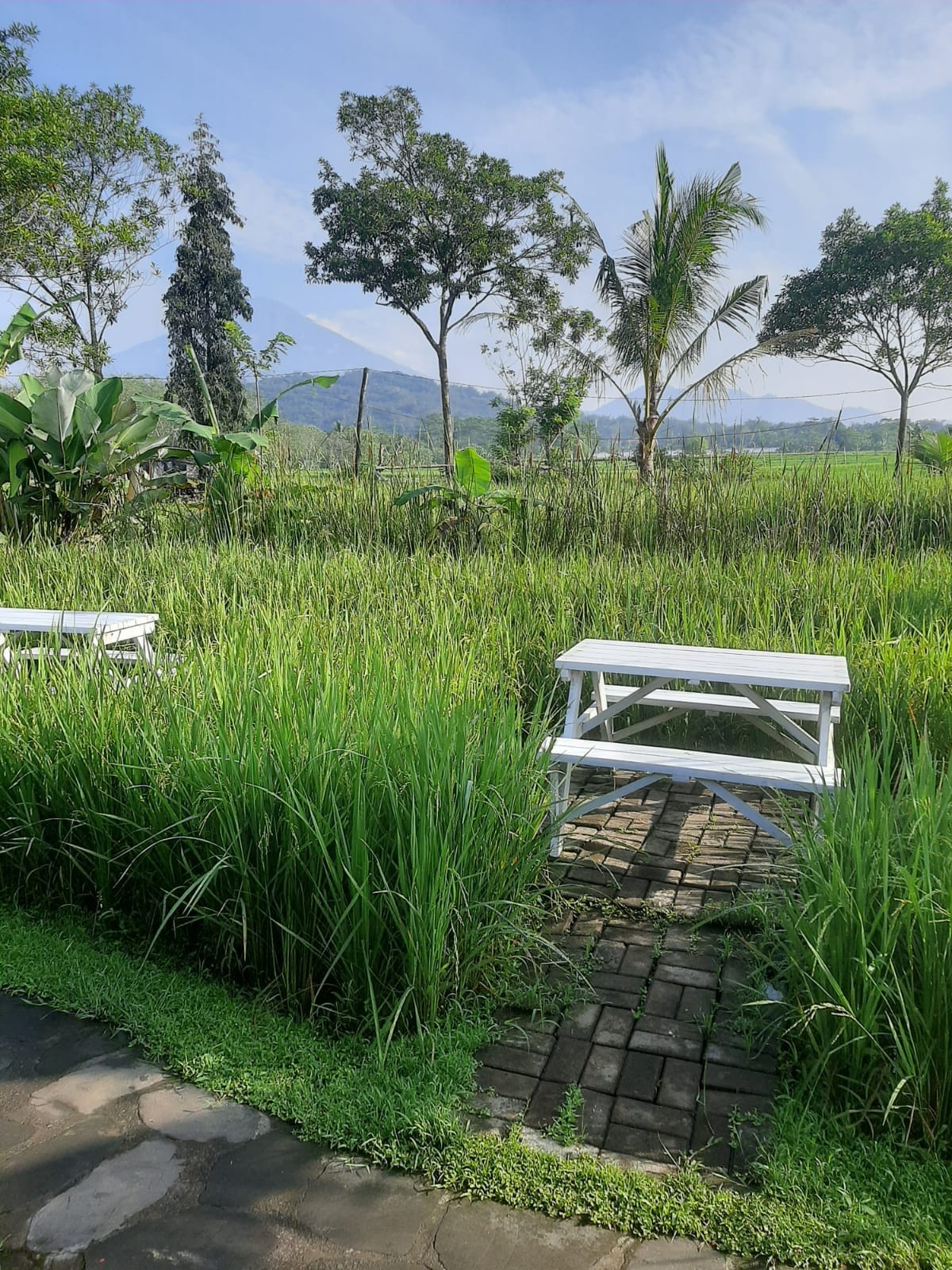
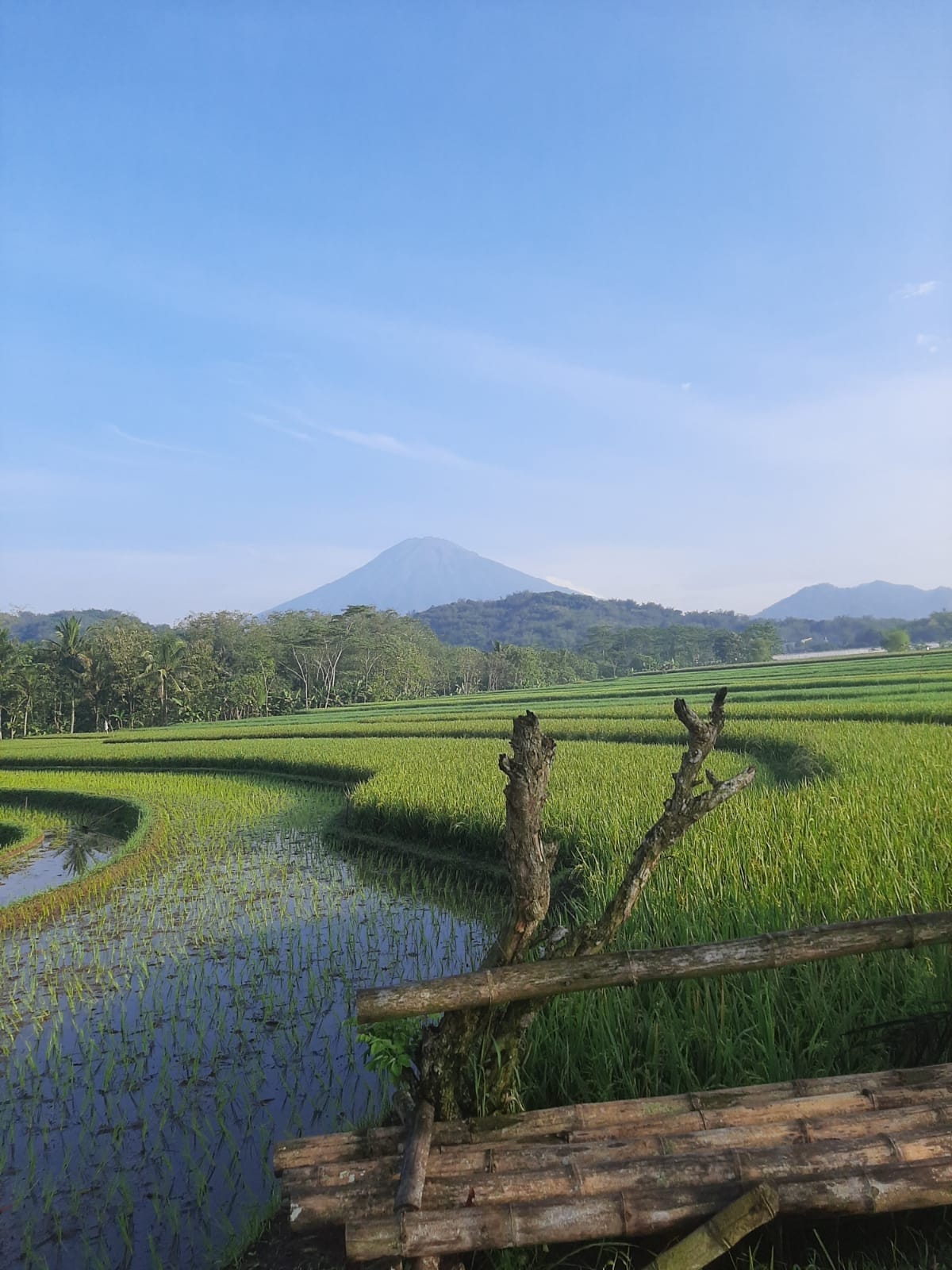
Dewdrops hung from the tips of rice stalks, glistening under the morning sun. Rousing crows from roosters pierced the stillness surrounding a patch of lush, green paddy field. In the distance, the peak of Mount Sumbing towered against a crisp blue sky, completing a tranquil rural panorama.
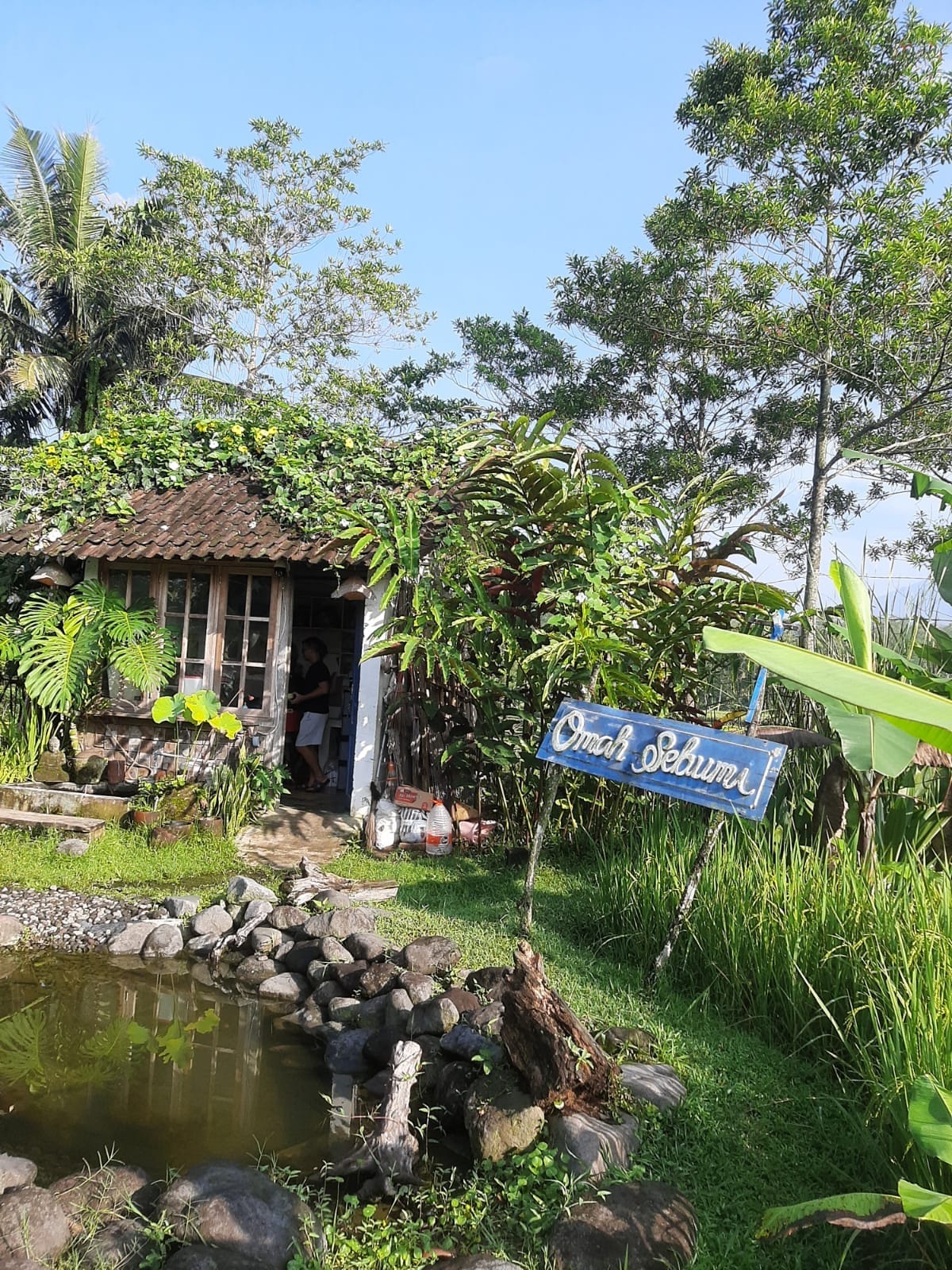
Situated just behind the paddy field stood traditional limasan guest houses built with wooden walls and floors. Almost every room featured local elements, from timber structures to assorted decorative trinkets, complemented by stone-paved bathrooms. There were no televisions in the rooms. At night, guests could immerse themselves in the chirping of crickets, the croaking of frogs, and the calls of geckos, or watch free-roaming chickens and geese. Encircled by diverse flora, the lodge was hidden away from the clamor of bustling city life, with only a scattering of neighboring houses nearby.
It was here, in Kanci Hamlet, Salamkanci, Bandongan, Magelang Regency, Central Java, that a young couple, Alvius Aries Ahmad and Maliqa Larasati, established Omah Sebumi four years ago. The agritourism-based lodge was built after they moved from Jakarta to Magelang, using savings accumulated from working in the capital. Alvius was previously a bank employee, while his wife, Laras, worked at an English language center. After having a child, they decided to relocate to the cool-weathered village.
The couple envisioned an educational tourism concept centered on rural life and agriculture. The idea stemmed from their concern over the dwindling interest among the younger generation to pursue farming. "It’s increasingly difficult to find young farmers in villages today. There is a generational crisis," said Alvius, affectionately known as Ius, when met at Omah Sebumi on Saturday, May 23, 2026.
They offer more than just accommodation for out-of-town travelers; they provide interactive agricultural education. Guests are invited to sit back and chat casually about rural and farming issues, or discuss them while strolling through the village. During planting or harvesting seasons, guests can wade directly into the semi-organic rice fields. Located a 30-minute drive from downtown Magelang, the lodge is easily accessible by vehicle.
Ius and Laras also offer lodging packages paired with pole sports—a discipline combining acrobatic gymnastics and dance using a vertical metal pole. Laras also frequently guides guests trekking up Mount Sumbing, alongside art and cooking workshops. These packages are typically held once or twice a year. Most of Omah Sebumi's guests hail from Jakarta, looking to spend time in silence and serenity.
These urbanites were drawn to stay after seeing various posts on Omah Sebumi’s Instagram account. The 36-year-old Alvius actively uploads snippets of village life, such as planting rice, raising livestock, gardening, and shopping for produce at traditional markets. For Ius, the most rewarding aspect of managing the lodge is delivering a personal experience, as he and Laras strive to foster close personal connections with every visitor.
They believe that if guests feel like they are part of Omah Sebumi, it becomes much easier to educate them on agriculture and village life. "Guests can learn in a way that isn't boring. It’s interactive, not just listening to someone lecture," Laras remarked.
For the couple, the most memorable guests are those who stay for extended periods and voluntarily disconnect from their mobile phones. These guests usually want to truly immerse themselves in village life. To avoid distraction, they hand over their phones to Ius and Laras. Throughout their stay, they focus heavily on activities like fertilizing and caring for the rice plants, purchasing supplies at agricultural shops, and marketing at traditional bazaars.
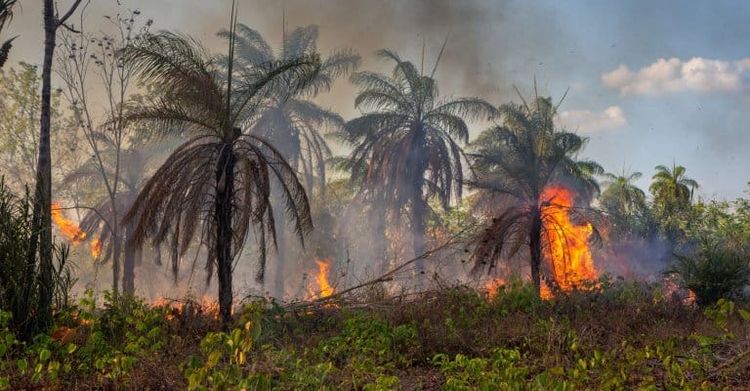
However, Ius admitted that interacting with and educating guests about agriculture does not always go smoothly. Some visitors still view the village through a strict urban lens, often informed solely by social media content. He cited an example of when guests witnessed farmers burning rice straw. Some criticized the farmers, arguing that the burning contributed to the greenhouse effect by releasing carbon dioxide.
Yet, as Ius explained, burning straw is a practical solution for farmers to acquire free hulls for seedbed cultivation. Furthermore, it clears the fields of rats that use straw piles as nesting grounds. From such instances, Ius learned that urban perspectives do not always align with or fit rural realities.
Ius, Laras, and their only child maintain close personal ties not only with their guests but also with the local residents. One of the main reasons they fell in love with rural living was the villagers' culture of warmth (guyub) and mutual cooperation, or working together, (gotong royong). They have made a conscious effort to adapt to local customs and traditions.
Ius recalled that whenever a neighbor passed away, he always made time to offer his help. Without any formal orders, villagers would swarm the grieving home to assist with everything from household chores to the burial. Because of his active involvement in community affairs, residents even appointed him to the management of the local farmers' association. Ius is one of the few young men willing to farm in the village. "I’m the youngest farmer in the association," he said.
This intense interaction with local farmers has allowed Ius to closely observe their daily habits. One female farmer in particular caught his eye: Kartini, fondly known as Mbok Kartini. Every planting season, Mbok Kartini routinely performs wiwitan, a sacred Javanese ritual conducted before harvesting rice. In Javanese, wiwit means to begin or initiate. The tradition is practiced as an expression of gratitude to God and as a tribute to nature and Dewi Sri, the goddess of rice, for a bountiful harvest.
During the wiwitan tradition, Javanese farmers typically prepare offerings consisting of tumpeng (cone-shaped rice), sego gurih (savory rice), urap (spiced shredded coconut salad), and traditional market snacks. They then hold a kenduri (communal feast and prayer) right in the rice field, led by a village elder. Following the prayers, they cut a few stalks of rice using an ani-ani, a traditional pocket-sized harvesting blade. Afterwards, farmers, residents, and passersby gather to eat together on the embankments of the field as a symbol of togetherness.
According to Ius, the wiwitan tradition is becoming an increasingly rare sight. When harvest time comes, Mbok Kartini hosts a selamatan (thanksgiving feast) to express her gratitude, distributing blessed rice boxes (nasi berkat) to working farmers and nearby neighbors. Interestingly, Ius observed that Mbok Kartini’s yields always remained excellent, even when neighboring plots were heavily plagued by rats.
Ius shared that his interest in agriculture blossomed during his elementary school years. As a young boy growing up in Semarang, he loved playing Harvest Moon, the legendary life and farming simulation video game series. The game tasks players with managing a farm, growing crops, raising livestock, and socializing with townsfolk. The PlayStation game was immensely popular in Indonesia. Ius also enjoyed gardening at his childhood home.
His affection for rural life deepened during his university student community service (KKN) program as a student at Soegijapranata Catholic University, Semarang, which coincided with the catastrophic eruption of Mount Merapi that devastated Central Java and its surroundings. For a month, Ius lived alongside the villagers on the slopes of Merapi, learning how they coped with the disaster through local wisdom.
On one occasion, Ius and his team were tasked with eradicating a rat infestation that struck the rice fields after the eruption. Heat had driven large numbers of rodents down the mountain to forage in the fields. The student team designed a comprehensive pest control program, but the locals showed no interest. Instead, the villagers chose to leave the rats alone, understanding that the extreme heat from the eruption had forced them down.
The residents explained to the students that the rats would only stay temporarily; once full, the rodents would promptly return to their natural habitat on the mountain. As it turned out, the locals were right—the rat attacks soon subsided. The resilience of the slopes' residents demonstrated that they were accustomed to living in harmony with nature. "I learned a lot from the villagers who remained legowo (accepting and resilient) in the face of disaster," he reflected.
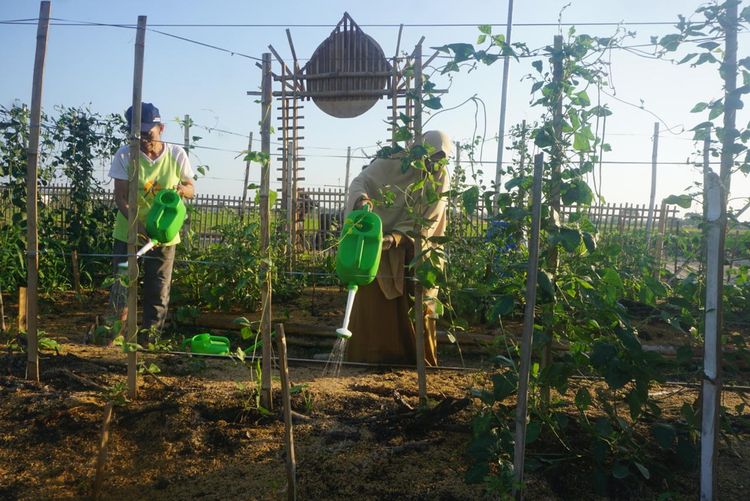
Muhammad Hafizh Hasanuddin, a guest at Omah Sebumi, took part in an agricultural “training” at the lodge owned by Ius back in 2023. Over the course of three days, the young farmer learned the ins and outs of chili cultivation, spanning the entire cycle from pre-planting soil preparation to cultivation, maintenance, harvesting, and marketing.
"We got the theoretical foundation in the inn’s pavilion. Then we dove straight into the mud, participating from planting all the way to harvest," said the 28-year-old when contacted on Tuesday, July 14, 2026.
At the time, Hafizh was a university student getting hands-on agricultural experience while volunteering at Omah Sebumi.
Ius taught him how to determine harvest windows, select seeds, schedule maintenance, manage pests, calculate the cost of goods sold (COGS), and cultivate environmental awareness. He also learned about crop nutrition and water management during the dry season. Alongside three other volunteers, Hafizh was schooled in the commercial side of things: how to market and sell the harvested chilies.
Hafizh’s interest in agriculture was sparked by Omah Sebumi’s Instagram posts, which showcased the intersection of farming and hospitality. He frequently picked Ius’s brain on how to sustainably blend agribusiness with running an inn.
The knowledge Hafizh gained was put to immediate use back home in Kendal, Central Java. Cultivating mint leaves in his backyard, he now regularly supplies ten local cafes. Every three days, he delivers 150 grams of fresh mint to each cafe.
The proceeds from his mint sales are being funneled into a savings account to expand into other commodities, such as dried lemons and pineapples. Hafizh plans to use the savings to purchase a dehydrator.
Looking ahead, Hafizh aims to cultivate rice and shallots—Kendal’s signature agricultural commodities. He hopes to implement sustainable farming methods by utilizing semi-organic fertilizers. "For me, the most important lesson has been patience and persistence in tending the land," he said.