Reclaiming Food Sovereignty from the Dinner Table
By. Purwani Diyah Prabandari
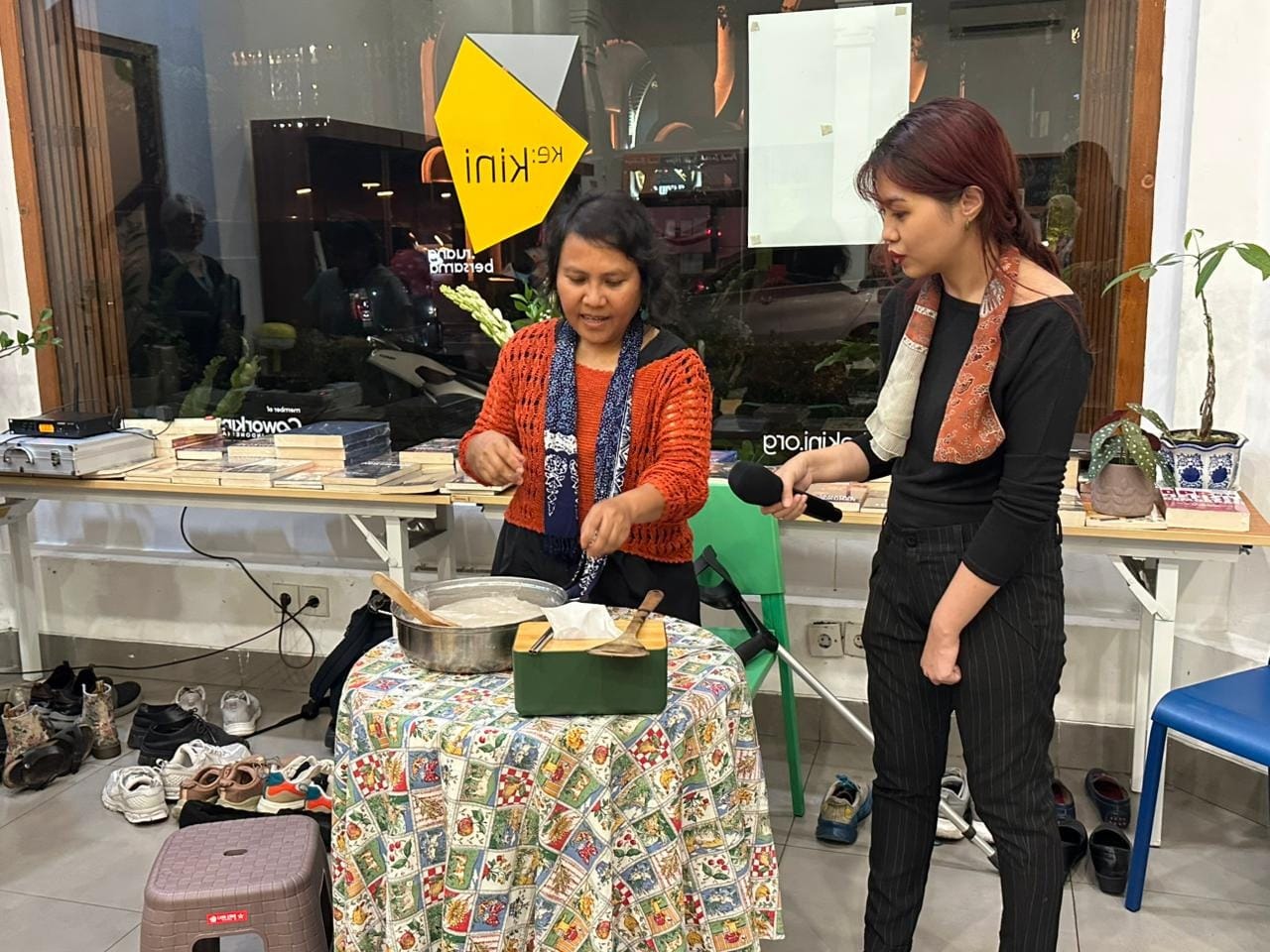
LIAN Gogali walked down to the first floor of the Ke:kini community space on Jalan Cikini Raya, Jakarta. After leaning her walking aid on a chair behind her, Lian positioned herself behind a small round table. She faced dozens of people sitting on the carpet, gathered for an evening of Molimbu.
"Molimbu is a communal dining tradition in Poso,” said the woman from Pamona, Poso, Central Sulawesi. “It is usually practiced during harvest festivals or communal gatherings."
In its ancestral form, this gathering serves as an expression of gratitude toward nature, where villagers bring their own home-cooked dishes. "It is like a potluck," Lian added. However, on that Wednesday evening, April 29, 2026, the Molimbu was different: it aimed to bring the natural essence of Poso straight to a Jakarta dinner table. The event was part of a book launch and discussion for Yang Datang Setelah Jawaban (What Comes After the Answer), which chronicles the journey of Lian, the founder of the Mosintuwu Institute—a grassroots organization working toward peace and justice during and after the sectarian conflicts that plagued Poso and its surrounding areas.
In front of her sat a stainless steel pot filled with sago flour. She asked a volunteer to boil water in a large kettle to prepare dui (a traditional thick sago porridge). "It must be made with boiling water," she emphasized. While waiting, Lian explained the cultural weight of the dish. "For us, dui is not just food. It is a representation of an identity entwined with our soil, water, and forests."
In the tradition of the Pamona and Mori communities in Central Sulawesi, harvesting sago involves a process of communication. Before felling a tree, locals insert a leaf stalk into the trunk, asking for permission to harvest. "We believe the sago palm is a part of the universal ecosystem, not just a plant that feeds us."
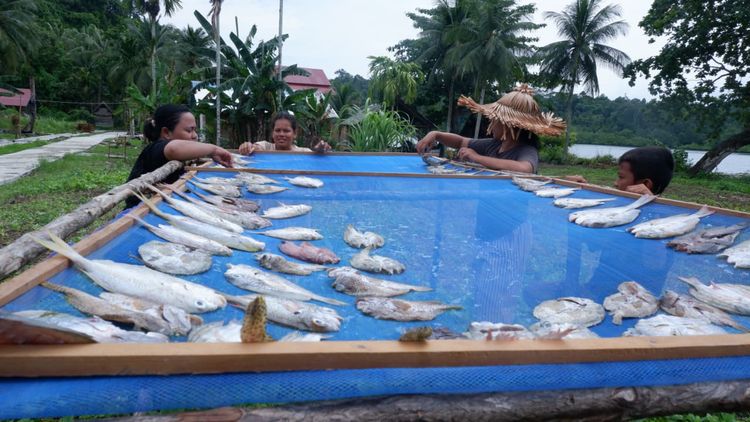
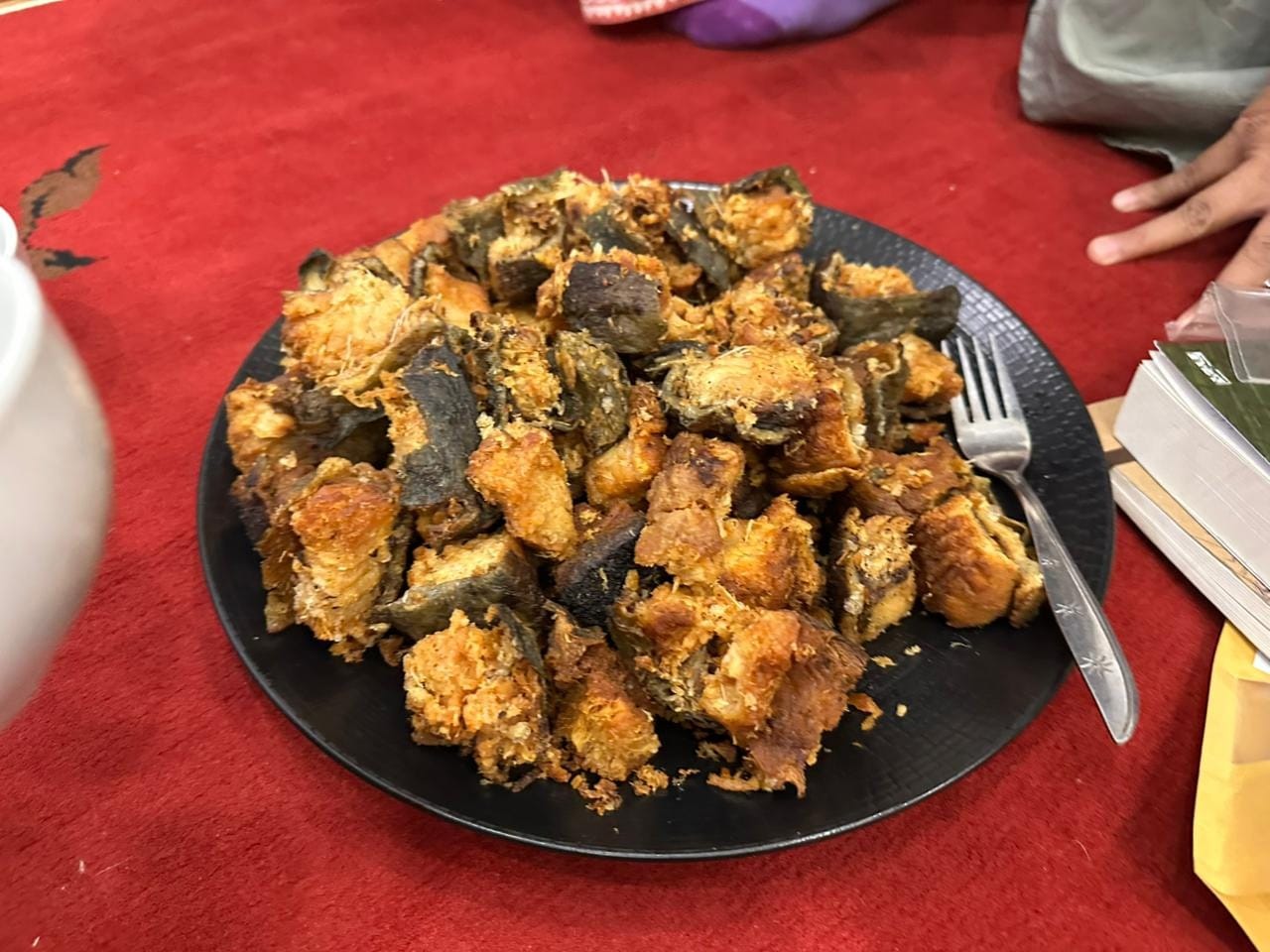
That evening, the dui onco rogo was served alongside other traditional Central Sulawesi dishes: ikan kuah asam (sour fish soup), local vegetables, sambal roa (chili paste with smoked garfish), and a special delicacy—masapi (silver eel) from Lake Poso. The masapi population currently faces conservation threats due to disrupted migration cycles, caused primarily by the construction of hydroelectric power plants and dredging activities in the area.
Lian lamented that modern dining habits have largely severed people's connection to the origins and struggles behind their food. Consumers eat whatever is available in the market or supermarket without questioning where it comes from. "There is no food sovereignty anymore,” she argued. “There is no sovereignty at the dinner table."
This realization prompted Lian to do what she calls “the politics of the dinner table” from her own home. She argues that the modern plate has been heavily politicized by corporate and political interests, leading to industrial mass production reliant on chemical fertilizers and pesticides. "It is a method to dismantle how mass food industries dictate commercial agriculture. Mass farming means mass industry—relying on chemical fertilizers, pesticides, and the like."
Lian’s campaign for dinner table politics did not happen overnight. Her perspective was awakened by several key events, including the 2016 Produce Festival organized by Mosintuwu Institute in Poso. When villagers brought their local crops, Lian noticed many attendees were shocked, yet nostalgic, to see nearly forgotten foods like kamonji (breadfruit) and jongi.
"People were surprised that these foods still existed, yet they were vanishing from our tables," she said. "That pushed us to audit our own dinner table."
The findings were grim. In a region rich in biodiversity, local dining tables were increasingly dominated by instant noodles, cap cay (stir-fried vegetables), and other foods sourced from outside the region. Even staple vegetables like carrots, cabbage, and potatoes consumed in Poso were transported from places over 300 kilometers away, from other islands, or even imported from abroad.
Intrigued, Lian began observing local markets. From Sunday to Friday, the stalls only sold generic vegetables like commercial carrots and common beans. But on Saturdays—her favorite day to visit—local villagers arrived to sell their own garden yields, instantly diversifying the market's inventory.
Further observation led Lian to Padungku, an annual thanksgiving harvest festival deeply rooted in the spirit of gotong royong (mutual cooperation). In the past, farmers brought rice and vegetables they grew themselves, alongside fish caught from their own ponds.
Today, Padungku has shifted. "Civil servants (PNS), most of whom do not farm, now participate," Lian observed. This demographic shift has altered the menus served, consequently changing the local culinary culture.
Ironically, when implementing a "village geo-social spatial mapping" approach—an integrative method that maps demographic conditions, social relations, and economic activities into the physical landscape—Mosintuwu people discovered an extraordinary wealth of food sources. "But that abundance is moving further away from the dinner table," Lian said.
Lian, who received the Indonesian Women of Change Award from the U.S. Embassy in Jakarta in 2015, offers a concrete method: a deconstruction. "Break down your dinner table. Question everything on it: where it comes from, and who processed it."
The easiest step, she suggested, is to measure "food miles." For example, she and her neighbors question whether the fish consumed comes from Lake Poso and local ponds, or if it is transported from distant seas. How far did their vegetables travel before reaching the village?
"Next, look at who produced it, local smallholders or industrial mass-producers," Lian said. Industrial agriculture distances humans from nature, and mass-produced food relies heavily on modern processing and chemical inputs. "It ultimately hazards the consumer’s body."
Furthermore, she urges people to calculate the financial leakages of food dependency. She calculated that a household spending Rp 2000 a day on a bunch of greens from mobile vendors spends Rp 60,000 a month. "That money could instead be used to pay for national health insurance (BPJS) or school fees," Lian noted, pointing out that this is the cost for just one type of vegetable.
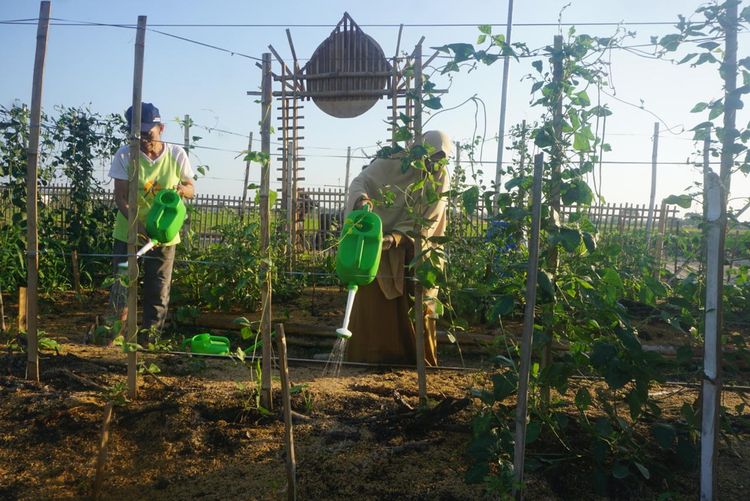
Lian does not merely theorize, she cultivates. She rigorously manages three garden plots near and far from her house on the edge of Poso Lake. In her backyard, she cultivates various vegetables, herbs, and fruit trees, including longan, mango, banana, papaya, and jackfruit. She also maintains a fish pond and raises chickens. "About 90 percent of our needs are met by our own garden," she stated.
The Mosintuwu Institute also manages a community garden based on agroecological principles—organic farming that aligns with nature like what she practices in her garden plots. Their restaurant, Dodowa Mosintuwu, sources its ingredients directly from this garden.
Lian continuously spreads these ideas through the classrooms of the Mosintuwu Institute, frequently inviting experts on food sovereignty to teach.
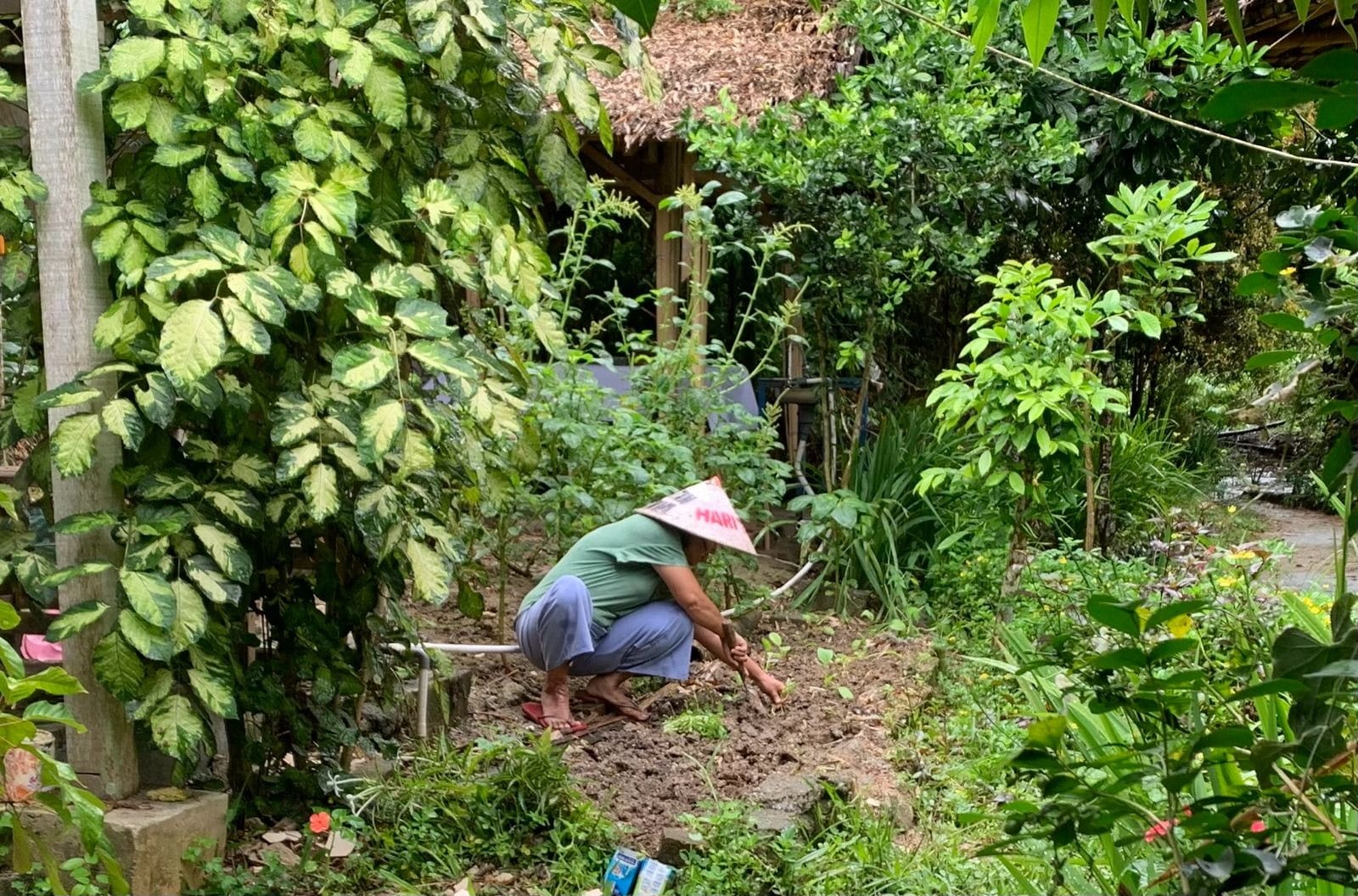
One of her most enthusiastic participants is Martince, who accompanied Lian to Jakarta. A resident of Bukit Bambu in the South Poso Kota subdistrict, Martince developed her own fruit and vegetable gardens after joining Mosintuwu’s classes. "We were taught permaculture design (a regenerative and sustainable agricultural system modeled on natural ecosystems)," she said.
Martince has harvested various vegetables, such as spinach, long beans, cucumbers, and luffa (gambas), in a plot around her house. "I calculated how much I used to spend on vegetables daily, weekly, monthly, and annually," she said. "My garden has been incredibly rewarding."
Her experience is mirrored by Nurhayati. For this Mosintuwu Institute activist, the harvest does more than just supply her own kitchen, she has turned her plots into a commercial venture, selling her yields both raw and cooked. "I make an average of Rp 50,000 to 60,000 a day just from selling cooked vegetable dishes," she said. Meanwhile, the raw produce from her modest estate—nurtured exclusively with organic fertilizers—is snapped up by wholesale vendors who visit her every three days. To broaden her reach, this resident of Lape, Poso, has even begun taking orders online.
Wanting her community to thrive, Martince actively engages with market vendors, encouraging them to sell their own backyard produce and telling them how to propagate seeds. "A month later, one vendor was already selling basil and long bean seedlings," Martince said proudly.
Lian shares that pride. The movement not only yields healthier food and protects the environment, but it also generates economic benefits for the community. Moreover, their sustainable gardens have brought biodiversity back to life; butterflies, birds, and fireflies—which are increasingly rare elsewhere—now frequent their plots. "I counted about 23 bird species in my garden alone," Lian said.
Moving forward, Lian wants this grassroots movement to scale up. She believes every individual has the power to dismantle corporate food reliance and reshape local culture, while gradually building an alternative economic model. "An economy of solidarity," she concluded. "An economy that stands in solidarity with nature, and in solidarity with one another."